
Closed loop water treatment standards are essential guidelines designed to ensure the efficient and reliable operation of closed recirculating water systems. This article aims to clarify these standards, providing practical insights to optimize system performance, reduce operational costs, and extend equipment life.
Key Takeaways
- Closed loop systems minimize water loss by recirculating fluids within sealed piping networks.
- Maintaining low dissolved oxygen levels is essential to reduce corrosion risks.
- Consistent chemical treatment and filtration prevent scale, corrosion, and biological fouling.
- Proper glycol management safeguards against freeze damage and microbial degradation.
- Routine monitoring and maintenance are critical for sustaining system efficiency and longevity.
- Limiting make-up water additions helps control contamination and preserve water quality.
What Closed Loop Systems Are
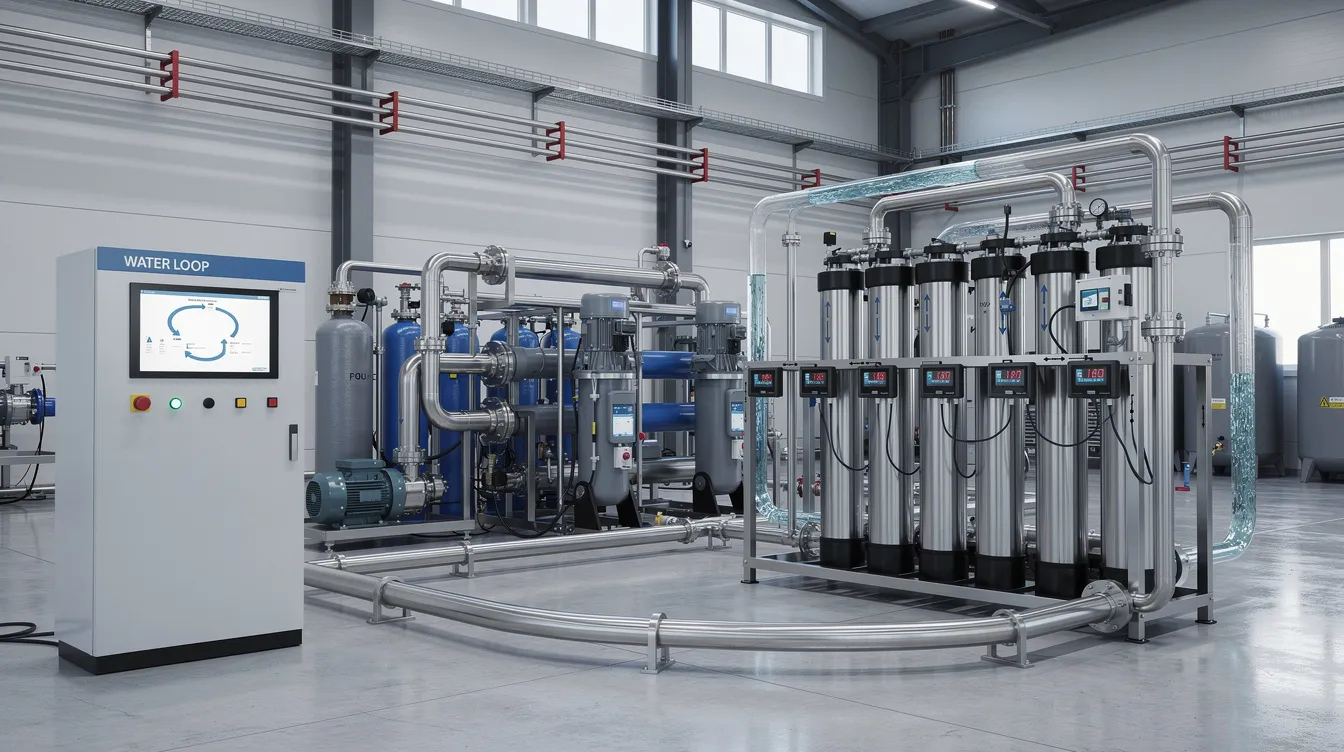
A closed loop system is a water system where water or heat transfer fluids continuously circulate within a sealed piping system, without exposure to the atmosphere. Unlike open cooling systems, a closed recirculating water system minimizes water loss and contamination, though make up water or fresh water additions can introduce oxygen and contaminants. Common applications include chilled water systems for air conditioning, hydronic heating, hot water systems, and industrial process cooling. Compared with open systems, closed loops have less contamination exposure and support better water conservation.
Why Clear Closed Loop Water Treatment Standards Matter
Proper water treatment in closed loops is critical because untreated systems can suffer from corrosion, scale buildup, and microbial growth, all of which reduce heat transfer efficiency and increase maintenance costs. Different industries follow specific regulations for closed-loop water management, and local or urban requirements may be stricter.
Poor treatment leads to increased energy consumption and operational costs, can reduce efficiency, shorten equipment life, and cause increased operational costs while compromising system reliability. Clear standards, on the other hand, help ensure compliance, reduce potential risks, and maintain system efficiency over time. Environmental regulations focus on preventing pollution from closed-loop systems, so guidelines emphasize preventing leaks to meet those standards.
Core Water Quality Targets for Chilled Water Systems and Cooling Systems
Maintaining water quality within specified parameters is vital. Since closed loop systems may operate across a wide range, typically about 4 to 150ºC, treatment targets must reflect those conditions. Keep dissolved oxygen levels as low as possible to prevent corrosion, typically near zero ppm. The ideal pH range for mixed metallurgy systems is between 7.5 and 10.0. Sable pH levels and pH balance help protect metal components. Control conductivity or total dissolved solids (TDS) because elevated dissolved solids can increase corrosion rates as well as scale risk, with TDS ideally below 2000 ppm. Maintain water hardness within recommended guidelines to avoid scale buildup on heat exchangers.
Corrosion Mechanisms in Closed Loops
Oxygen intrusion accelerates corrosion by reacting with metal surfaces. Leaks or shutdowns can trigger oxygen pitting as well as general pitting corrosion and higher corrosion rates. In mixed-metal systems that include copper alloys and lead, galvanic corrosion can occur, where one metal corrodes preferentially due to electrochemical differences. Additionally, microbial corrosion may arise from nitrate-reducing bacteria, which contribute to metal degradation and system fouling. Biological material can support microbiological growth and worsen corrosion in fouled areas.
Corrosion Inhibitors: Selection and Use
Nitrite-based inhibitors are effective for protecting steel but should generally be maintained at 600-1200 ppm and require careful concentration control to avoid toxicity. Higher nitrite programs may require acid feed for ph control. Molybdate inhibitors offer broad-spectrum protection and are environmentally friendly alternatives. Phosphate inhibitors help control scale and corrosion but must be compatible with system materials. It is crucial to verify inhibitor compatibility with glycol-based fluids used in many closed loops as part of a broader treatment program and proper treatment approach to prevent adverse reactions.
Corrosion Inhibitor Application Tips
Start dosing corrosion inhibitors during system commissioning to establish protective levels. Periodic testing of inhibitor concentrations ensures ongoing protection, especially after system modifications or makeup water additions. Adjust inhibitor dosing based on test results to maintain optimal treatment levels and system performance.
Managing Glycols and Heat Exchange Fluids in Closed Loop Water
Ethylene glycol and Propylene glycol are commonly used for freeze protection in closed loops. While glycols prevent freezing, they can degrade biologically over time. Low temperatures are a key reason these fluids are used in the first place, increasing microbial activity and corrosion risks if the fluid breaks down. Regular glycol testing, at least annually, is recommended to monitor glycol condition. Glycol concentrations in closed systems are commonly maintained at 30% to 50% for freeze protection and system protection. Replace glycol fluids when degradation is detected to maintain system efficiency and prevent damage.
Preventing Biological Fouling in Closed Loop Water
Biological fouling occurs when microbial growth forms biofilms inside the system, reducing heat transfer and increasing maintenance costs. Non-oxidizing biocides are preferred to control microbial activity without damaging system components. Eliminating dead legs and stagnant zones through proper system design and maintenance helps reduce microbial growth and maintain system cleanliness.
Scale Control and Mechanical Filtration for Closed Systems
Scale inhibitors, such as phosphates or polyphosphates, help prevent mineral deposits on metal surfaces. Using ion exchange or reverse osmosis for makeup water reduces hardness and dissolved solids. Hard water in make-up water can drive scaling and deposits in piping and heat exchangers. Side-stream filtration and magnetic separators support proper filtration by removing suspended solids and corrosion products, preserving heat exchanger performance and extending equipment life. When very low dissolved solids are required, deionization is the preferred method.
Monitoring, Testing, and Automated Control for Compliance
Schedule routine water quality testing, including pH, conductivity, dissolved oxygen, and inhibitor levels, monthly or quarterly depending on system size and complexity. Continuous monitoring of critical parameters with automated controls and alarms enables early detection of deviations, allowing prompt corrective actions to maintain system efficiency.
Commissioning, Cleaning, and Ongoing Maintenance of Closed Loops
Before filling, systems should undergo thorough cleaning and flushing to remove debris, corrosion products, and contaminants. Passivation treatments help stabilize metal surfaces. Initial chemical treatment fills establish protective inhibitor levels. Regular inspections and preventive maintenance, including filter cleaning and chemical adjustments, help sustain system health and performance.
Risk Management: Preventing Costly Repairs in Cooling Systems
Closely monitor early warning signs such as increased corrosion rates, scaling, or microbial fouling. Predictive maintenance using remote monitoring and trend analysis can prevent unexpected failures. Maintaining detailed treatment and service records supports informed decision-making and regulatory compliance.
Implementation Checklist for Closed Loop Water Treatment Standards
To effectively implement closed loop water treatment standards, follow these key steps:
- Begin with a baseline water quality report to understand system conditions.
- Install necessary filtration and air management equipment.
- Establish chemical feed systems and monitoring protocols.
- Train operations staff on routine testing, chemical dosing, and maintenance procedures to ensure consistent compliance and system performance.
Next Steps for Closed Loop Water Treatment Plans
Adhering to closed loop water treatment standards is key to maintaining system efficiency, reducing operational costs, and extending equipment life. Facility managers should schedule comprehensive system audits with water treatment specialists to tailor treatment programs. Contact our team to develop and implement a closed loop water treatment plan that meets your facility’s unique needs and ensures long-term reliability.
Frequently Asked Questions (FAQs)
What are closed loop water treatment standards?
Closed loop water treatment standards are guidelines that ensure water quality and system performance in closed recirculating water systems. They focus on controlling corrosion, scaling, microbial growth, and maintaining chemical balance to optimize efficiency and extend equipment life.
Why is controlling energy waste important in closed loop water treatment?
Controlling energy waste is crucial because poor water quality increases pumping energy requirements and reduces heat transfer efficiency. Proper treatment minimizes energy consumption, lowering operational costs and environmental impact.
How often should water quality be tested in closed loop systems?
Water quality testing should be performed regularly, typically monthly or quarterly, depending on system size and complexity. Routine testing includes parameters like pH, dissolved oxygen, total dissolved solids (TDS), and inhibitor concentrations.
What role do corrosion inhibitors play in closed loop systems?
Corrosion inhibitors protect metal components from degradation by forming protective films and neutralizing corrosive agents. Maintaining proper inhibitor levels prevents pitting, galvanic corrosion, and extends system lifespan.
How is glycol managed in closed loop water systems?
Glycol concentrations are maintained between 30% and 50% for freeze protection. Regular annual testing monitors glycol condition to detect degradation. Degraded glycol should be replaced to prevent microbial growth and corrosion.
What methods are used to prevent biological fouling?
Non-oxidizing biocides are commonly used to control microbial growth without harming system components. Additionally, system design minimizing dead legs and stagnant zones, along with regular maintenance, helps reduce biofilm formation.
Why is filtration important in closed loop water treatment?
Filtration removes suspended solids, corrosion products, and debris that can cause scaling and blockages. Proper filtration preserves heat exchanger performance and reduces maintenance needs.
How much make-up water is acceptable in closed loop systems?
Make-up water should not exceed 5% of the total system volume annually to limit oxygen introduction and contamination, which can accelerate corrosion and reduce system efficiency.
What are the economic benefits of adhering to closed loop water treatment standards?
Proper treatment reduces operational costs by minimizing energy waste, preventing costly repairs, extending equipment life, and reducing water consumption, resulting in long-term savings.
How does pH control affect closed loop water systems?
Maintaining pH within the ideal range (7.5 to 10.0) stabilizes chemical inhibitors and protects metal surfaces from corrosion. Deviations can accelerate corrosion and damage system components.
