
A chemical dosing pump, also known as a chemical metering pump, is a vital component in water treatment systems. It precisely injects exact volumes of chemicals into water streams to ensure optimal treatment. Unlike pumps that move large fluid volumes, chemical dosing pumps deliver controlled, accurate flow rates that can be adjusted manually or automatically, making them essential for maintaining water quality and safety.
Key Takeaways
- Chemical dosing pumps are essential for precise and controlled chemical injection in water treatment systems.
- They operate on positive displacement principles, ensuring accurate and consistent dosing regardless of system conditions.
- Various types of dosing pumps, such as diaphragm, piston, and peristaltic, suit different chemical and application needs.
- Selecting the right pump involves considering flow rate, chemical compatibility, system pressure, control options, and power requirements.
- Regular maintenance and calibration are critical to maintaining dosing accuracy and system performance.
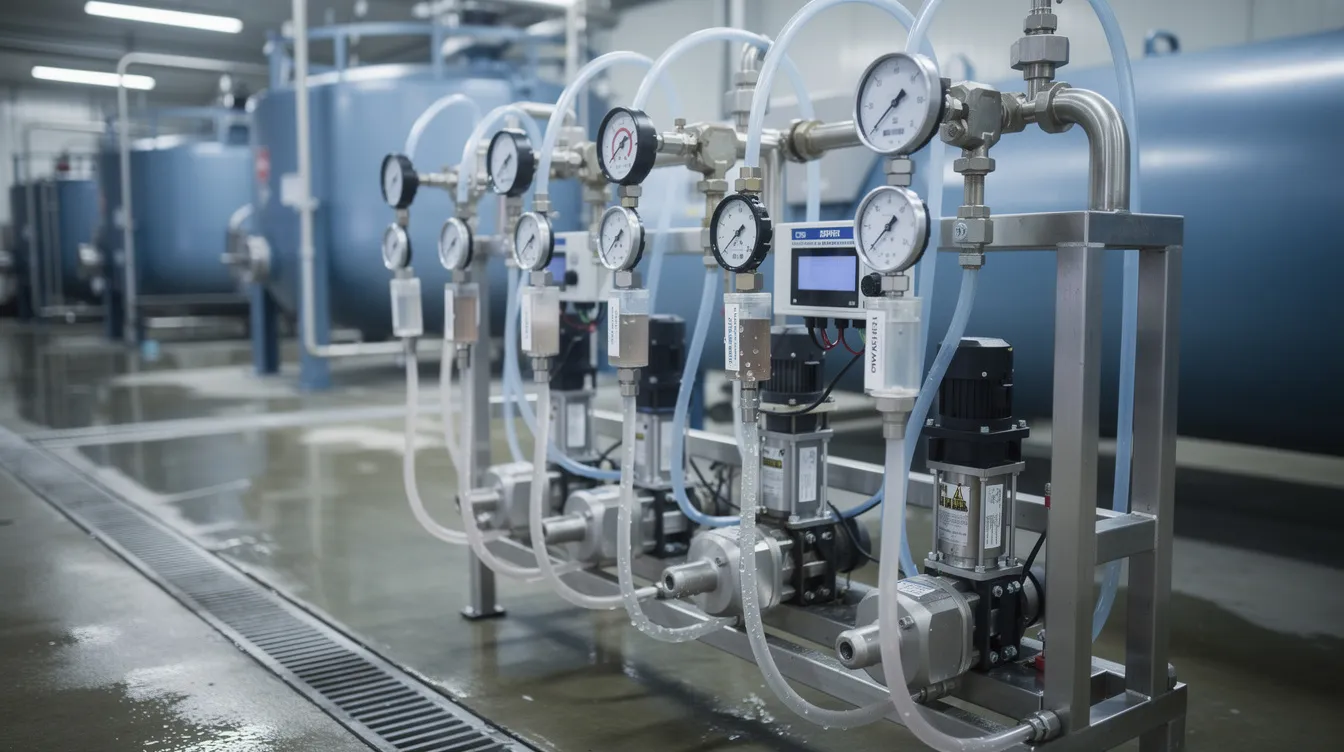
How Chemical Dosing Pumps Work
Chemical dosing pumps operate as positive displacement pumps designed to deliver specific, highly accurate chemical volumes. Their main function is to inject precise amounts of chemicals into water, gas, or steam streams at controlled rates. These pumps maintain accuracy regardless of fluctuations in pressure, temperature, or flow conditions, ensuring consistent chemical injection for effective treatment.
Key components such as the diaphragm, check valve, and stroke length work together to control the flow and prevent backflow, enhancing reliability. Additionally, stroke speed and turndown ratio allow for fine adjustment of dosing rates to meet various chemical dosing applications. Common types include diaphragm metering pumps, peristaltic pumps, and chemical injection pumps, each suited for different industries and fluid types.
Key Applications in Water Treatment Systems
Chemical dosing pumps serve various applications in water treatment, each targeting specific treatment goals. The following table summarizes common uses:
| Application | Chemicals Used | Purpose |
|---|---|---|
| pH Control | Acids, alkalis | Prevent scaling, corrosion, and chemical inefficiency by maintaining optimal pH levels in water systems |
| Disinfection | Chlorine, peroxide | Control microbial growth and prevent harmful bacteria including Legionella, ensuring safe and hygienic water supplies |
| Coagulation/Flocculation | Ferric chloride, polyacrylamide | Aggregate suspended solids and impurities for easier removal during filtration and sedimentation processes |
| Scale & Corrosion Inhibition | Specialized inhibitors | Prevent mineral deposits and protect metal components from corrosion, extending equipment lifespan |
| Odor Control | Deodorizing agents | Manage and neutralize odors in sludge handling systems and wastewater treatment facilities |
| RO Antiscalant Injection | Antiscalant chemicals | Prevent membrane fouling and scaling in reverse osmosis systems, enhancing efficiency and longevity |
Why Precision Dosing Matters
Accurate chemical dosing is critical to achieving clean, safe, and compliant water that meets regulatory standards. Precision dosing enhances treatment effectiveness while lowering operating costs by minimizing chemical waste. It also ensures consistent water quality, avoiding issues caused by over dosing or under dosing chemicals.
Moreover, precise dosing reduces the risk of equipment damage and environmental impact by maintaining optimal chemical levels. This capability is essential across various industries and municipal applications where water treatment systems demand reliable and efficient chemical feed pumps for continuous operation.
Selecting the Right Chemical Dosing Pump
Choosing the appropriate chemical dosing pump depends on several factors:
- Flow Rate (GPH or GPD): Determine how much chemical is required per hour or per day based on dosage calculations specific to the treatment process. Pumps like the IX Series can handle up to 80 gallons per hour, while the LK Series offers capacities up to 856 gallons per hour for larger scale needs.
- Operating Environment: Consider temperature, maximum pressure, and chemical exposure tolerance to ensure pump reliability and longevity in water treatment applications.
- Chemical Type: Some pumps are specially designed to handle slurries, viscous liquids, or aggressive chemicals. Material compatibility is critical to prevent corrosion and wear.
- Control Mechanism: Electronic controllers and manual options allow for precise adjustments to dosing rates, enabling flexible operation tailored to specific system demands.
- Pump Design: Compact design models such as the EZ Series and EHE Series offer space-saving solutions without compromising performance, ideal for OEM applications and installations with limited space.
- Voltage and Power: Ensure the pump is powered with the correct voltage, typically 115VAC or 230VAC, to match the electrical supply and maintain consistent operation.
- Installation Requirements: Evaluate inlet and outlet configurations, mounting options, and ease of installation to integrate seamlessly into existing water treatment systems.
Selecting the right chemical dosing pump equipped with these features ensures optimal chemical feed accuracy, system efficiency, and durability in various water treatment applications.
Maintenance & Calibration Best Practices
Chemical dosing pumps are essential tools in water treatment systems, enabling the precise and controlled addition of chemicals necessary for effective water purification. These pumps play a crucial role in maintaining water quality by ensuring accurate dosing tailored to specific treatment needs.
- Calibrate chemical dosing pumps at least every three months using proper calibration equipment under normal operating conditions.
- Routine calibration helps identify and correct deviations in pump performance before affecting treatment quality.
- Document all calibration procedures and results thoroughly for troubleshooting and compliance.
- Regularly verify dosing accuracy and adjust parameters as needed to maintain precise chemical volumes.
- Train operators in correct calibration techniques and routine maintenance tasks.
- Implementing these best practices minimizes downtime and supports reliable, efficient chemical dosing in water treatment systems.
Safety Precautions for Chemical Dosing
Safe chemical dosing requires careful attention to several key areas:
- Water Analysis & Testing: Assess water composition before determining treatment chemicals and dosages.
- Safe Operation Guidelines: Follow proper chemical selection, handling, and dosing procedures.
- Precautions: Avoid over dosing, spills, and unsafe handling to protect personnel and equipment.
- Testing Procedures & Frequency: Conduct regular monitoring to verify treatment effectiveness.
- Responsible Personnel: Assign designated individuals for dosing and monitoring tasks.
- Remedial Actions: Establish steps to address incorrect dosing or system failures promptly.
Effective Chemical Dosing
Effective chemical dosing in water treatment depends on selecting the right chemical dosing pump, ensuring precision and accuracy, following maintenance best practices, and adhering to safety protocols. These factors work together to optimize treatment processes, reduce costs, and maintain water quality for municipal and industrial applications.
Frequently Asked Questions (FAQs)
What is a chemical dosing pump?
A chemical dosing pump is a device designed to inject precise volumes of chemicals into water or other fluid streams. It ensures accurate and controlled chemical delivery essential for various water treatment processes.
How do chemical dosing pumps maintain accuracy?
These pumps operate using positive displacement principles, where each pump stroke displaces a fixed amount of fluid. Components like the diaphragm and check valves prevent backflow and allow fine control over stroke length and speed, maintaining dosing precision.
What types of chemical dosing pumps are commonly used?
Common types include diaphragm metering pumps, piston pumps, and peristaltic pumps. Each uses different mechanisms, such as flexible diaphragms, pistons, or rollers, to deliver chemicals accurately based on application needs.
How do I select the right chemical dosing pump for my system?
Selection depends on factors like required flow rate, chemical compatibility, system pressure, control methods, and power supply. Considering these ensures the pump meets your water treatment requirements effectively.
How often should chemical dosing pumps be calibrated?
It is recommended to calibrate chemical dosing pumps at least every three months. Regular calibration ensures dosing accuracy, identifies performance deviations early, and maintains optimal water treatment quality.
What safety precautions should be followed when using chemical dosing pumps?
Safety involves proper chemical handling, water analysis before dosing, adherence to dosing guidelines, regular testing, and assigning responsible personnel. Following these precautions protects operators and maintains system integrity.
