
This article focuses on closed-loop water treatment specifically for HVAC systems, highlighting essential safety and regulatory standards to ensure compliant and effective treatment practices.
Proper water treatment in closed-loop HVAC systems is critical for preventing corrosion, scaling, and microbial growth, all of which can lead to costly repairs and system downtime. By implementing best practices in water quality monitoring, chemical treatment, and filtration, water treatment specialists can optimize system performance, extend equipment lifespan, and reduce operational expenses. This comprehensive guide provides knowledge to manage these complex systems confidently, ensuring long-term reliability and compliance with industry regulations.
Key Takeaways
- Closed-loop HVAC systems require sealed operation to minimize oxygen exposure and corrosion risks.
- Maintaining balanced water chemistry is essential for preventing scale, corrosion, and microbial contamination.
- Glycol concentration and condition monitoring are critical for freeze protection and system longevity.
- Effective filtration and air management hardware help remove solids and gases that degrade system performance.
- Automation and remote monitoring enhance treatment accuracy and reduce manual maintenance.
- Limiting make-up water and managing blowdown conserve water and reduce contaminant introduction.
- Compliance with environmental regulations and proper chemical disposal safeguard facility and community health.
Overview of Closed Loop Systems and Water Treatment
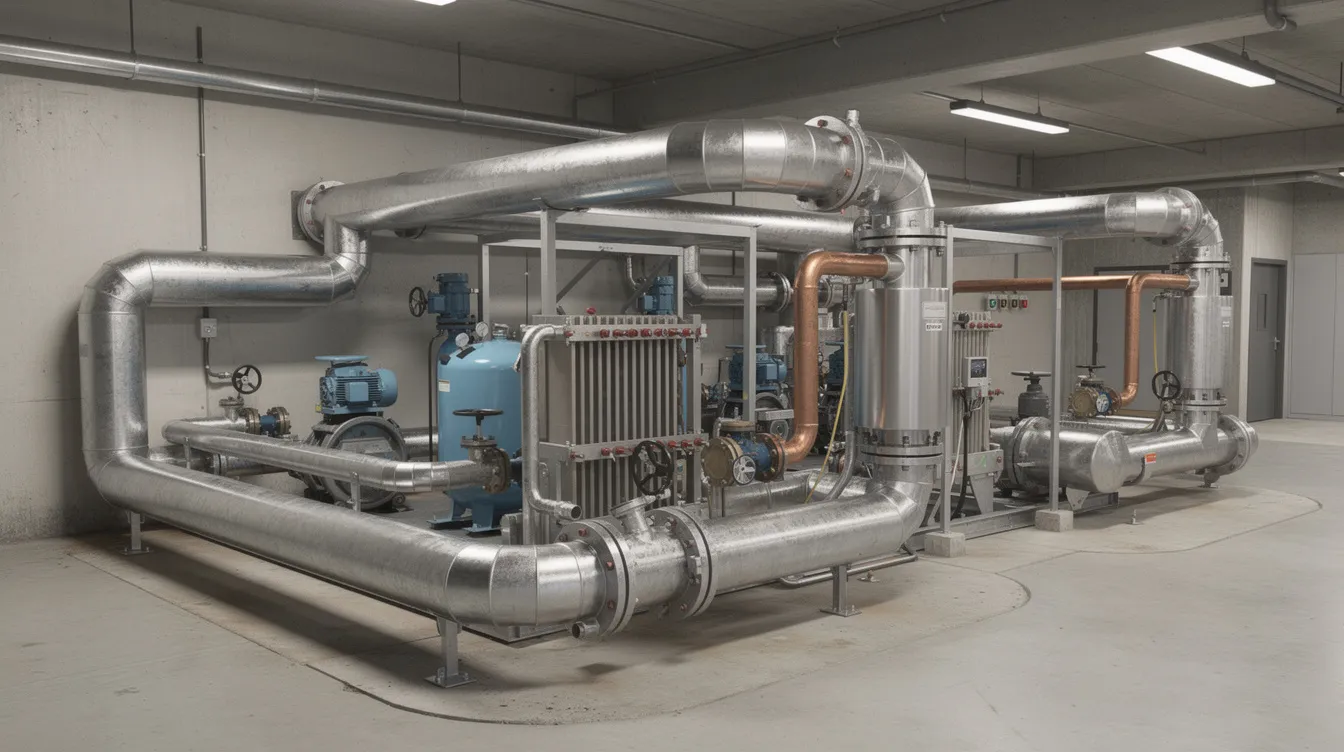
Closed-loop systems circulate water or glycol mixtures within a sealed piping network to transfer heat for heating or cooling purposes. Unlike open cooling tower systems, the loop must remain sealed within the building piping network because oxygen introduction can rapidly accelerate corrosion. This also also reducing contamination risks. Common heat-exchange fluids include treated water, ethylene glycol, and propylene glycol, selected based on freeze protection and system requirements. These closed-loop systems are common in commercial and industrial applications, including hot water systems, and may operate between 4 to 150ºC.
Cooling Towers Versus Closed Loop System Risks
Cooling towers are more susceptible to contamination from airborne particles, biological growth, and suspended solids due to their open nature. Closed-loop systems minimize these risks but can still support bacteria if water quality declines, while also facing internal challenges such as corrosion and microbial growth. Avoid cross-contamination between cooling towers and closed loops, especially when connecting to campus chilled water loops, because untreated water can contain harmful Legionella that can cause severe illness in humans. Approval steps and strict protocols are essential before interfacing these systems.
Key Water Quality Parameters for Closed Loop Water Treatment
Maintaining proper water chemistry is critical for system longevity. Target hardness should range between 85 and 250 ppm to prevent scaling from calcium and magnesium deposits. In cooling systems scale acts as an insulator that reduces heat transfer efficiency. Total dissolved solids (TDS) must remain below 2000 ppm to reduce corrosion risk. Fouling refers to the accumulation of scale and suspended solids. Control the pH within 7.5 to 10.0 for optimal inhibitor performance. Chloride levels must stay under 250 ppm to avoid pitting corrosion. Minimize dissolved oxygen to prevent oxidative damage.
Pre-Commissioning Cleaning and Commissioning for Closed Loop System
Before chemical dosing, pre-commissioning cleaning should follow a structured process to remove debris, organic material, and construction residues from piping and heat exchangers. Magnetic separators are recommended. The loop should be properly filled and circulated during cleaning because proper filtration supports the removal of magnetite, other ferrous particles, and residual solids. Technicians should test the water samples to verify cleanliness and chemistry before approval, followed by an inspection with the water treatment laboratory to approve commissioning.
Chemical Treatment Programs for Closed Loop Water Treatment
Selecting appropriate corrosion inhibitors is essential to treat system metals, and molybdate-based inhibitors are a leading option for non-glycol systems. Non-oxidizing biocides are preferred to control microbial growth because oxidizing biocides such as chlorine are not typically used in closed-loop systems. Unchecked growth can restrict water flow and create health hazards. Scale inhibitors reduce mineral deposits that impair heat transfer. Filming amines offer additional protection, especially in mixed-metal systems containing aluminum. All chemical treatments require proper documentation and approval to ensure safety and compliance.
Glycol Management and Chemical Treatment for Loop Systems
Maintain glycol concentrations between 30% and 50% for effective freeze protection. Check the concentration against the product’s inhibitor package, as common closed-loop formulations may contain nitrite, molybdate, or phosphate. Annual testing of glycol condition helps detect degradation, which can cause pH to drop over time and lead to microbial growth and corrosion. Maintain molybdate residuals around 150 ppm, and nitrate levels at approximately 1500 ppm to inhibit corrosion in glycol systems.
Filtration, Air Management, and Loop System Hardware
Bag filters sized according to system volume are necessary because proper filtration hardware keeps the loop free of suspended material. Magnetic separators installed at low points capture iron oxides and magnetite. Air separators help eliminate entrained gases that accelerate corrosion. Sample and injection points should be located on accessible piping to facilitate monitoring and dosing across chilled water systems and other closed-loop circuits.
Monitoring, Sampling, and Chemical Control
Establish sampling points for each loop circuit, with routine sampling used to test key parameters, regular testing frequencies, and record retention to track water quality trends and confirm chemical concentration remains within target ranges. Online conductivity or TDS sensors provide real-time monitoring to help control maintenance costs by catching deviations early, while pH probes with automatic calibration ensure accurate chemical dosing.
Online Automation and Remote Monitoring for Water Treatment
You can configure automated systems with alarm thresholds for critical parameters, enabling remote data logging and trend export. Automatic dosing interlocks help maintain chemical levels within target ranges, reducing manual intervention and improving treatment consistency.
Make-Up Water, Blowdown, and Water Conservation
Make-up water must meet strict quality criteria to avoid introducing contaminants. In closed-loop systems serving a building, limit annual make-up volume so water losses stay under 10% of the total system volume. Controlled blowdown procedures help manage water quality without excessive losses. Pretreatment methods such as softening or reverse osmosis improve make-up water quality through removal of contaminants from incoming water before it enters the loop.
Cooling Tower Interfaces and Hybrid Loop Considerations
When cooling towers interface with closed loops, enforce separation protocols to prevent contamination. Permits for tower blowdown discharge are required to comply with environmental regulations. Biocide controls are critical when towers feed heat exchangers to inhibit biological growth, helping protect occupants and the surrounding community while reducing the risk of legal liabilities tied to health code violations from poor cooling tower maintenance.
Environmental Impact, Chemical Disposal, and Compliance
Adhere to discharge permits and reporting obligations when disposing of treatment chemicals. Disposal and discharge practices must also protect the environment. Safety Data Sheets (SDS) and complete chemical formulations should be submitted for approval, and only approved chemicals and methods should be utilized for compliance. Chemical disposal requires neutralization to minimize environmental impact. Spill response plans and environmental reporting procedures ensure regulatory compliance.
Specification Language, Documentation, and Training
Sample specification clauses help standardize closed-loop water treatment requirements. Treatment records binders at treated systems facilitate documentation and audits. Operator training on dosing, sampling, and monitoring is vital for effective program execution. Vendor approval and product evaluations maintain treatment quality.
Cost, Risk Management, and Troubleshooting
Lifecycle costs depend on the benefits of proper treatment chemicals, monitoring, and maintenance frequency to reduce lifecycle expense. Elevated corrosion rates require prioritized corrective actions because corrosion or fouling can destroy heat exchangers and other components if left unchecked. A troubleshooting checklist assists in identifying common faults such as scaling, microbiological fouling, or chemical imbalances. Escalation procedures for microbiological events help manage risks proactively.
Optimizing HVAC Water Treatment for Closed-Loop Systems
Effective HVAC water treatment for closed-loop systems is essential to maintain system efficiency, reduce operational costs, and extend equipment life. By understanding key water quality parameters, implementing proper treatment chemicals, and utilizing appropriate filtration and air management hardware, specialists can ensure optimal system performance. Regular monitoring, automation, and adherence to environmental regulations safeguard both facility operations and occupant health. Continuous education and adherence to industry standards empower water treatment professionals to manage risks, prevent costly repairs, and deliver reliable, long-lasting closed-loop HVAC systems.
If you have questions on HVAC water treatment for closed-loop system, contact our team today for tailored services.
Frequently Asked Questions (FAQs)
What is HVAC water treatment for closed-loop systems?
HVAC water treatment for closed-loop systems involves managing water quality to prevent corrosion, scaling, and microbial growth within sealed piping networks that circulate water or glycol mixtures for heating and cooling.
Why is water treatment important in closed-loop HVAC systems?
Proper water treatment prevents costly mechanical failures, maintains heat transfer efficiency by controlling scale and fouling, extends equipment lifespan, and reduces operational money spent on repairs and downtime.
How often should water quality be monitored in closed-loop systems?
Water quality parameters such as hardness, pH, total dissolved solids, and chloride levels should be monitored regularly, typically on a monthly basis, with glycol condition checked at least annually.
What are common chemical treatments used in closed-loop HVAC systems?
Common treatments include molybdate-based corrosion inhibitors, non-oxidizing biocides to control microbial growth, scale inhibitors, and filming amines for enhanced protection, especially in mixed-metal systems.
How does filtration contribute to closed-loop water treatment?
Filtration removes suspended solids, iron oxides, and magnetite that can cause fouling and blockages, helping to maintain efficient water flow and heat exchange in the system.
What role does glycol play in closed-loop systems?
Glycol protects against freezing in HVAC systems, typically maintained between 30% and 50% concentration. Its condition must be monitored annually to prevent degradation that can lower pH and encourage corrosion.
How much make-up water is acceptable in closed-loop systems?
Make-up water losses should be minimized, ideally kept under 10% annually, to prevent introducing contaminants that can accelerate corrosion and scaling.
What are the risks of not treating closed-loop HVAC water?
Untreated water can lead to accelerated corrosion, scale buildup acting as an insulator reducing heat transfer efficiency, microbial fouling including Legionella growth, increased operational money spent on repairs, and potential health hazards.
Can HVAC water treatment be automated?
Yes, automated systems with online sensors and dosing pumps can maintain chemical levels within target ranges, reduce manual intervention, and provide remote monitoring and alarms for early issue detection.
How does HVAC water treatment impact environmental compliance?
Proper treatment ensures safe chemical disposal, adherence to discharge permits, and minimizes environmental impact by using approved chemicals and following regulatory guidelines.
