
When it comes to improving water quality, understanding the difference between a water softener vs. filter is essential. Water softeners primarily remove hardness minerals like calcium and magnesium to prevent scale buildup, while water filters target contaminants such as chlorine, lead, PFAS, and bacteria to make water safer and better-tasting. This article explores the core differences between these systems, guides you on when to choose each, and explains the benefits of combining both for comprehensive water treatment.
Key Takeaways
- Water softeners focus on eliminating minerals that cause hardness, protecting plumbing and appliances from scale damage.
- Water filters target a wide range of impurities to enhance water safety, flavor, and clarity.
- Neither system alone addresses all water quality issues; combining them often yields the most comprehensive results.
- Proper maintenance and regular water testing are essential to maximize the effectiveness of both systems.
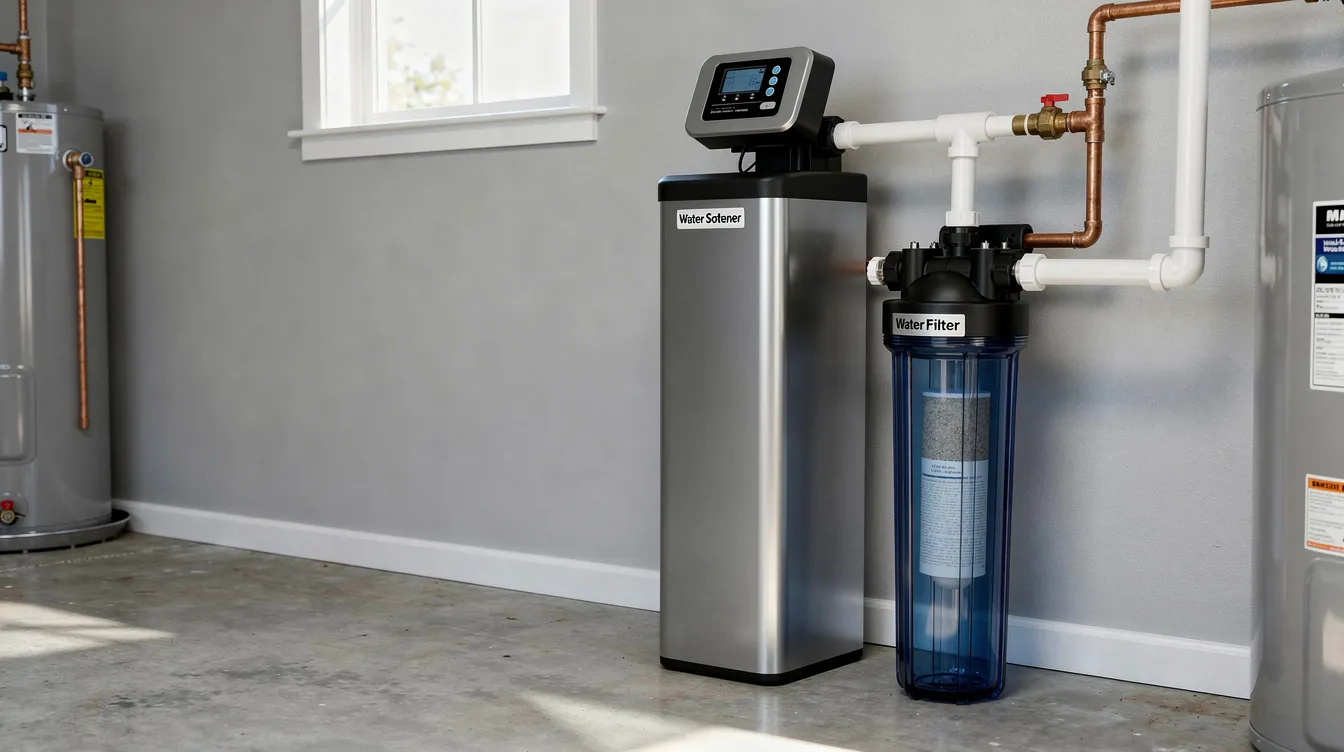
Core Differences at a Glance
Here’s a quick comparison to highlight the main distinctions between water softeners and water filters:
| Feature | Water Softener | Water Filter |
|---|---|---|
| Main job | Remove hardness ions | Remove particles, metals, chemicals |
| Target contaminants | Calcium, magnesium, small iron | Lead, arsenic, chlorine, PFAS, bacteria, sediment |
| Technology | Ion exchange resin + brine | Media beds, carbon, membranes |
| Maintenance | Salt refills every few weeks | Cartridge/membrane replacement |
| Adds to water? | Trace sodium/potassium | Usually none |
| Best for | Scale control, appliance protection | Health safety, taste/odor improvement |
| Installation location | Whole-house (main line) | Whole-house or point-of-use |
| Typical lifespan | 12–15 years | 5–15 years (varies by type) |
How Water Softeners Work
Water softeners operate through a process called ion exchange. Inside the system, resin beads coated with sodium ions attract and swap these for calcium and magnesium ions present in hard water, which contains dissolved minerals, mainly calcium and magnesium. This exchange removes the hardness minerals responsible for scale buildup. Periodically, the resin beads are regenerated using a brine solution (a mix of salt and water) that cleans and recharges the beads for continued effectiveness.
Hard water is generally considered hard above 7 GPG, or over 7 grains per gallon of minerals.
While water softening in a water softener system effectively removes calcium, magnesium, and trace iron (less than 2 ppm), they do not eliminate chlorine, lead, bacteria, PFAS, or sediment from the water.
When to Choose a Water Softener
If you notice any of the following signs, a water softener may be the best solution:
- White scale buildup on fixtures, shower doors, and dishes
- Spots on glassware after washing from mineral deposits, and sometimes residue on dishes or clothing
- Dry or itchy skin and brittle hair
- Reduced soap lather and detergent effectiveness, which can leave soap scum and residue behind
- Appliance damage or shortened lifespan, especially in a water heater
The benefits of softening your water include preventing scale buildup in pipes and appliances like water heaters and dishwashers, reducing detergent use by up to 30%, and improving skin and hair health by providing soft water that protects appliances. Even 1/8 inch of limescale in a water heater can raise energy use by about 30%.
Softened water typically contains about 12.5-25 mg of sodium per 8-ounce glass.
How Water Filters Work
Water filtration systems use various technologies to remove contaminants and improve tap water quality:
- Sediment filters trap particles such as rust, dirt, sand, and rust particles.
- Activated carbon filters adsorb chlorine, chloramine, and improve water taste and odor.
- Specialty filters target specific contaminants like iron, arsenic, or manganese.
- Reverse osmosis (RO) systems use a semi-permeable membrane to reject 90-99% of dissolved solids, heavy metals, and other impurities. These osmosis filters are also commonly installed as an RO system for broader purification.
Unlike softeners, water filters do not remove hardness minerals like calcium and magnesium but instead reduce contaminants to improve water safety and quality.
When to Choose a Water Filter
Start with a water test before choosing a filtration system or any other treatment, since testing water quality is essential to identify the right solution.
Consider a water filtration system if you want filtered water that prevents:
- Odd tastes or odors in your water
- Discoloration or cloudiness
- Concerns about health contaminants such as PFAS, lead, or arsenic
- High levels of chlorine or chloramine
- Rust stains or sediment visible in water
Filtration provides safer drinking water, better taste and odor, removal of harmful contaminants, and long-term health protection.
When Both Systems Are Needed
In many cases, combining a water softener and a whole house filter offers the best overall water quality. Here are common scenarios and recommended setups:
| Situation | System Setup |
|---|---|
| Hard water + bad taste/odor | Softener + carbon filter |
| Rust stains (high iron) | Iron filter → softener (iron filter first if >2 ppm) |
| Health contaminants + hard water | Softener + RO or specialty filter |
| Boiler feed water | Twin-tank softener for 24/7 operation |
| Food & beverage industry | Multimedia → carbon → softener → whole house filter |
Using both systems together protects your plumbing and appliances from scale while removing contaminants that softeners cannot handle, resulting in comprehensive water quality improvement. In whole-home setups, house water filters or a house filter may also be used to address contaminants beyond hardness.
Iron Filter vs Water Softener
When iron levels exceed 2 ppm, an iron filter becomes essential before installing a water softener. Iron filters chemically remove iron to prevent resin bead coating and system failure in the softener. Common media options for iron filtration include manganese greensand, Birm®, and air-injection systems, each designed to oxidize and trap iron particles effectively.
Water softeners can only exchange iron ions if levels are below 2 ppm and do not physically filter iron out of the water. Properly sequencing an iron filter before a water softener ensures both systems operate efficiently, protecting the entire house plumbing and appliances from damage caused by hard minerals and iron buildup.
Reverse Osmosis as the Finishing Step
Reverse osmosis (RO) systems provide a high level of purification by removing 90-99% of total dissolved solids, including heavy metals, dissolved salts, and other microscopic contaminants. RO is especially effective at producing great tasting drinking water by eliminating impurities that can affect flavor and safety.
Because RO membranes are sensitive and can foul quickly when exposed to hard water, it is crucial to install a water softener upstream to reduce water hardness before RO treatment. This combination helps extend the lifespan of the RO membrane and maintains system efficiency. Typically, RO serves as the final polishing step after water has passed through softening and carbon filtration stages, ensuring the highest quality water for drinking and cooking purposes.
Maintenance Requirements for Water Softeners and Water Filters
Maintaining your water treatment systems is key to ensuring their long-term effectiveness and efficiency. Proper upkeep helps prevent issues such as system failure, reduced water quality, and increased operational costs. Here’s what you need to know about maintaining water softeners and water filters:
| Task | Water Softener | Water Filter |
|---|---|---|
| Regular upkeep | Salt refills every 2–4 weeks | Cartridge replacement every 2–6 months |
| Annual service | Resin cleaning, valve inspection | Membrane cleaning (for RO) |
| Lifespan | 12–15 years | 5–15 years (varies by type) |
Compared with conventional softeners, salt free systems and water conditioners usually have different maintenance needs.
Choosing the Best Water Solution
Understanding the differences between a water softener and a water filter is vital for selecting the best water treatment solution. Water softeners excel at eliminating calcium and magnesium minerals to prevent scale buildup and protect appliances, while water filters remove a broad range of contaminants to improve water safety, taste, and odor. For many homes and businesses, using both systems in tandem offers the best protection and water quality. Contact our team today for expert advice and tailored water treatment solutions that meet your specific needs.
Frequently Asked Questions (FAQs)
What is the main difference between a water softener and a water filter?
A water softener removes hardness minerals like calcium and magnesium to prevent scale buildup, while a water filter removes contaminants such as chlorine, lead, sediment, and bacteria to improve water safety and taste.
Can I use a water softener and water filter together?
Yes, combining a water softener with a whole home filtration system is often recommended to address both hard water issues and contaminant removal for comprehensive water treatment.
Does a water softener remove chlorine or sediment?
No, water softeners do not remove chlorine or sediment. These contaminants are typically removed by water filters such as activated carbon or sediment filters.
Are reverse osmosis systems better than water softeners?
Reverse osmosis systems remove a wide range of contaminants including heavy metals and dissolved solids, but they do not soften water. Water softeners specifically target hardness minerals. Often, RO systems are installed after softeners to protect the membranes.
Will using a water softener improve skin condition?
Softened water can help reduce dry or irritated skin caused by hard water minerals, resulting in softer skin and hair.
Does water softening produce waste water?
Traditional salt-based water softeners generate some waste water during the regeneration cycle, which should be managed properly to minimize environmental impact.
Is softened water safe to drink?
Softened water typically contains low levels of sodium but is generally safe for most people. However, those on sodium-restricted diets should consult a healthcare professional.
Can a water filter remove hydrogen sulfide from water?
Certain specialty water filters can reduce hydrogen sulfide, which causes a rotten egg smell, improving water odor and safety.
How often should I maintain my water softener and filter?
Water softeners require salt refills every few weeks and periodic resin cleaning, while water filters need cartridge or membrane replacements every few months, depending on the type.
What causes dry skin related to water quality?
Hard water minerals can strip natural oils from the skin, leading to dry and irritated skin. Using a water softener can alleviate these symptoms.
