
Industrial water softener systems play a crucial role in maintaining efficient, long-lasting water systems for commercial and industrial facilities. This article provides clear, accessible guidance on the benefits, operation, and procurement of these systems. It will explore how soft water improves facility operations, reduce unnecessary wear on industrial equipment, and provide technical insights for selecting and maintaining the right system.
Key Takeaways
- Industrial water softener systems handle high-volume water treatment demands with robust, durable components.
- Ion exchange resin beds require regular regeneration and occasional maintenance to sustain optimal performance.
- Proper system design includes consideration of flow rates, resin volume, and salt usage for cost-effective operation.
- Professional installation ensures seamless integration with existing infrastructure and adherence to regulatory requirements.
What Is a Commercial Water Softener System
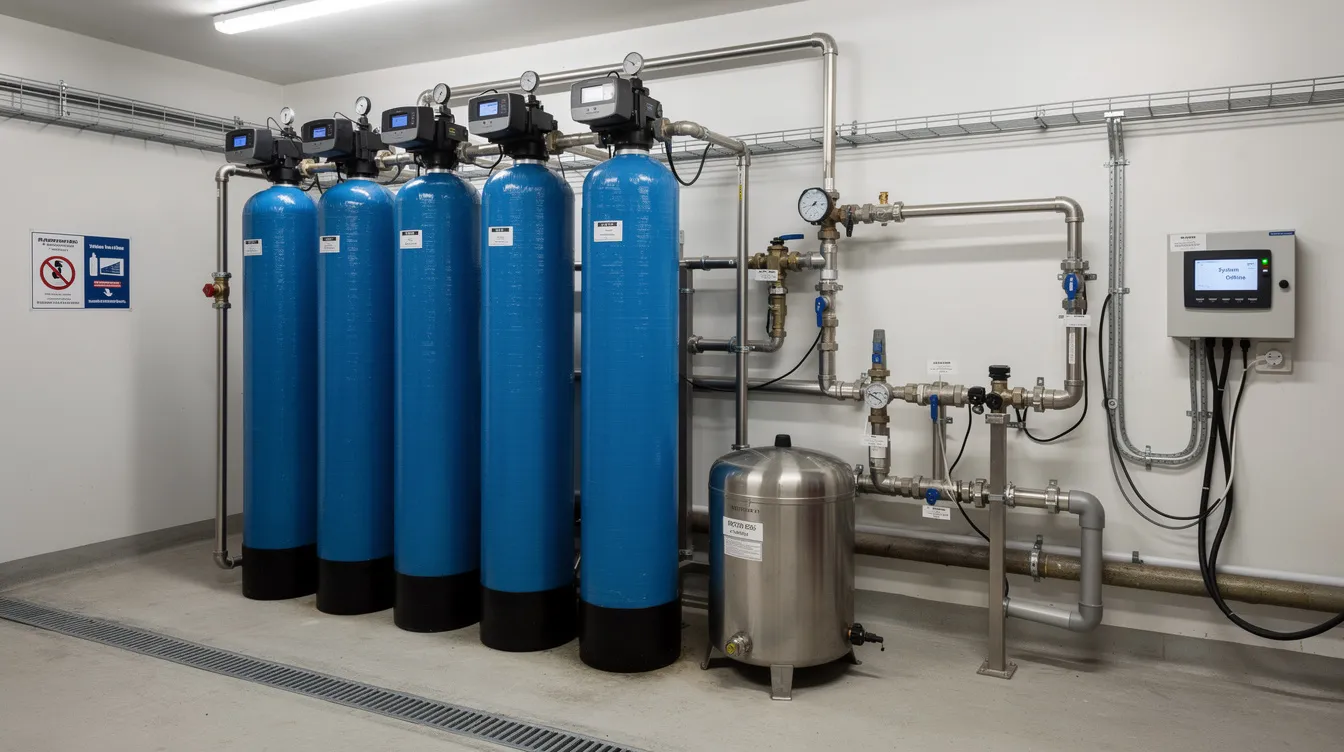
A commercial water softener system is an industrial-grade solution that removes hardness minerals like calcium and magnesium from water supplies. Unlike residential units that handle a few gallons per minute, the key difference is that commercial systems are built for greater capacity and durability, processing hundreds to thousands of gallons per hour for large-scale applications. Their primary objectives include preventing scale buildup, protecting process equipment, and improving overall water quality across the full installation, not just a single unit, for business operations.
Hard Water, Scale Buildup, and Operational Impacts
Hard water contains dissolved calcium and magnesium ions that precipitate as scale inside pipes, boilers, cooling towers, and other industrial equipment. This scale buildup reduces heat transfer efficiency, leading to higher energy costs and increased maintenance requirements. Over time, hard water causes premature equipment failure, unnecessary wear on fixtures, and costly downtime that can severely impact business productivity.
How Water Softening Works: Water Softening System Fundamentals
Water softeners operate on an ion-exchange principle, where calcium and magnesium ions are replaced with sodium ions on resin beads. As hard water passes through the resin bed, these hardness minerals are captured until the resin becomes saturated, triggering a regeneration cycle. This process restores the resin’s ability to soften water, ensuring continuous supply of high-quality soft water.
Ion-Exchange Process
The core of water softening is cation exchange, where calcium and magnesium ions swap places with sodium ions. During regeneration, brine solution flushes the resin beads, removing hardness minerals and replenishing sodium. Sensors measuring conductivity or hardness verify when resin exhaustion occurs, initiating automatic regeneration to maintain system effectiveness.
Resin Types and Fouling Mechanisms
Common resin types vary in chemical composition and operating ranges, tailored to specific water chemistries. Fouling by iron or organic compounds can impair resin performance, so pre-treatment such as filtration or oxidation is often recommended to protect the resin and extend system life.
Core Components of Industrial Water Softener System
Industrial water softeners consist of pressure vessels made from fiberglass, steel, or epoxy-coated steel, housing the resin bed. Control valves manage water flow and regeneration sequencing. Some advanced controls also use progressive flow to bring tanks online or offline based on demand. Brine tanks store salt solution for regeneration. Advanced telemetry and remote monitoring components enhance operational oversight, allowing real-time tracking of water usage and system status.
Sizing and Selecting Industrial Water Softeners
Proper sizing begins with calculating peak flow rates and daily grain capacity based on water usage and hardness levels. A safety factor accounts for simultaneous peak demand, while resin volume is selected to balance capacity with acceptable headloss. Verification flows and pressure-drop margins ensure efficient system design.
Flow Rate and Capacity Calculations
Converting gallons per minute to bed velocity helps determine the cubic feet of resin required for optimal operation. These calculations verify that the system can handle peak water usage without excessive pressure drop or reduced effectiveness.
Salt Efficiency and Regeneration Strategy
Choosing between time-clock and metered regeneration affects salt consumption and water usage. Optimizing salt dose per cubic foot of resin enhances salt efficiency, with options like brine reclaim systems available to reduce salt consumption by at least 25%, saving money and minimizing environmental impact.
Installation and Integration With Building Systems
Mainline installation typically includes a bypass configuration to allow maintenance without interrupting water supply. Having specialists install the system helps prevent costly errors in system sizing. Backflow prevention devices are required by code to protect potable water. Professional installation also minimizes downtime and operational disruptions during integration. Coordination with filtration systems ensures boilers and cooling towers receive properly softened water, preventing scale and corrosion.
Operation, Monitoring, and Maintenance of Water Softeners
Regular monitoring of hardness and flow rates verifies system performance. Maintaining salt inventory and scheduling refills prevent regeneration failures. Resin inspection and replacement intervals extend system life, while alarms alert operators to operational issues requiring immediate attention and prompt service.
Troubleshooting Scale, Iron, and Resin Issues
Identifying scale buildup sources and fouling patterns helps target corrective actions. Iron fouling is detected through declining resin performance, prompting chlorination or acid cleaning procedures. When cleaning is insufficient, resin replacement restores system effectiveness.
Comparing System Types: Tank Exchange vs Self-Regenerating
Soft water tank exchange services provide flexibility without upfront investment or maintenance responsibilities, ideal for some businesses. Self-regenerating systems offer continuous on-site soft water supply and greater control, suitable for facilities with consistent water usage and space for installation.
Environmental, Regulatory, and Discharge Considerations
Regulations govern brine discharge volumes and concentrations, requiring dilution or reuse strategies to comply with local limits. Large-capacity installations may need permitting and coordination with authorities to ensure environmental compliance.
Ensuring Long-Term Success with Water Softeners
Industrial water softener systems are essential for protecting equipment, improving operational efficiency, and reducing maintenance costs in commercial and industrial facilities. By thoroughly analyzing water chemistry, assessing site conditions, and customizing system design, water treatment specialists can deliver tailored solutions that meet specific client needs. Proper selection and installation of these systems ensure long-term reliability and cost savings, ultimately enhancing overall business performance.
For expert guidance and support with your water treatment challenges, contact our team today. We offer comprehensive services to help you select, install, and maintain the ideal water softening system for your facility.
Frequently Asked Questions (FAQs)
What is the main difference between industrial and residential water softener systems?
An industrial water softener system is designed for much higher flow rates and larger capacities, processing hundreds to thousands of gallons per hour, whereas residential systems handle only a few gallons per minute. Industrial systems are built with more durable components and advanced controls to support continuous operation in commercial and industrial settings.
How does ion exchange remove hardness minerals from water?
Ion exchange works by exchanging calcium and magnesium ions, which cause hardness, with sodium ions on resin beads inside the softener tank. As hard water passes through the resin bed, hardness minerals adhere to the beads, and sodium ions are released into the water, effectively softening it.
Why is professional installation important for industrial water softeners?
Professional installation ensures proper system sizing, compliance with local codes, and correct integration with existing building systems. It prevents costly errors, minimizes downtime, and often comes with warranties that protect your investment, ensuring the system operates efficiently and reliably over time.
Can industrial water softeners help reduce operational costs?
Yes, by preventing scale buildup, industrial water softeners improve equipment efficiency, reduce maintenance and repair needs, and extend equipment lifespan. They also lower energy consumption and chemical usage, potentially saving businesses millions of dollars annually.
What are the options for industrial water softener configurations?
An industrial water softener system can be custom designed with various configurations such as simplex, duplex, triplex, or even larger multiplex setups. Some use twin-alternating tanks for continuous soft water supply, while others incorporate progressive flow controls to optimize operation based on demand.
How often should the resin in a water softener be replaced or maintained?
Resin lifespan varies depending on water quality and usage but typically lasts several years. Routine monitoring for fouling or loss of capacity is essential. When performance declines due to fouling by iron or organics, cleaning or replacement of resin is recommended to maintain system effectiveness.
What environmental considerations are involved with industrial water softeners?
Brine discharge from regeneration cycles must comply with local regulations, often requiring dilution or treatment before disposal. Some systems incorporate brine reclaim technologies to reduce salt usage and minimize environmental impact.
Are there alternatives to self-regenerating water softeners for industrial use?
Yes, soft water tank exchange services provide an alternative by delivering pre-regenerated soft water tanks to facilities. This eliminates the need for onsite regeneration equipment and maintenance, offering flexibility for businesses that prefer not to invest in or manage self-regenerating systems.
