
A closed loop system is a water circulation setup where the same water continuously flows through pipes, heat exchangers, and equipment without exposure to the external environment. This design conserves water and maintains high water quality by minimizing contamination and evaporation.
Closed loop water treatment offers numerous benefits for HVAC cooling systems. By recirculating the same water, these systems reduce water consumption and energy use, prevent scale formation and corrosion, and limit microbial growth. Proper treatment ensures efficient heat transfer and extends equipment life, ultimately lowering maintenance costs and operational downtime.
Key Takeaways
- Closed loop water systems circulate the same water continuously, reducing water use and contamination risks.
- Effective water treatment prevents corrosion, scaling, and microbial growth, which can impair system performance.
- Monitoring key water quality parameters like pH, TDS, and chlorides is essential for maintaining system health.
- Regular maintenance, testing, and system optimization reduce downtime and operational costs.
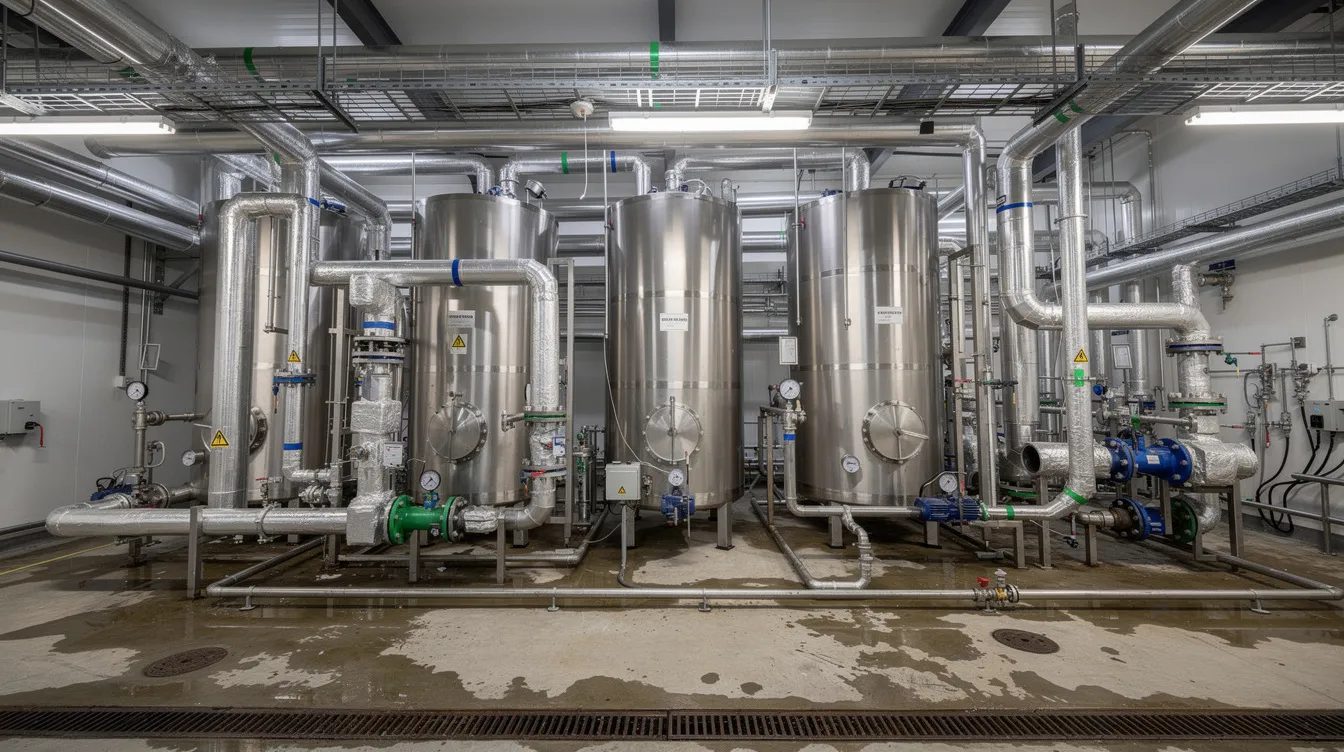
Closed Loop System Basics for Cooling Systems and Chilled Water Systems
Closed loop systems rely on several key components to function effectively. Pumps circulate water through the system, moving it through heat exchangers and heat-producing equipment. Common pump failure modes include mechanical seal wear and cavitation, which can lead to leaks or reduced flow. Heat exchangers transfer heat between the closed loop water and another fluid, maintaining the desired temperature without mixing fluids.
Surge tanks serve as reservoirs to accommodate water volume changes caused by temperature fluctuations, preventing pressure spikes. Expansion devices, such as expansion tanks or bladder tanks, absorb thermal expansion to protect piping and equipment integrity.
Unlike open loop systems, which require a continuous supply of fresh water, closed loop systems recirculate the same water and typically require less than 5% makeup water annually, significantly reducing water consumption and contamination risks. The following comparison table summarizes key differences, including that closed loop systems are more energy efficient than open systems:
| Feature | Closed Loop System | Open Loop System |
|---|---|---|
| Water flow | Recirculates same water | Fresh water intake and discharge |
| Water consumption | Minimal makeup water needed | Continuous makeup water required |
| Contamination risk | Low | High |
| Maintenance frequency | Lower | Higher |
| Energy efficiency | Higher | Lower |
Key Components of Closed Loop Water Systems
Key components essential for maintaining closed loop water systems include:
- Pumps and their mechanical seals, which are critical for maintaining flow and preventing leaks.
- Heat exchangers that enable efficient heat transfer without mixing fluids, protecting system components.
- Surge tanks that manage water volume changes caused by temperature fluctuations.
- Filtration options such as side-stream filters that remove suspended solids to prevent scale buildup.
- Magnetic and dirt separators that capture iron oxide and other debris, protecting pipe surfaces and heat transfer surfaces.
Typical HVAC Closed Loop Water System Configurations
Common closed loop configurations include chilled water systems for air conditioning, hot water systems for heating, and closed water loops in generators and boilers, as well as broader industrial processes. Chilled water systems typically feature a network of pipes circulating water through air handlers and heat exchangers, maintaining precise temperature control. Generators and boilers use closed water loops to efficiently manage heat produced during operation. Similar closed circuit systems are valued because recirculation limits contamination and makes water chemistry easier to manage. Power plants also use closed recirculating systems for reliable cooling water service and heat removal.
Water Quality and Treatment Programs for Closed Water Systems and Closed Loop Water
Maintaining high quality water is essential to proper water treatment in order to prevent corrosion, scale formation, and biofilm buildup. When it is maintained, closed loop systems also help prevent mineral deposition and biological fouling. Critical water parameters to monitor include pH, total dissolved solids (TDS), hardness, chlorides, and dissolved oxygen levels, with TDS kept below 2000 ppm and chloride levels below 250 ppm to help prevent corrosion and support system performance.
Corrosion control aims to prevent metal degradation that can reduce equipment life and increase maintenance costs. Scale control focuses on minimizing mineral deposits that reduce heat transfer efficiency. Biofilm control targets microbial growth that can lead to biological fouling and system inefficiency.
Initial laboratory tests should assess baseline water chemistry, including hardness, alkalinity, and microbial content. Regular testing frequencies vary by system. Closed systems usually need less frequent treatment than open systems, but untreated systems still deteriorate without ongoing monitoring. For this reason, monthly pH and chemical level checks and quarterly comprehensive water analyses remain important.
Chemical Treatment Options for Closed Loop Water
Effective chemical treatments for closed loop water systems include several key inhibitors and biocides designed to protect system components and maintain water quality:
- Molybdate inhibitors provide effective corrosion protection in mixed-metal systems at 200-300 ppm, offering thermal stability and compatibility with various water qualities.
- Nitrite inhibitors at 600-1200 ppm inhibit iron and steel corrosion but may require biocides to prevent microbiological growth, as nitrites can be oxidized by bacteria.
- Higher nitrite programs may also require acid feed for pH control to maintain system stability.
- Filming amines form protective layers on metal surfaces, reducing corrosion and improving system life.
- Non-oxidizing biocides are preferred to minimize chemical degradation and maintain inhibitor effectiveness.
- Monitoring glycol breakdown is important in systems using glycol for freeze protection, as degradation can lower pH and promote corrosion.
Molybdate inhibitors are recommended for systems containing steel, copper, and aluminum because these corrosion inhibitors provide broad protection, have regulatory acceptance, and are selected to limit galvanic corrosion in mixed-metal closed systems. Chromate inhibitors, while effective, face regulatory limits and environmental concerns. Chromate treatments typically range from 500-1000 ppm for corrosion control. Maintaining target pH ranges between 7.0 and 9.5 is critical to maximize inhibitor performance and prevent corrosion, especially for aluminum components sensitive to high pH.
Filtration, Side-Stream Treatment, and Mechanical Controls in Closed Systems
Side-stream filtration provides proper filtration to maintain water quality and system efficiency by continuously removing suspended solids, reducing scale formation and fouling. Magnetic separators efficiently capture iron oxide and magnetic debris, while dirt separators remove larger particulate matter. Air removal devices, such as air separators and deaerators, eliminate dissolved oxygen and entrained air that can accelerate corrosion, while cleaner water and tighter solids control support efficient operation.
Filtration Best Practices for Closed Loop Water Systems
Filters should be sized to handle a bypass ratio of approximately 10-20% of total system flow, balancing effective solids removal without excessive pressure drop. Cartridge filters require regular replacement, typically every 3 to 6 months, depending on system conditions. Online particle monitoring can provide real-time data on suspended solids, enabling proactive maintenance.
Monitoring, Testing, and Automation for Closed Loop Water Systems
Routine testing includes monitoring pH, conductivity, TDS, hardness, chlorides, and dissolved oxygen. Sampling frequencies depend on system size and criticality but generally range from weekly to monthly. Key sensors for continuous monitoring include pH probes, conductivity meters, and dissolved oxygen analyzers, while automation provides better control of chemical feed and operating conditions. Data logging and alarm systems help detect deviations early and keep operations running smoothly by enabling timely corrective actions. Alarm thresholds should be set based on water chemistry targets to prevent corrosion, scale, and microbial growth.
Common Problems in Closed Loop Systems and Troubleshooting
Indicators of corrosion include pitting, leaks, increased metal ion concentrations in water, and metal loss from galvanic attack when dissimilar metals are present. Fouling signs include reduced heat transfer efficiency, pressure drops, and visible deposits on heat exchanger surfaces. Root-cause investigations involve water testing, visual inspections, and equipment performance analysis. Prompt troubleshooting helps avoid costly repairs and increased operational costs. Corrective cleaning actions may include chemical descaling, flushing, and biocide treatments. Flushing procedures should remove accumulated debris and restore water quality before reintroducing treatment chemicals.
Microbiological Issues in Closed Loop Water Systems
Biofilm detection can involve microbiological sampling, ATP testing, and visual inspections. A stepwise mitigation plan includes system flushing, biocide application, and ongoing monitoring. Biocide efficacy testing ensures the chosen chemicals effectively control microbial populations without damaging system components.
Maintenance, Commissioning, and Start-Up for Closed System Treatment
Pre-commission cleaning is part of proper chemical treatment at startup, including flushing the system to remove debris and contaminants and the initial addition of water treatment chemicals. Passivation procedures establish protective oxide layers on metal surfaces before operation. Initial inhibitor dosing should be based on system volume and water chemistry targets. A startup test checklist includes verifying chemical concentrations, pH, flow rates, and temperature control, while also identifying broken heads and other freeze-related damage in systems using glycol or similar freeze-protection measures.
Optimization, Energy, and Water Conservation for Closed Loops
Heat recovery opportunities can improve energy efficiency and overall system performance by capturing waste heat for reuse, while variable frequency drive (VFD) tuning and pump trimming optimize energy consumption by matching flow rates to system demand. Minimizing makeup water helps conserve water, supports efficient operation, and limits the introduction of contaminants, lowering operational costs.
Compliance, Safety, and Environmental Considerations for Closed Water Systems
Operators must comply with discharge regulations and chemical reporting requirements. Personal protective equipment (PPE) is essential for safe chemical handling. Proper storage, labeling, and handling procedures prevent accidents. Maintaining detailed records and preparing for audits ensures regulatory compliance and supports continuous improvement.
Expert Support for Your Closed Loop Water Treatment Needs
Closed loop water treatment is vital for maintaining the efficiency, reliability, and longevity of HVAC systems and other industrial applications. By implementing proper water quality management, chemical treatments, and filtration strategies, you can prevent corrosion, scaling, and microbial growth that threaten metallic surfaces and system performance. Optimizing your closed loop system ensures energy savings, water conservation, and reduced maintenance costs across the entire system.
If you are looking to enhance your closed loop water treatment program or need expert guidance tailored to your cooling towers, industrial facilities, or HVAC systems, our team of is here to help. Contact us today to develop a customized solution that delivers optimal performance and protects your valuable equipment for years to come.
Frequently Asked Questions (FAQs)
What is closed loop water treatment in HVAC systems?
Closed loop water treatment involves maintaining and treating water that continuously circulates within a closed piping system, such as in HVAC cooling or heating systems. This treatment prevents corrosion, scale buildup, and microbial growth, ensuring efficient heat transfer and prolonging equipment life.
How does closed loop water treatment differ from open loop treatment?
Closed loop systems recirculate the same water with minimal makeup water, reducing contamination and water consumption. Open loop systems continuously intake fresh water and discharge used water, which increases maintenance needs and chemical treatment requirements.
Why is chemical treatment important in closed loop systems?
Chemical treatments inhibit corrosion, control scale formation, and prevent microbial fouling. Proper dosing of inhibitors like molybdate, nitrite, and biocides helps protect metal surfaces and maintain system efficiency.
How often should water quality be tested in closed loop systems?
Routine water testing is typically performed monthly to monitor parameters such as pH, total dissolved solids (TDS), hardness, chlorides, and dissolved oxygen. Regular testing helps detect issues early and maintain optimal water quality.
What are common problems in closed loop water systems?
Common issues include scaling, corrosion, microbiological growth leading to biofouling, and the accumulation of black magnetic iron oxide deposits. These problems can reduce heat transfer efficiency and damage system components if left untreated.
How can makeup water affect closed loop systems?
Makeup water should be limited to less than 5% of the total system volume annually to minimize the introduction of contaminants and dissolved oxygen, which can increase corrosion and microbial growth.
What role does filtration play in closed loop water treatment?
Filtration removes suspended solids, iron oxide, and debris that can cause blockages or scaling. Side-stream filters, magnetic separators, and dirt separators are commonly used to maintain water cleanliness and system performance.
Can glycol be used in closed loop systems?
Yes, glycol solutions are often used for freeze protection. However, only inhibited glycol fluids should be used, as uninhibited glycol is corrosive. Monitoring glycol concentration and breakdown is essential to prevent corrosion and microbial growth.
How does closed loop water treatment contribute to energy efficiency?
By maintaining clean water with minimal scaling and corrosion, closed loop water treatment ensures efficient heat transfer, reducing energy consumption. Additionally, closed systems require less makeup water and allow for better temperature control, further improving efficiency.
What maintenance practices help optimize closed loop water systems?
Regular water testing, chemical treatment adjustments, filtration maintenance, equipment inspections, and periodic flushing help prevent buildup and corrosion, ensuring reliable operation and extending system lifespan.
