
Water treatment in industrial facilities is evolving rapidly, driven by regulatory pressures, sustainability goals, and technological advancements. This article explores the top trends shaping industrial water treatment, highlighting practical implications for facility managers tasked with ensuring efficient, compliant, and cost-effective operations.
Key Takeaways
- Industrial water treatment is increasingly driven by the need for regulatory compliance and sustainability across various industries.
- Emerging technologies focus on enhancing flexibility, energy efficiency, and contaminant removal capabilities.
- Digital tools and AI are transforming operational management, enabling proactive and data-driven decisions.
- Modular and decentralized systems provide scalable solutions that align investment with demand growth.
- Resource recovery not only supports environmental goals but also creates economic benefits by turning waste into valuable inputs.
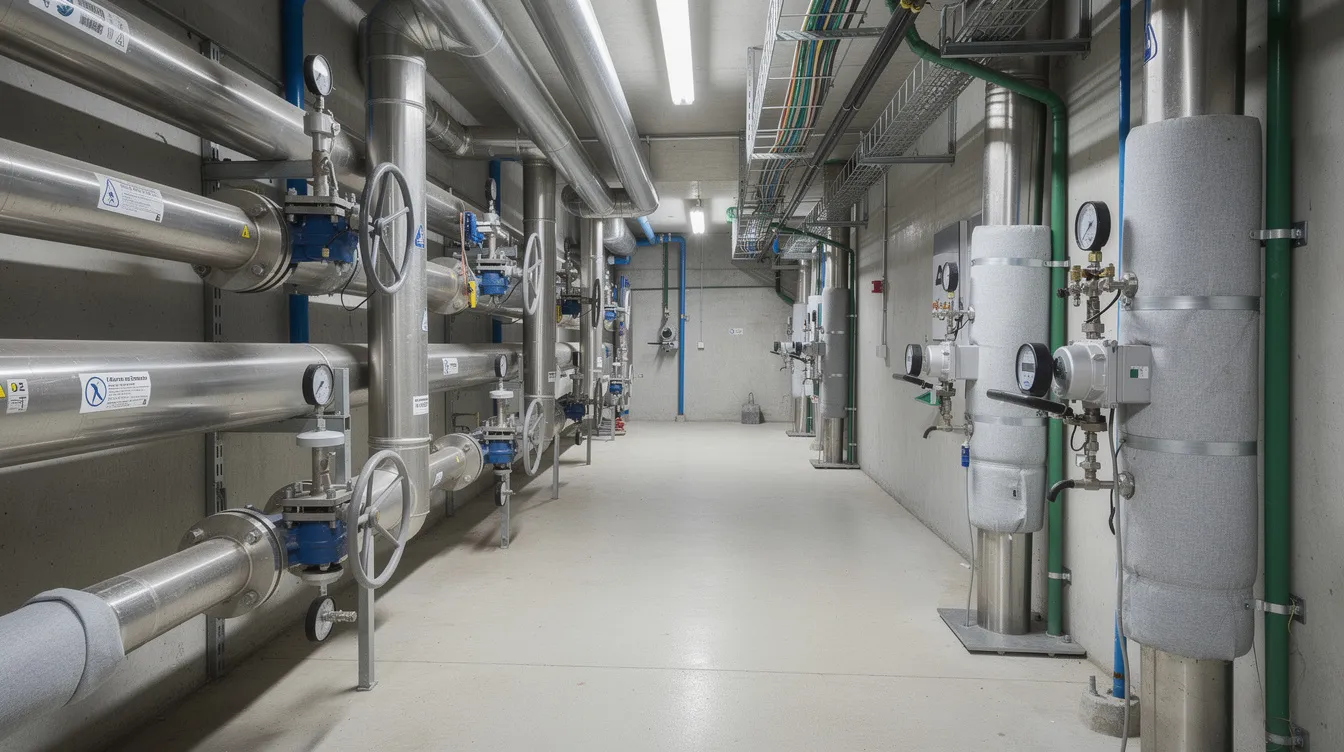
Industry Drivers: Wastewater Management and Environmental Sustainability
The global water treatment market is being shaped by rising demand for water and wastewater treatment across industry, especially as facilities work to improve water quality, protect safe water supplies, expand fresh water access, and treat diverse water sources in water stressed regions. Water scarcity, climate change, and population growth are adding regulatory pressure to adopt new and emerging technologies, while many municipalities face similar upgrade demands. During the forecast period, the global water treatment market is projected to reach $536 billion by 2030 and $809.5 billion by 2040.
Sustainability goals are increasingly tied to operational key performance indicators (KPIs), promoting resource recovery projects that support water reuse, enable wastewater reuse for nonpotable applications, and create economic incentives. These drivers underscore the importance of integrating strategies that align with broader corporate responsibility and compliance, including wastewater treatment upgrades and additional treatment where needed.
Treatment Technologies: Reverse Osmosis, Activated Carbon, and Membranes
Industrial water treatment relies on a core set of technologies tailored to specific contaminants and operational demands. Regulatory pressure is intensifying around wastewater treatment as nitrogen and phosphorus limits become stricter and often require additional treatment to improve water quality. Noncompliance can lead to fines and reputational damage.
Reverse osmosis (RO), activated carbon adsorption, and membrane filtration form the backbone of many treatment systems, supported by advanced technologies and modular systems that enable faster deployment, better monitoring, and flexible integration. Facility managers must balance capital expenditures with ongoing operating costs, treatment efficacy, process efficiency, and energy consumption while removing contaminants. Sustainability goals are also driving increased water reuse and wastewater reuse, reducing withdrawals from freshwater sources and preventing aquatic contamination. Many municipalities are adopting these strategies as water scarcity grows.
Reverse Osmosis (RO): Energy, Recovery, and Contaminant Removal
RO operates by forcing water through semipermeable membranes to remove dissolved solids and contaminants. Although energy-intensive compared to some alternatives, RO offers superior contaminant removal and enables significant water recovery. Key trends include AI integration, decentralized systems, eliminating PFAS, reducing energy consumption, and using RO within zero liquid discharge strategies. Effective pretreatment reduces membrane fouling and extends system lifespan, improving cost efficiency.
Activated Carbon: Adsorption Tactics for Contaminant Removal
Activated carbon, available in granular and powdered forms, is widely used to adsorb organic compounds and micropollutants. Regeneration options and disposal methods vary depending on carbon type and contaminant load. Pilot testing is recommended to tailor activated carbon use to specific industrial contaminants, optimizing performance and minimizing waste.
Nanofiltration and Membranes: Boosting Reuse and Water Recovery
Nanofiltration membranes provide selective removal of divalent ions and larger organic molecules, offering advantages over RO in energy consumption and fouling resistance. Optimized cleaning protocols and pretreatment improve membrane longevity. Facility managers should evaluate membrane types based on water quality goals and process integration.
Advanced Oxidation and Disinfection: Tackling Emerging Contaminants
Advanced oxidation processes (AOPs) utilize reactive species like hydroxyl radicals to break down complex organic pollutants, including emerging contaminants. Integration with ultraviolet (UV) disinfection enhances treatment efficacy. Proper design balances oxidation capacity with operational costs.
Biological Treatment and Bio-Remediation: Resource Recovery
Biological treatment methods, including anaerobic digestion, support resource recovery by converting organic waste into biogas and facilitating nutrient recovery. Tracking performance indicators such as biogas yield and nutrient capture rates helps optimize these systems, contributing to energy efficiency and sustainability goals.
Energy Efficiency and Decarbonization in Treatment Systems
Given the energy-intensive nature of many water treatment processes, conducting energy audits is critical to identify optimization opportunities. Integrating waste-to-energy technologies can reduce net energy consumption and greenhouse gas emissions. Monitoring carbon intensity through standardized metrics supports decarbonization efforts and regulatory reporting.
Digitalization and Smart Treatment Systems
Installing real-time water quality sensors enables proactive management and rapid response to process deviations. Pilot projects leveraging artificial intelligence (AI) for predictive maintenance can improve equipment reliability and reduce downtime. Establishing robust data governance ensures integrity, while staff training builds capacity to utilize digital tools effectively.
Modular and Decentralized Treatment Systems: Flexibility and Scalability
Modular water treatment systems offer flexibility and scalability, allowing phased deployment aligned with demand. Their compact design facilitates site selection in constrained industrial environments, while smart and remote monitoring systems deliver real-time data for water and wastewater treatment. AI supports proactive maintenance to reduce downtime. The water quality monitoring market is expected to reach $9.6 billion by 2032. Adopting modular solutions accelerates project timelines and improves cost efficiency.
Resource Recovery and Sustainable Water Treatment: Making Wastewater an Asset
Wastewater streams can yield valuable by-products such as nutrients, biogas, and treated water suitable for reuse in industrial processes like cooling. The modular water treatment market is projected to reach $10.1 billion by 2030. Decentralized treatment systems can expand capacity faster than centralized systems. Treated effluent offsets fresh water demand in nonpotable uses such as industrial cooling. Economic analyses often show favorable returns on nutrient recovery investments. Partnering with technology providers and downstream users enhances valorization and supports circular economy principles.
Contaminant Removal Strategies for Emerging Pollutants
Emerging contaminants such as per- and polyfluoroalkyl substances (PFAS), pharmaceuticals, and endocrine disruptors require prioritized monitoring and targeted treatment. Microplastics monitoring strengthens contaminant management, ensuring compliance with evolving regulations and protecting water quality.
Removal strategies combine advanced oxidation processes (AOPs) to break down persistent chemicals, specialized activated carbon adsorption to capture micropollutants, and membrane filtration technologies like nanofiltration and RO to separate contaminants effectively. Integrating these with smart monitoring enables real-time detection and adaptive treatment adjustments, improving overall efficacy. Combining biological and chemical treatments enhances degradation and resource recovery, making water treatment more sustainable and responsive to emerging impacts.
Securing Clean Water, Resilience, and Long-Term Value
Industrial facilities must embrace evolving water treatment trends to secure clean water supply, enhance resilience, and generate long-term value. Practical next steps include conducting energy audits, piloting digital tools, exploring modular system deployment, and prioritizing resource recovery. For tailored solutions and expert guidance, contact our team to advance your facility’s water treatment capabilities.
Frequently Asked Questions (FAQs)
What are the key water treatment trends gaining traction in industrial facilities?
Key water treatment trends gaining traction include modular and decentralized systems, digitalization with AI-enabled monitoring, energy-efficient technologies, advanced contaminant removal methods such as nanofiltration and advanced oxidation processes, and resource recovery strategies that promote sustainability and circular economy principles.
How can industrial facilities improve efficiency in water treatment?
Industrial facilities can improve efficiency by conducting energy audits to identify high-energy processes, adopting energy-efficient treatment technologies, integrating waste-to-energy solutions, implementing real-time digital monitoring for predictive maintenance, and utilizing modular systems that allow scalable and flexible deployment aligned with demand.
What is the environmental impact of modern water treatment technologies?
Modern water treatment technologies reduce environmental impact by minimizing energy consumption, lowering greenhouse gas emissions through decarbonization efforts, enabling water reuse to reduce freshwater withdrawals, recovering valuable resources from wastewater, and effectively removing emerging contaminants to protect ecosystems and public health.
How do modular and decentralized water treatment systems benefit industrial facilities?
Modular and decentralized systems offer flexibility and scalability, enabling phased investment and rapid deployment. They reduce reliance on large centralized infrastructure, lower capital costs, improve site adaptability, and support quicker responses to changing water demand or regulatory requirements, enhancing operational resilience.
What role does digitalization play in the future of industrial water treatment?
Digitalization enables real-time water quality monitoring, predictive maintenance through AI, optimized treatment process control, and enhanced data-driven decision-making. These capabilities improve operational reliability, reduce downtime, and support compliance with tightening environmental regulations.
How are emerging contaminants like PFAS addressed in industrial water treatment?
Emerging contaminants such as PFAS are addressed through advanced treatment strategies including targeted activated carbon adsorption, advanced oxidation processes, membrane filtration like nanofiltration and reverse osmosis, combined with continuous monitoring to ensure effective removal and regulatory compliance.
Why is resource recovery important in sustainable water treatment?
Resource recovery transforms wastewater from a disposal problem into a valuable asset by extracting nutrients, biogas, and reusable water. This supports sustainability goals, reduces environmental impact, lowers operational costs, and aligns with circular economy principles by turning waste into resources for industrial reuse or energy production.
