
Water treatment plays a vital role in pharmaceutical manufacturing, ensuring the production of Purified Water (PW), Water for Injection (WFI), and other high-quality water grades that meet stringent regulatory standards.
This article offers practical guidance to navigate the complexities of pharmaceutical water treatment. From essential technologies like reverse osmosis and distillation to monitoring, validation, and wastewater management, we explore the key factors that influence system design and operation. Because water quality directly impacts product safety, efficacy, and environmental responsibility, mastering these processes is crucial for success in pharmaceutical production.
Key Takeaways
- Pharmaceutical water treatment integrates multiple purification technologies to meet diverse quality requirements.
- Continuous water circulation and hygienic system design are essential to prevent contamination risks.
- Advanced wastewater treatment and recycling methods contribute to environmental sustainability and regulatory compliance.
- Vendor expertise and tailored solutions are critical for effective system implementation and long-term operation.
- Regular monitoring, validation, and maintenance ensure consistent water quality and product safety.
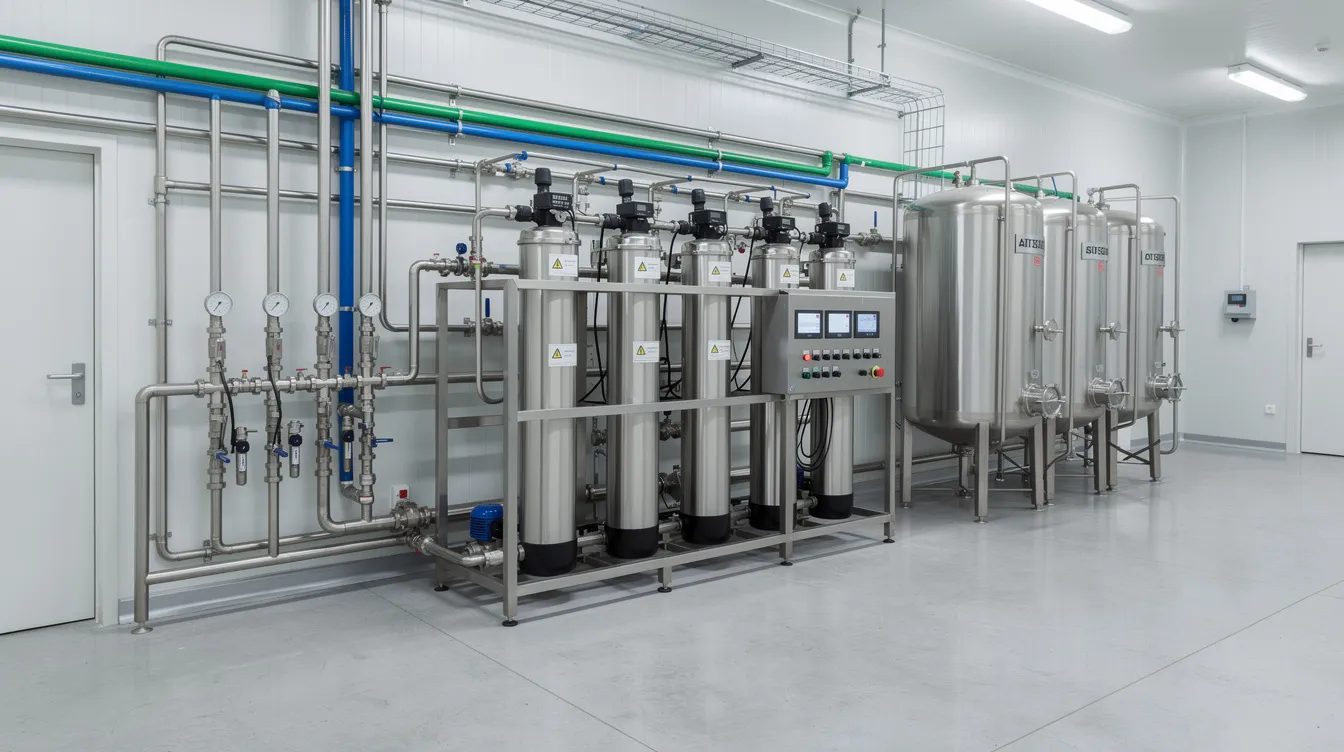
Purified Water Role in Pharmaceutical Production
Purified water serves multiple functions within pharmaceutical manufacturing, including as an ingredient in drug formulations and in the cleaning process for equipment. The scope of pharmaceutical water includes Purified Water (PW), Aqua Purificata (AP), Water for Injection (WFI), and other pure water grades, each with specific quality requirements. The quality of water directly influences pharmaceutical processes, impacting product safety and efficacy.
Regulatory and Quality Requirements for the Pharmaceutical Industry
Pharmaceutical water must comply with strict standards set by pharmacopeias such as the United States Pharmacopeia (USP), European Pharmacopoeia (EP), and Japanese Pharmacopoeia (JP), and water treatment systems must ensure compliance with FDA and EMA guidelines. These regulations mandate thorough validation and documentation of the treatment process, with acceptance criteria and treatment processes used to maintain required quality attributes typically covering conductivity, total organic carbon (TOC), and microbial bioburden limits to ensure consistent water quality.
Sources of Contamination and Impacts on Drinking Water
Common sources of pharmaceutical contaminants in water include human excretion, industrial discharge, and septic systems, which pose point-source risks. These contaminants can reach downstream drinking water supplies, raising concerns about groundwater contamination and patient safety. Municipal wastewater treatment plants and other treatment plants are generally built for conventional pollutants, so traditional systems are not designed to remove pharmaceuticals effectively. Unused medicines should never be flushed down the drain because they can affect downstream water supply quality.
Core Treatment Technologies: Reverse Osmosis and Alternatives
Reverse osmosis (RO) is widely employed for its effectiveness in removing dissolved solids and contaminants. Ultraviolet disinfection deactivates bacteria and viruses in water. Alternatives such as distillation, electrodeionization (EDI), and granular activated carbon (GAC) filtration are also used. Pall Corporation focuses on sterilization filtration for pharmaceutical applications, while Evoqua specializes in EDI technology for high-quality deionized water. These technologies vary in purity levels achieved and energy consumption, with hybrid systems often preferred to optimize performance and operational costs.
Reverse Osmosis System Design for Pharmaceutical Manufacturing
Effective RO system design includes proper feedwater pre-treatment to protect membranes, selection of suitable membrane types and configurations, and setting design parameters like recovery rates and flux. Sanitization strategies, including chemical or thermal methods, are crucial. Chemicals may be used in chemical sanitization to protect system integrity and support reliable operation, along with provisions for RO bypass and redundancy to ensure continuous operation. Pharmaceutical water systems should keep water treated and circulating continuously to prevent stagnation.
Distillation, EDI, and Ion Exchange for Purified Water
Distillation remains essential for producing WFI due to its high purity standards. EDI systems are commonly coupled with RO permeate polishing to maintain ionic control, while mixed-bed ion exchange polishing addresses trace dissolved salts. These treatment methods collectively ensure the water meets stringent pharmaceutical requirements.
Purified Water and WFI Production Processes
Pharmaceutical water production involves mapping PW and WFI streams, with continuous generation preferred for consistent quality. Continuous generation supports consistency throughout the production process and helps maintain the integrity of treated water delivered to points of use. Loop materials such as stainless steel and hygienic design principles minimize contamination risks, supporting product safety.
Monitoring, Validation, and Control of Pharmaceutical Water
Continuous monitoring of conductivity and TOC is mandatory, supplemented by routine microbiological sampling and trending. Supervisory control and data acquisition (SCADA) systems provide alarms and logging capabilities, ensuring compliance and traceability.
Sampling Protocols and Validation Activities
Defined sampling points and frequencies support ongoing validation efforts. Validation tests cover chemical, microbial, and physical parameters, with acceptance ranges specified by regulatory guidelines. Comprehensive documentation templates facilitate commissioning and regulatory audits.
Removing Pharmaceuticals from Waste and Reuse Streams
Advanced oxidation processes and GAC filtration reduce pharmaceutical residues and active pharmaceutical ingredients in waste streams. RO and nanofiltration (NF) further enhance pharmaceutical removal efficiency. Some wastewater treatment operations still struggle with compounds that resist standard treatment. Properly designed disposal or reuse pathways need effective treatment to control harmful chemicals before discharge or reuse.
Wastewater Management, Recycling, and Environmental Benefits
Recycling treated water reduces freshwater demand in pharmaceutical manufacturing while lowering operational costs and supporting sustainability goals. Advanced water recycling systems also support compliance with environmental regulations. Zero Discharge approaches address a major concern for sites facing strict wastewater regulations. Recycling initiatives offer significant environmental benefits and lifecycle savings in energy and water resources, aligning with environmental regulations.
Operation, Maintenance, and Lifecycle for Reverse Osmosis Systems
Regular membrane cleaning and timely replacement preserve RO performance over the system lifecycle. Sanitization routines control biofilm formation. Sanitation chemicals must be carefully selected and managed during maintenance, while trained operations staff respond promptly to alarms and maintain accurate records to ensure system reliability. Disciplined maintenance practices lead to more consistent compliance and product quality.
Risk Management: Septic Systems, Releases, and Compliance
Auditing on-site septic systems identifies potential leachate pathways. Modeling downstream contaminant concentrations informs risk assessments. Corrective measures and emergency response plans are essential to maintain compliance and protect the environment.
Supplier Selection and Procurement
Selecting vendors involves evaluating their experience with pharmaceutical water treatment systems, including validation and qualification support. Established providers like Herco Wassertechnik, with 80 years of experience, demonstrate strong performance. Clear communication of requirements ensures procurement aligns with production and regulatory needs.
Best Practices and Recommendations
Pilot testing before full-scale deployment helps identify potential issues early. A phased validation and handover plan ensures smooth transition to production. Continuous performance monitoring supports ongoing improvements in water treatment systems. For expert guidance and services in water treatment, contact our team to discuss your specific pharmaceutical manufacturing needs.
Frequently Asked Questions (FAQs)
What are the main types of water used in pharmaceutical manufacturing?
Pharmaceutical manufacturing primarily uses Purified Water (PW) and Water for Injection (WFI). PW is used for non-sterile processes and cleaning, while WFI meets higher purity standards required for sterile products and injections. Other grades like Aqua Purificata (AP) may also be used depending on regional regulations and specific applications.
Why is water treatment critical in pharmaceutical production?
Water treatment ensures that water meets stringent quality standards, preventing contamination that could compromise drug safety and efficacy. Proper treatment removes dissolved solids, microorganisms, endotoxins, and other impurities, supporting compliance with regulatory guidelines such as USP and EP.
How do reverse osmosis and distillation differ in pharmaceutical water treatment?
Reverse osmosis (RO) uses semi-permeable membranes to remove dissolved solids and contaminants, offering energy-efficient purification. Distillation involves vaporizing and condensing water to achieve very high purity, especially for Water for Injection (WFI). Both methods are often combined or selected based on purity requirements and operational considerations.
What challenges do wastewater treatment plants face regarding pharmaceutical contaminants?
Traditional wastewater treatment plants are generally not designed to remove pharmaceutical compounds effectively. Many pharmaceuticals pass through these plants and enter the environment, potentially contaminating downstream water sources. Advanced treatment technologies are necessary to reduce pharmaceutical residues in wastewater.
How can pharmaceutical manufacturers reduce water consumption and environmental impact?
Implementing water recycling and reuse systems reduces freshwater consumption and wastewater discharge. Technologies such as Zero Discharge systems and advanced oxidation processes help meet strict environmental regulations while supporting sustainability goals.
What role does monitoring and validation play in pharmaceutical water systems?
Continuous monitoring of parameters like conductivity, total organic carbon (TOC), and microbial counts ensures water quality remains within specifications. Validation activities confirm that treatment systems consistently produce compliant water, supporting regulatory compliance and product safety.
How do suppliers like Herco Wassertechnik and Evoqua support pharmaceutical water treatment?
Suppliers with extensive industry experience provide customized water treatment plants designed to meet pharmaceutical standards. For example, Herco Wassertechnik offers scalable systems with hygienic design and validation support, while Evoqua specializes in electro-deionization (EDI) technology for high-purity water production.
