
Understanding the parts of a water softener system is essential to design, install, and maintain efficient softening solutions. This article provides an overview of the main components, operational flow, maintenance considerations, and integration points of water softeners.
Key Takeaways
- Water softener systems rely on coordinated operation of the resin tank, brine tank, and control valve.
- Proper regeneration cycles restore resin bead capacity and maintain softening efficiency.
- Regular inspection of salt levels, valves, and drain lines prevents common operational issues.
- Bypass valves provide flexibility for maintenance without disrupting water supply.
- Using OEM or high-quality replacement parts ensures system reliability and longevity.
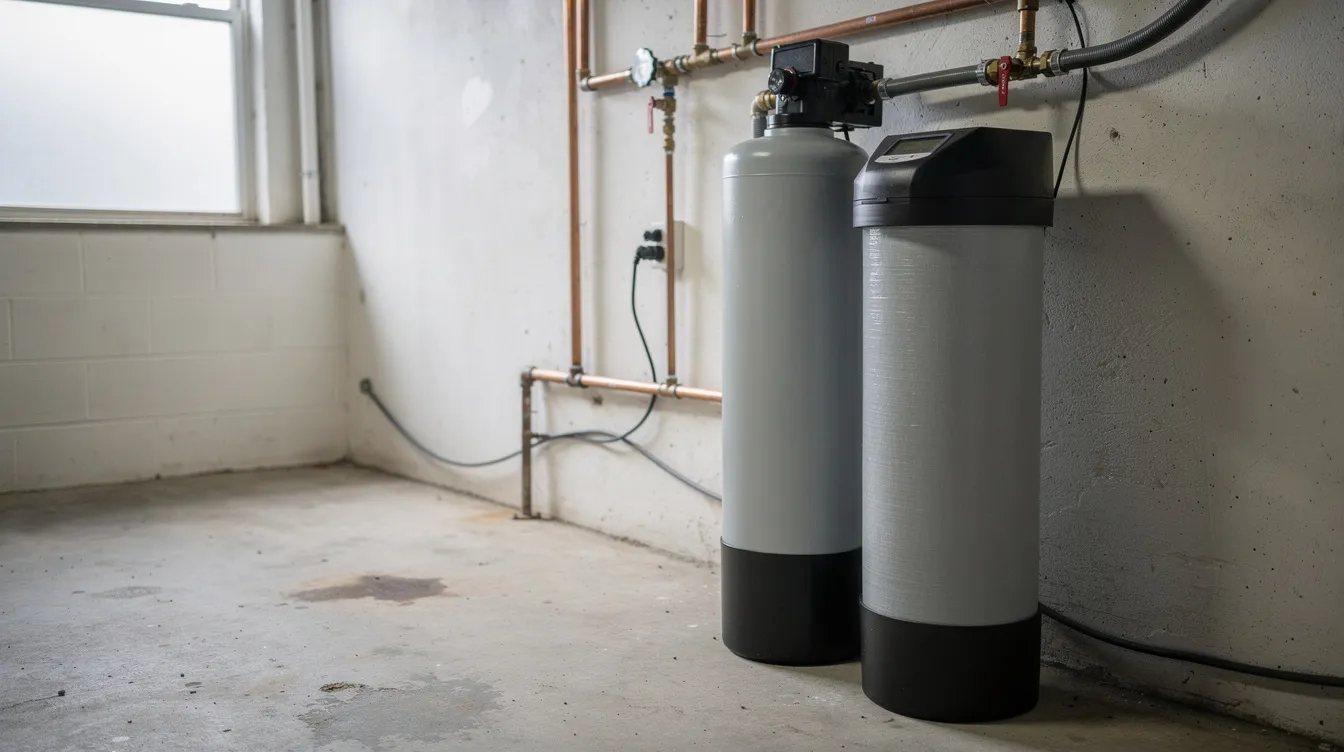
System-Level Overview of Water Softeners
A water softener system primarily functions to provide water softening for the entire home by removing hardness minerals, such as calcium and magnesium ions, from the water supply. This protects plumbing and appliances from scale buildup. Most water softener systems consist of three main assemblies: the resin tank, the brine tank, and the control valve. This complete softening system delivers high quality water and help protect household plumbing and appliances. Variants include compact integrated units combining these components, but the fundamental process remains consistent across designs.
Water Softener System Elements
The water softener system consists of several key elements that work together to remove hardness minerals from the water supply.
- The resin tank, filled with negatively charged resin beads, serves as the core softening chamber where ion exchange occurs.
- The control valve regulates water flow through the system and manages the timing of regeneration cycles.
- The bypass valve allows the system to be isolated for maintenance without interrupting the water supply.
- The brine tank stores salt and creates the brine solution necessary for regenerating the resin beads, connected to the resin tank via brine tubing.
- Drain lines equipped with an air-gap or discharge point safely remove wastewater containing hardness minerals during regeneration.
- Inside the resin tank, the distributor tube and central riser tube ensure even distribution and collection of water, optimizing the softening process.
Together, these components form the essential framework of a residential water softener system, designed to effectively reduce water hardness and protect household plumbing and appliances.
Resin Tank and Resin Beads
Resin tanks vary in size and are typically constructed from durable materials like fiberglass, and they’re commonly specified by gallons and grain capacity. As water passes through the resin bed, the resin beads perform ion exchange to capture calcium and magnesium ions while releasing sodium ions, effectively softening the water. The beads must regenerate after reaching their capacity limit. Fouling from iron, sediment, or impurities can reduce efficiency, necessitating pretreatment in some cases. Regular inspection and resin replacement, usually every 8 years, help maintain optimal performance.
Control Valve and Bypass Valve
The control valve acts as the system’s brain, directing water flow during normal softening and managing the regeneration cycle. Most control valves use timers or flow meters for efficiency. They typically regenerate at night when water usage is low. The bypass valve allows isolation of the softener from the plumbing during maintenance without disrupting the water supply. Monitoring for leaks, erratic regeneration, valve wear, or low water pressure is critical to sustaining system efficiency.
Brine Tank and Brine Components
The brine tank includes components such as the lid, brinewell, float assembly, and overflow to manage salt storage and brine solution creation. A standard brine tank often holds about 275 pounds of salt. During regeneration, the system draws brine from this tank to flush hardness minerals from the resin beads. When sized to fit demand, the brine tank supports the system in a cost effective way. Proper sizing of brine tubing and secure connections are essential for reliable operation. Regular cleaning and salt level checks prevent buildup and ensure consistent salt usage, since salt consumption varies based on softener size and water usage.
Drain Line and Air-Gap Requirements
Route drain lines with appropriate slope to facilitate wastewater flow during regeneration. Installation of code-approved air-gap fittings prevents backflow and contamination. Installers should also allow enough floor space for the softener equipment and service access. Check valves or backflow preventers may be required to maintain system integrity and comply with plumbing codes.
Water Softener Replacement Parts
Field service stocking should prioritize critical replacement components such as rotors, seals, injectors, O-rings, and filters as core water softener parts. Utilizing OEM parts ensures compatibility and durability. It helps confirm replacement components match the specific system, though high-quality aftermarket options may be considered. Providing part number cross-reference guides aids technicians in identifying correct components quickly.
Integration With Reverse Osmosis Systems
Reverse osmosis (RO) units typically connect downstream of the water softener to protect RO membranes from hardness minerals. Proper pretreatment and bypass sequencing are necessary to optimize both systems’ performance and longevity. Pre-filters can remove impurities before water enters downstream treatment equipment.
Maintenance, Troubleshooting, and Common Failure Modes
Routine checks of regeneration performance during regular use include verifying salt levels, inspecting drain lines for clogs, and monitoring water quality to catch declining performance early. Signs of resin fouling, such as reduced soft water output or increased hard water, require corrective actions like resin cleaning or replacement. Valve troubleshooting involves checking for leaks, ensuring proper cycle initiation, and testing electrical components. Documenting inspection results supports proactive maintenance.
Procurement, Inventory, and Field Service Tips
Maintaining a minimum inventory of spare parts tailored to typical installations minimizes downtime. Compatibility matrices organized by model simplify part selection. Labeling and storing critical fittings, tubing, and valves in an accessible manner enhances field service efficiency and reduces installation or repair times.
Maintaining Optimal Softener Performance
Understanding the parts of a water softener system is crucial for water treatment specialists to design, install, and maintain effective water softening solutions. Each component, from the resin tank and brine tank to the control valve and drain lines, plays a vital role in ensuring high-quality soft water that protects plumbing and appliances from the effects of hard water. Regular maintenance and timely replacement of key parts help sustain system efficiency and longevity.
If you need expert assistance with water treatment solutions or want to learn more about optimizing your water softener system, contact our team today. Our specialists are ready to provide tailored advice and service to meet your water treatment needs.
Frequently Asked Questions (FAQs)
What is the purpose of the resin tank in a water softener system?
The resin tank contains negatively charged resin beads that perform ion exchange by capturing hardness minerals like calcium and magnesium and replacing them with sodium ions, effectively softening the water.
How often should the resin beads be replaced?
Replace resin beads every 8 years to maintain optimal softening performance, as they become less effective due to fouling and saturation over time.
What role does the brine tank play in water softening?
The brine tank stores salt and creates a concentrated brine solution used during the regeneration cycle to flush hardness minerals from the resin beads, restoring their softening capacity.
Why is the control valve important in a water softener?
The control valve manages water flow through the system and controls the timing of regeneration cycles, ensuring efficient operation and consistent soft water output.
How does the bypass valve benefit the water softener system?
The bypass valve allows the system to be isolated for maintenance or repairs without interrupting the water supply to faucets and other household fixtures.
What maintenance is required for the brine tank?
Regularly checking salt levels, cleaning the tank annually to prevent buildup, and ensuring proper brine tubing connections are essential to keep the brine tank functioning efficiently.
How do drain lines and air-gap fittings contribute to system safety?
Drain lines remove wastewater during regeneration, and code-approved air-gap fittings prevent backflow contamination, ensuring safe and compliant system operation.
When should water softener parts be replaced or repaired?
Signs like reduced soft water quality, frequent regeneration, leaks, or unusual salt consumption indicate it may be time to replace or repair components such as resin, control valves, or seals. Regular inspections help catch issues early.
