
Ensuring safe and high-quality water in medical facilities is essential for patient care, regulatory compliance, and operational efficiency. This article provides an accessible overview of hospital water treatment systems, focusing on compliance with industry standards and practical design considerations for water treatment specialists.
Key Takeaways
- Hospital water treatment systems must address diverse applications, including dialysis, sterilization, and HVAC.
- Combining point-of-entry and point-of-use filtration optimizes water safety throughout the facility.
- Temperature and stagnation control are critical design elements to minimize pathogen risks.
- Routine testing and IoT-enabled monitoring enhance system reliability and early issue detection.
- Sustainable practices like water reuse contribute to operational efficiency and environmental goals.
Healthcare Facilities Water Quality Requirements
Hospitals must adhere to strict water quality standards to protect patients and support medical operations. The ANSI/AAMI ST108 standard, introduced in 2023, sets specific water quality requirements for medical device processing. Additionally, Water Infection Control Risk Assessment (WICRA) guidance outlines risk-based water management planning to prevent waterborne pathogens and contamination. Developing a comprehensive water management plan is critical to minimizing risks associated with microbial growth and pollutants in hospital water systems.
Hospital Water Treatment Systems Overview
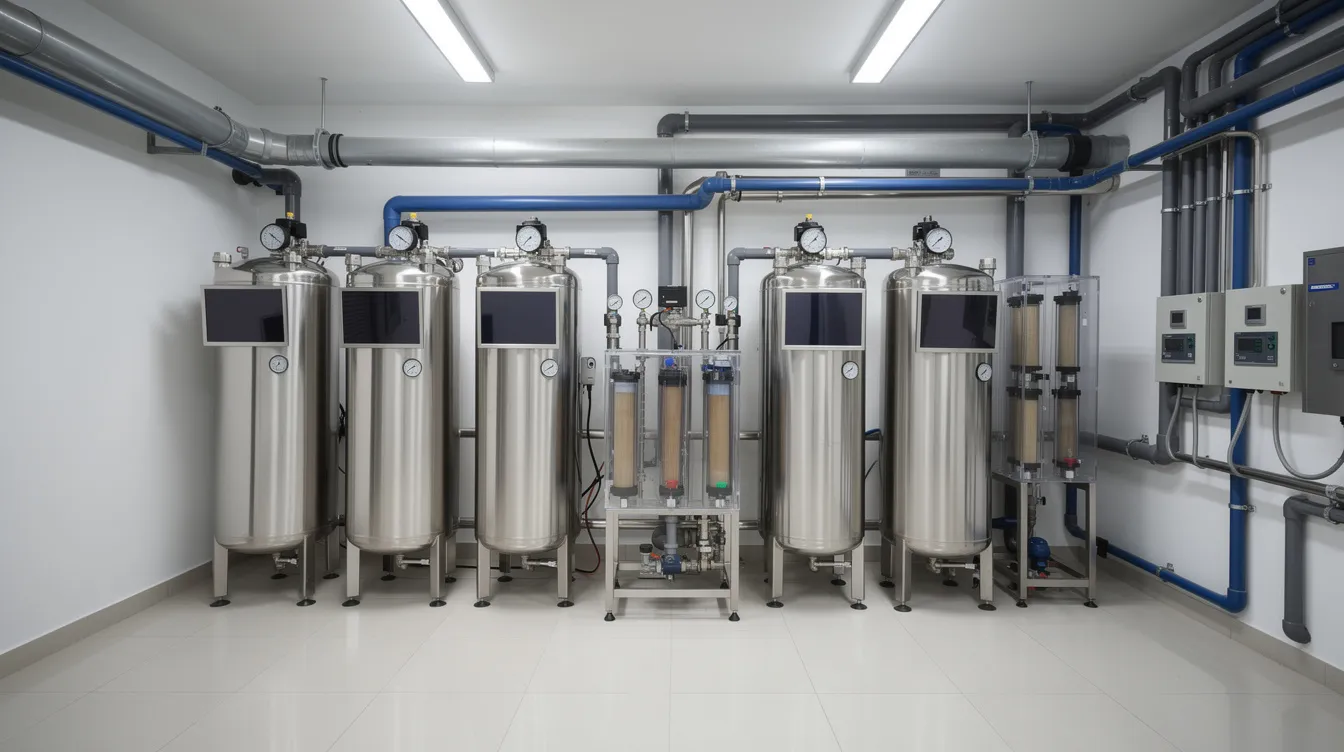
Hospitals utilize various water treatment systems tailored to their diverse needs. Common systems include reverse osmosis (RO) units for producing high purity water, filtration systems for removing contaminants, water softeners to prevent scale buildup, and ultraviolet sterilization to reduce microbial growth. Reverse osmosis systems play a vital role in supplying purified water for dialysis, sterilization, and laboratory applications. Water treatment strategies often combine point-of-entry filtration, which treats water entering the facility, with point-of-use solutions that ensure water quality at critical outlets like surgical instruments and ice machines.
Reverse Osmosis Systems and High Purity Water
Reverse osmosis operates by forcing water through semipermeable membranes, removing dissolved solids, ionic contaminants, and pollutants such as lead and chlorine. For clinical use, RO systems must achieve high purity water targets that meet stringent standards to protect patients and sensitive equipment. Hospitals use these systems to produce high purity water for critical applications, and routine testing for Legionella is a key part of overall water management. Prefiltration is essential to remove particulates before the RO membrane, while water softening helps extend membrane longevity by reducing scale formation.
Water Filtration and Point-of-Use Solutions
Point-of-entry filtration helps provide clean water across the facility, whereas point-of-use filtration targets specific outlets requiring the highest water quality. Point-of-use treatment may also help protect drinking water outlets for patients and staff. For critical points such as dialysis stations and surgical instrument washing areas, 0.2-micron filters are recommended to effectively remove bacteria and other contaminants. Ice machines can breed legionella if not properly maintained, which is why filtration and upkeep at those outlets also matter. Sanitary changeout procedures for filters are crucial to prevent contamination during maintenance, ensuring continuous protection against microbial growth.
Water Treatment Solutions for Medical Devices
Different water grades correspond to specific medical device reprocessing needs. Deionized water is often required in laboratories for testing and pharmaceutical preparation due to its removal of ionic contaminants. Validation protocols must be in place to confirm that water quality consistently meets the necessary standards for medical device use, supporting patient safety and regulatory compliance.
Design Considerations for Hospital Water Systems
Effective design minimizes risks associated with hospital water distribution systems. Distribution loops should be engineered to reduce stagnation, which can promote biofilm and bacteria growth, and stagnation control also helps prevent biofilms in hospital plumbing. Maintaining appropriate water temperature is essential for Legionella risk control, typically by storing water at elevated temperatures and delivering it at safe, tempered levels. This is because temperature management is essential for controlling waterborne pathogens across the system. Design should also account for future demand so the system can maintain water quality and performance as facility needs change. Selecting materials that resist corrosion and leaching helps protect water quality. Redundancy and easy access in system design facilitate routine maintenance and reduce downtime.
Monitoring, Validation, and Water Quality
Critical water quality parameters include microbial counts, chlorine residuals, temperature, and turbidity. Sampling locations should cover key points throughout the distribution system, with sampling frequency tailored to risk levels. Microbiological action and alert thresholds guide timely interventions. Online sensors enable real-time monitoring, while data logging supports audit-ready reports essential for regulatory compliance.
Remote Monitoring and Reverse Osmosis Performance
Internet of Things (IoT) analytics enhance RO system performance by predicting membrane fouling and system issues. Predictive alarms and health-score dashboards provide facility managers with actionable insights to optimize potable water systems and maintain compliance.
Operation, Maintenance, and Treatment System Hygiene
Standard operating procedures (SOPs) guide membrane cleaning and clean-in-place (CIP) processes. Preventive maintenance schedules vary by equipment type but are critical to sustaining water quality and system reliability. Chemical dosing protocols must prioritize safety and effectiveness, with chemicals including disinfectants such as chlorine and biocides to maintain water quality and support compliance. Sanitary practices during point-of-use device maintenance prevent contamination and microbial growth while also protecting drinking water and steam-related equipment served by those devices.
Infection Control, Legionella, and Healthcare Water Safety
Integrating the water safety plan with the hospital’s infection control program is essential, underscoring the importance of coordinated prevention. Technologies such as copper silver ionization, a chemical-free treatment that mitigates waterborne pathogens without chemicals, monochloramine dosing for secondary disinfection in potable water to help minimize the risk of waterborne pathogens, and ultraviolet disinfection offer Legionella control options. Legionella prevention programs should align with ASHRAE 188 and CDC guidelines. Clear outbreak response steps, including positive detection protocols and corrective actions, must be documented and communicated promptly to safeguard patient safety.
Compliance, Documentation, and Validation
Thorough validation protocols ensure high purity water systems meet quality standards. Maintaining calibration and certification records systematically supports ongoing compliance. Documentation packages prepared for regulatory inspections streamline audits, while routine compliance reporting templates assist in consistent monitoring and communication.
Retrofit, Upgrades, and Water Reuse Strategies
Assessing the feasibility of retrofitting existing systems with RO and advanced filtration can improve water quality and reduce operational costs. Designing gray-water reuse systems for non-potable applications supports net zero water goals and lowers water usage and energy consumption, aligning with sustainability initiatives.
Supplier Selection and Procurement for Water Treatment Solutions
Defining clear technical specifications in procurement tenders ensures suitable equipment selection. Evaluating vendors based on experience serving the healthcare industry, healthcare compliance. The ability to support hospital-specific water services, while requiring service contracts with performance guarantees, protects facility interests and supports long-term system reliability.
Ensuring Compliance and Safety in Hospital Water Treatment
To maintain patient safety and regulatory compliance, healthcare facilities should prioritize water treatment system assessments, implement pilot projects to validate improvements. Establish robust monitoring programs to maintain safe drinking water for patients, staff, and clinical operations, while supporting cooling applications across broader hospital water systems.
By adopting comprehensive water management systems and adhering to regulatory standards, medical facilities can protect patients, optimize equipment maintenance, and promote sustainable water usage while protecting water sources throughout their operations.
Contact our team for expert guidance on general water treatment services tailored to your needs.
Frequently Asked Questions (FAQs)
What are the key water quality standards hospitals must comply with?
Hospitals must adhere to standards such as ANSI/AAMI ST108 for medical device processing and follow Water Infection Control Risk Assessment (WICRA) guidelines to manage waterborne pathogen risks effectively. Compliance ensures patient safety and regulatory approval.
How do reverse osmosis systems benefit hospital water treatment?
Reverse osmosis systems remove dissolved solids, ions, and contaminants like lead and chlorine, producing high purity water essential for dialysis, sterilization, and laboratory applications. They help meet stringent water quality requirements in healthcare.
Why is temperature management important in hospital water systems?
Proper temperature control prevents the growth of Legionella and other waterborne pathogens. Hospitals typically store water at elevated temperatures and deliver it at safe, tempered levels to minimize infection risks.
What role do point-of-use filters play in hospital water safety?
Point-of-use filters, especially those with 0.2-micron ratings, remove bacteria and contaminants at critical outlets such as dialysis stations and surgical areas, providing an additional layer of protection against microbial contamination.
How can hospitals reduce energy usage and water waste in their treatment systems?
Implementing efficient water reuse strategies, such as gray-water recycling, and upgrading to advanced treatment technologies can lower water consumption and energy usage while maintaining compliance and water quality.
What are effective methods to prevent biofilm and scale buildup in hospital water systems?
Using water softeners to reduce scale, routine maintenance, and treatment technologies like copper silver ionization and monochloramine dosing help prevent biofilm formation and scale, protecting equipment and water quality.
How does remote monitoring improve hospital water treatment operations?
IoT-enabled remote monitoring provides real-time data on water quality parameters and system performance, enabling predictive maintenance, early detection of issues, and ensuring continuous compliance.
What is the importance of wastewater management in healthcare facilities?
Proper management of wastewater streams prevents environmental contamination and supports regulatory compliance. It also helps hospitals optimize water usage and align with sustainability goals.
How should hospitals approach supplier selection for water treatment systems?
Hospitals should evaluate vendors based on healthcare industry experience, compliance support, technical specifications, and service contracts with performance guarantees to ensure reliable and effective water treatment solutions.
What infection control technologies are commonly used in hospital water treatment?
Technologies such as ultraviolet disinfection, copper silver ionization, monochloramine dosing, and 3M filtration systems are widely used to reduce waterborne pathogens and support infection prevention programs.
