
A glycol heat exchanger is a core component in many HVAC and industrial cooling systems where a glycol solution is used as the heat transfer fluid. These systems are designed to transfer heat efficiently while providing freeze protection, stable temperatures, and reliable operation in low temperature environments.
For facility operators, glycol heat exchangers sit at the center of a heat transfer system—moving thermal energy from a heat source to a chiller, refrigeration unit, or secondary loop. Understanding how these exchangers work, where they are used, and how glycol properties affect performance is critical for maintaining efficiency and protecting equipment.
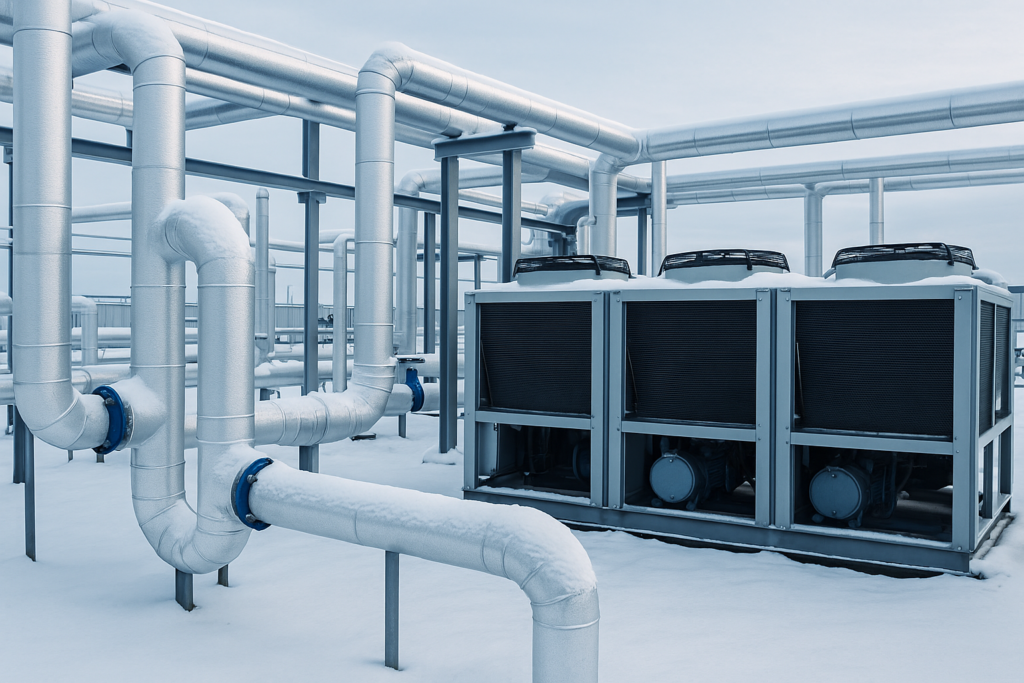
What Is a Glycol Heat Exchanger?
A glycol heat exchanger is a heat exchanger that uses a glycol water mixture—typically ethylene glycol or propylene glycol—as the working fluid to transfer heat. Instead of using city water directly, a closed loop glycol system circulates fluid through coils, plates, or tubes to move heat between systems.
Common configurations include:
- Plate heat exchangers for compact, high-efficiency transfer
- Shell-and-tube exchangers for industrial processes
- Air coils paired with fans in HVAC applications
In all cases, the objective is the same: transfer heat from one fluid stream to another without mixing them, while maintaining precise temperature control.
How Glycol Heat Exchangers Work
In a typical glycol system, the glycol solution absorbs heat from equipment or process lines, then flows through a heat exchanger where that heat is transferred to another medium (often water or air) and removed via a chiller or cooling system.
Basic flow sequence:
- Glycol absorbs heat from a heat source (process equipment, air stream, or refrigeration load)
- The warmed fluid moves through the heat exchanger
- Heat is transferred across plates or tubes to a secondary fluid or air stream
- The cooled glycol returns to the loop to repeat the process
Because glycol lowers the freezing point of the fluid, the system can operate safely in freezing conditions or very low temperatures without risking pipe rupture or equipment damage.
Why Use Glycol in Heat Transfer Systems?
Freeze Protection
Glycol acts as antifreeze, allowing the fluid to remain liquid at temperatures below water’s freezing point. This is essential for outdoor systems, cold climates, and chilled glycol applications.
Stable Temperature Control
Glycol systems support precise temperature control by maintaining consistent fluid properties across a wide range of operating temperatures.
Closed Loop Operation
Most glycol heat exchanger setups are part of a closed loop system, which limits contamination and allows better control of water chemistry and corrosion protection.
Types of Glycol Used
| Glycol Type | Common Use | Advantages | Limitations |
|---|---|---|---|
| Ethylene Glycol | Industrial processes, HVAC, chiller systems | Strong thermal performance, lower cost | Higher toxicity, environmental considerations |
| Propylene Glycol | Food and beverage industry, sensitive applications | Food grade antifreeze, lower toxicity | Slightly reduced heat transfer efficiency |
Ethylene glycol is often used where performance and cost matter, while propylene glycol is preferred in applications involving food processing or where exposure risk must be minimized.
For a broader overview of glycol use in HVAC, see our guide on what glycol is used for in HVAC.
Key Design Considerations
Heat Transfer Efficiency
Glycol reduces heat transfer efficiency compared to water due to higher viscosity and different physical properties. This must be accounted for when sizing heat exchangers and pumps.
Pressure Drop and Pumping
Higher viscosity leads to increased pressure drop, requiring properly sized pumps and careful system design to maintain flow and performance.
Glycol Concentration
Glycol concentration directly impacts freezing point, thermal performance, and system efficiency. The goal is to meet the desired freeze protection level without over-concentrating the fluid.
Materials and Construction
Heat exchangers are typically constructed from stainless steel, copper, or other alloys. Material selection affects corrosion resistance, heat transfer, and long-term durability.
Common Applications
Glycol heat exchangers are used across a range of industrial and commercial systems:
- HVAC systems and building cooling
- Chiller systems and refrigeration units
- Industrial processes requiring temperature control
- Cooling towers (in hybrid or secondary loop configurations)
- Food processing and beverage production
Example: Beverage and Draft Beer Systems
In beverage production and draft beer systems, glycol systems circulate chilled glycol through beer lines to maintain consistent temperatures. A glycol power pack or chiller maintains the glycol temperature, while heat exchangers help transfer heat away from the product to prevent spoilage.
For more on system-level design, see our overview of glycol cooling systems.
Performance Challenges and Troubleshooting
Even well-designed glycol heat exchangers can experience performance issues if not properly maintained.
Common challenges include:
- Fouling on heat transfer surfaces reducing efficiency
- Degraded glycol forming organic acids
- Inadequate corrosion inhibitors leading to corrosion
- Cavitation in pumps due to poor system design
- Air entrainment reducing heat transfer effectiveness
These issues can reduce system performance, increase energy use, and shorten equipment life.
Maintenance and Best Practices
To maintain efficient cooling and heat transfer, facilities should follow best practices:
- Regularly test glycol concentration and inhibitor levels
- Inspect heat exchangers for fouling or scale
- Monitor system temperatures and flow rates
- Maintain pumps, expansion tanks, and connections
- Replace or treat degraded glycol as needed
Routine maintenance helps ensure the system continues delivering efficient cooling and stable operation.
Integrating Glycol Systems with Water Treatment
Even though glycol systems are closed loop, water treatment remains essential. Corrosion inhibitors, filtration, and monitoring programs are needed to protect metal components and maintain system performance.
Proper corrosion control and water chemistry management help extend equipment life, reduce maintenance costs, and improve overall efficiency.
Comparison: Glycol vs Water in Heat Exchange
| Factor | Water | Glycol Solution |
|---|---|---|
| Heat Transfer | High efficiency | Reduced efficiency |
| Freezing Point | 32°F (0°C) | Lowered depending on concentration |
| Viscosity | Low | Higher (increases pressure drop) |
| Corrosion Risk | Moderate | Depends on inhibitor levels |
| Use Case | General cooling | Freeze protection and low temperature systems |
This comparison highlights why glycol is used when freeze protection is required, even though it comes with performance tradeoffs.
Maintain Reliable Glycol Heat Exchanger Performance
A glycol heat exchanger is an essential part of many HVAC and industrial systems, enabling safe and efficient heat transfer in challenging environments. However, performance depends on proper system design, correct glycol concentration, and ongoing maintenance.
Aquatrol works with facilities to evaluate glycol systems, maintain heat transfer efficiency, and implement treatment programs that protect equipment and support reliable operation.
If your system requires troubleshooting, optimization, or ongoing support, talk to an Aquatrol expert to review your glycol heat exchanger system and water treatment program.
