
Chlorine dioxide biofilm control is one of the most effective strategies available for managing persistent biological growth in industrial water systems. Operators dealing with biofilm buildup know that once biofilm formation is established, traditional disinfectants often lose effectiveness. This is where chlorine dioxide offers a different approach.
Unlike conventional chlorine-based treatment, chlorine dioxide acts as a selective oxidizer. It targets microorganisms, organic matter, and biofilm structure directly, making it particularly effective in controlling biofilm in cooling systems, potable water systems, and other industrial applications.
Why Biofilm Control Is Challenging
Biofilm formation occurs when microorganisms attach to surfaces and begin to grow in structured communities. These bacterial biofilm layers develop on pipes, heat exchangers, and other equipment, creating a protective environment for bacteria.
In water systems, biofilm growth leads to:
- Reduced water flow and restricted piping
- Increased corrosion under deposits
- Higher chemical demand
- Reduced overall system efficiency
Once biofilm is established, removing biofilm becomes difficult because disinfectants struggle to penetrate the biofilm matrix.
How Chlorine Dioxide Works
Chlorine dioxide is different from chlorine. While chlorine reacts broadly with organic compounds, chlorine dioxide reacts more selectively with specific targets.
As a gas dissolved in water, chlorine dioxide interacts with:
- Bacterial cell walls
- Organic compounds
- Biofilm structure
This selective oxidation allows chlorine dioxide to disrupt biofilm formation and assist in biofilm removal.
Chlorine Dioxide vs Traditional Chlorine
| Factor | Chlorine | Chlorine Dioxide |
|---|---|---|
| Reaction type | Broad oxidation | Selective oxidizer |
| Biofilm penetration | Limited | Strong |
| Byproduct formation | Can produce trihalomethanes | Does not produce trihalomethanes |
| pH sensitivity | High | Effective across wide pH range |
Chlorine dioxide biofilm applications are preferred in systems where biofilm control is critical and traditional chlorine shows limited effectiveness.
Applications in Industrial Water Systems
Chlorine dioxide is widely used across different water systems.
Cooling Towers and Cooling Systems
Cooling towers are highly susceptible to biofilm growth due to warm temperatures and nutrient availability.
Using chlorine dioxide helps:
- Control bacterial biofilm formation
- Reduce algae and microbial growth
- Maintain cooling system performance
For broader cooling system context, see how cooling tower water treatment supports system control.
Potable Water Systems
In potable water systems, chlorine dioxide is used for water disinfection and controlling biofilm without significantly affecting water quality.
It is effective against pathogens such as Legionella, which is critical for public health and patient safety.
Industrial Applications
In industrial water systems, chlorine dioxide supports:
- Biofilm control in process systems
- Removal of organic matter
- Improved overall system performance
Chlorine Dioxide Generation and Delivery
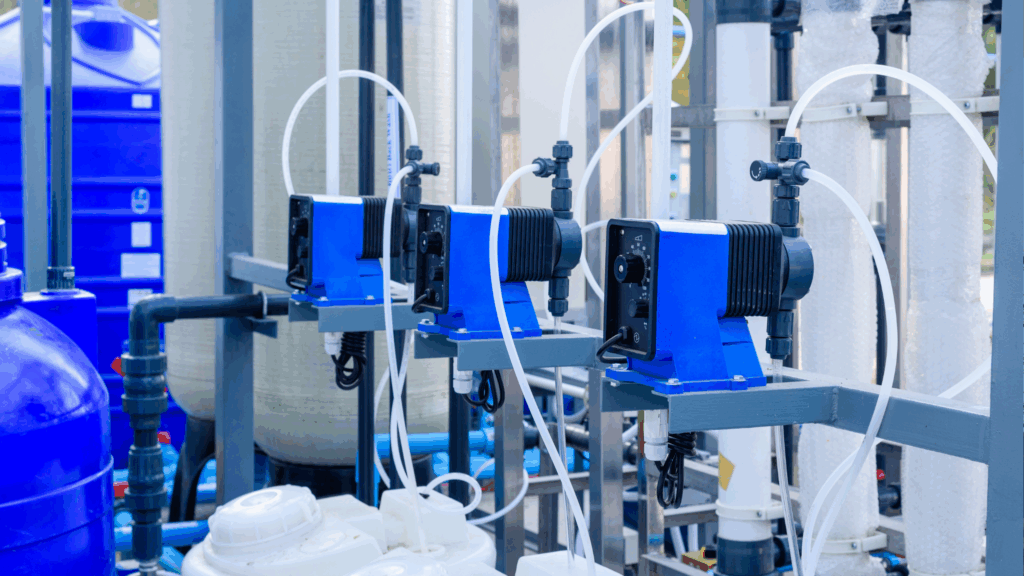
Chlorine dioxide is typically generated on site using a chlorine dioxide generator. This process often involves sodium chlorite reacting with an acid or other chemical compounds to produce chlorine dioxide in its active form.
The generated solution is then injected into water systems where it can:
- Disinfect microorganisms
- Control biofilm growth
- Improve water quality
Factors Affecting Effectiveness
The effectiveness of chlorine dioxide depends on several factors.
- Concentration of chlorine dioxide in the system
- Contact time with biofilm and microorganisms
- Water flow and system design
- Presence of organic matter and nutrients
Operators must monitor these factors to maintain consistent performance.
Monitoring and Control
Proper monitoring is essential when using chlorine dioxide.
- Measure chlorine dioxide concentration regularly
- Track chlorite levels to ensure compliance
- Monitor water quality and system conditions
Using tools such as online analyzers helps ensure consistent control and avoid overfeeding.
For related monitoring strategies, see how chlorine monitoring systems are used in water systems.
Safety and Handling Considerations
Chlorine dioxide must be handled carefully due to its reactive nature.
Key considerations include:
- Proper generator operation
- Safe storage of sodium chlorite
- Monitoring gas concentrations
When used correctly, chlorine dioxide provides strong disinfection with manageable safety risks.
Benefits of Chlorine Dioxide for Biofilm Control
Using chlorine dioxide for biofilm control offers several advantages.
- Effective biofilm removal and prevention
- Reduced formation of harmful byproducts
- Stable performance across wide pH range
- Improved system efficiency
These benefits make chlorine dioxide a preferred disinfectant in many industrial systems.
Integrating Chlorine Dioxide into Treatment Programs
Integrating chlorine dioxide into existing water treatment programs requires careful planning.
- Evaluate system conditions and biofilm severity
- Adjust dosing strategies based on system response
- Combine with other treatment methods where needed
For a broader look at chemical treatment strategies, see how biocide for water treatment supports microbial control.
Common Challenges
Despite its effectiveness, chlorine dioxide use presents challenges.
- Managing chlorite levels
n- Maintaining consistent generation and dosing - Monitoring system response over time
Addressing these challenges ensures reliable long-term performance.
Frequently Asked Questions
What is chlorine dioxide biofilm control
Chlorine dioxide biofilm control is the use of chlorine dioxide to prevent and remove biofilm in water systems.
Why is chlorine dioxide effective
It acts as a selective oxidizer and penetrates biofilm structure more effectively than chlorine.
Where is chlorine dioxide used
It is used in cooling towers, potable water systems, and industrial water systems.
Does chlorine dioxide produce harmful byproducts
It does not produce trihalomethanes like chlorine.
How is chlorine dioxide generated
It is typically generated on site using sodium chlorite and chemical reactions.
Improve Biofilm Control in Your Systems
Chlorine dioxide provides a reliable method for controlling biofilm in industrial water systems. When properly implemented, it improves system performance, reduces contamination, and supports long-term stability.
If your facility is dealing with persistent biofilm growth or evaluating chlorine dioxide treatment, contact our team todayto review your system and identify the right approach.
