
In a closed loop water system, the same water is continuously used instead of being discharged after one use, unlike in an open loop system. This is done with minimal makeup, through a sealed circuit for heating, cooling, or process duties. Common examples include chilled water loops, hot water heating system loops, and industrial process cooling circuits.
A closed loop water system can be ideal in the appropriate settings because its stable water volume supports chemical balance, corrosion control, microbial growth prevention, and energy efficiency.
Key Takeaways
- A closed loop water system recirculates the same water within a sealed circuit, minimizing makeup water and reducing waste compared to open loop systems.
- These systems rely on feedback control to continuously monitor and adjust conditions like temperature, pressure, flow, and chemistry, ensuring stable and efficient operation.
- Proper treatment and maintenance are essential to prevent corrosion, sludge buildup, and microbial growth, which can impair system performance and reliability.
- Closed loop systems offer many advantages, including improved energy efficiency, tighter chemical control, reduced water consumption, and longer equipment lifespan.
- Effective operation depends on well-designed control loops with sensors, controllers, and actuators that maintain desired setpoints and respond to disturbances automatically.
- Regular monitoring, preventive maintenance, and system cleaning are critical to sustaining closed loop system health and avoiding common issues like fouling and unstable control.
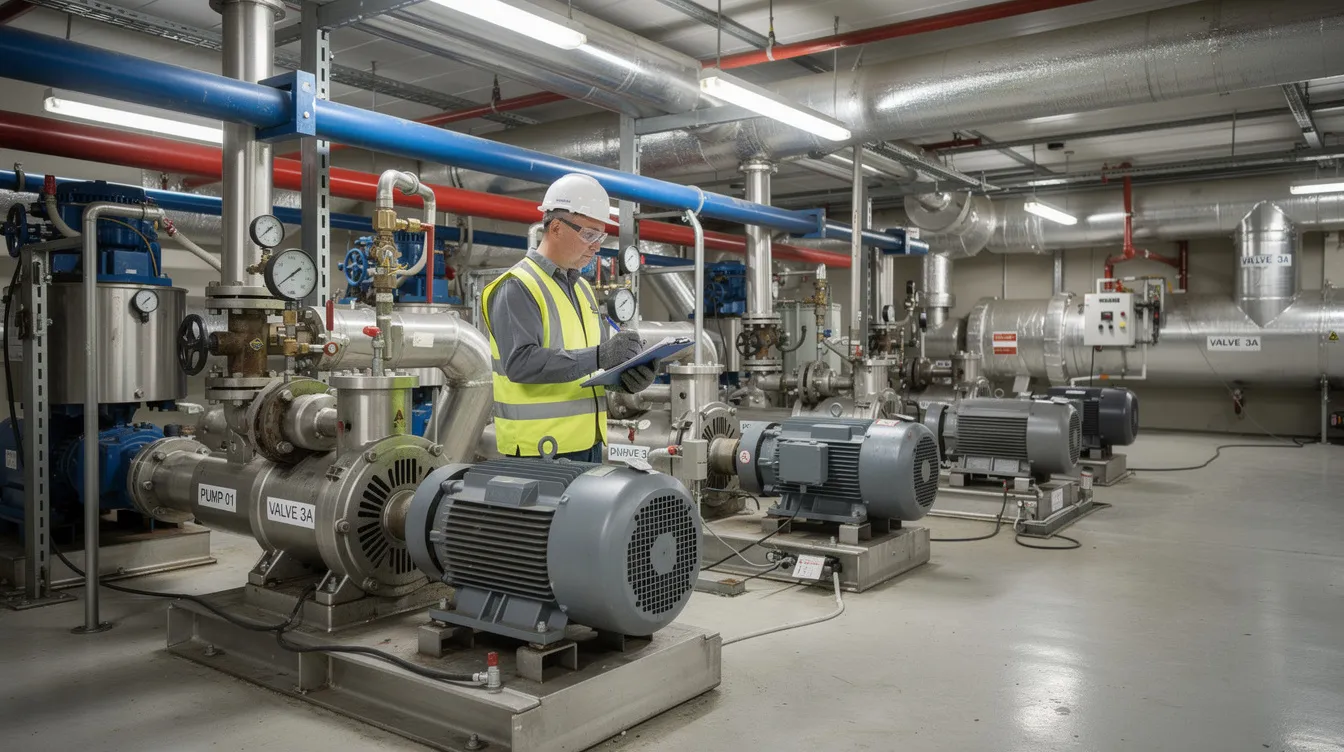
Understanding Closed Loop vs. Open Loop Water Systems
A closed loop water system continuously circulates the same water within a sealed piping circuit. In an open loop system, on the other hand, water is continually added and discharged, such as in once-through cooling, cooling towers, wells, or surface water intakes.
Open loop systems are simpler, with fewer components and no feedback sensors, so they execute exactly what they are programmed to do without automatic correction. However, they still face issues like varying makeup water quality, airborne contamination, evaporation, scale buildup, and biological growth.
Despite the name, most closed systems are semi-closed in practice. There is usually a connection for makeup water, expansion, and venting. These small openings are where oxygen, hardness, suspended solids, and microorganisms can enter.
The main advantages of closed loop systems include their ability to use feedback to compare the actual output with the desired output and make automatic adjustments. This makes them more resilient than open loop systems that operate only on predetermined commands. Closed loop water systems offer lower water consumption, reduced water waste discharge, tighter chemistry, and better long-term reliability. That added control also makes them generally more complex because of the feedback path, which if not designed properly, can create stability issues.
Core Components of a Closed Loop Water System
Most closed loop water systems include the following core elements:
| Component | Role in the water system |
|---|---|
| Pumps | Maintain circulation, differential pressure, and flow through the entire system. |
| Heat exchangers | Transfer heat between the closed loop and another fluid without mixing. |
| Expansion tanks | Absorb thermal expansion, maintain static pressure, and prevent vacuum conditions. |
| Control valves and balancing valves | Regulate flow distribution and support accurate control of temperature and pressure. |
| Air separators and vents | Remove entrained air that can drive corrosion. |
| Strainers, dirt separators, filters | Capture iron oxide, sediment, and scale buildup before it reaches small passages. |
| Sensors and controllers | Measure temperature, pressure, flow, level, conductivity, and other system parameters. |
| Chemical feed and sample points | Support inhibitor dosing, testing, and corrective treatment. |
A closed loop feedback system consists of several key elements: an input signal, a controller, an actuator (e.g., chemical feed pump, VFD, control valve), and a feedback system that continuously measures the output and returns it to the controller to maintain the desired response.
How a Closed Loop Water System Works
Water continuously circulates through pumps, coils, or heat exchangers, absorbing or rejecting heat before returning to repeat the cycle. Makeup water is added only to replace small losses.
Because the system is sealed, dissolved oxygen and contaminants are controlled tightly, supporting corrosion protection and stable inhibitor levels.
Temperature and flow are managed through feedback control in a closed loop control system. A feedback sensor measures the actual value, such as temperature or pressure, and the actual output is compared to the desired value or reference input. The controller then sends a control signal to valves, pumps, or dosing devices.
This closed loop system uses negative feedback: the feedback signal represents the difference between the desired output and the actual output, producing an error signal the controller uses for correction. The control action then adjusts the system to automatically achieve the desired output condition.
Closed Loop Control Systems in Water Applications
Closed loop control systems regulate water temperature, pressure, flow, and chemistry by using sensors to measure actual conditions, compare them to setpoints, and adjust system components accordingly. Examples include chilled water temperature control, pump speed adjustment for pressure, chemical dosing, and water quality management.
These systems rely on feedback loops with a summing junction or comparison element that produces an error signal: the difference between desired and actual outputs. This negative feedback maintains stability and accuracy, as shown by the closed loop transfer function.
Properly designed closed loop systems are more accurate and adaptable than open loop systems, offering cost-effective and stable overall system performance. Stability is vital, as excessive controller gain or delay can cause oscillations and loss of control.
Why Closed Loop Water Systems Matter for Treatment and Performance
Closed loop water treatment is different from cooling tower treatment because closed loop systems matter for stable operation, better chemistry control, and consistent performance with minimal evaporation and water loss. In these systems, scale from cycles of concentration is usually less of an issue than problems caused by oxygen corrosion, sludge buildup, and poor monitoring.
Corrosion often begins during system filling, inadequate cleaning, leaks, or frequent makeup water additions. Iron oxides form black magnetic sludge that clogs strainers, blocks small passages, and reduces heat transfer. For example, a hospital chilled water system showed that even a thin fouling factor of 0.001 increased energy use by over 7%.
Microbial growth can still happen in stagnant branches, low-flow areas, warm loops, and plastic pipes. Biofilms trap solids and oxygen, causing under-deposit corrosion risks.
Well-controlled closed loops use less chemical, minimize waste, reduce sewer costs, and extend the life of pipes, coils, and heat exchangers. Such systems also help maintain uptime in healthcare, higher education, data centers, food and beverage, and power plants.
Closed Loop Water Treatment Fundamentals
The objectives are straightforward: minimize corrosion, prevent deposition, control microbial activity, and maintain heat transfer.
Key practices include:
- Pre-commission cleaning and passivation to remove mill scale, oils, weld debris, and construction sediment.
- Inhibitor selection for metallurgy, often nitrite, molybdate, azole, or blended organic inhibitors for ferrous metals and copper alloys.
- pH control, often in an alkaline range suitable for the metals in the loop.
- Oxygen control through degassing, effective venting, and positive pressure at high points.
- Filtration using full-flow strainers or side-stream filtration to remove suspended iron oxide and debris.
- Routine monitoring of pH, conductivity, inhibitor residual, dissolved oxygen where relevant, iron, copper, and microbiological indicators.
A closed loop control system for treatment should define limits and corrective actions. Low nitrite, high iron, pH drift, or recurring bacteria should call for investigation, not just chemical addition.
The design of closed loop systems requires careful consideration of performance requirements, including dynamic and steady state heating and cooling loads for each unit operation in the process.
Real-World Examples of Closed Loop Water Systems
Industrial cooling systems in factories and power plants rely on closed loop water circuits to manage heat removal efficiently and prevent contamination. These loops maintain stable water chemistry and temperature through continuous feedback control, protecting equipment and ensuring consistent operation.
HVAC systems in commercial and residential buildings use closed loop water systems to provide reliable heating and cooling. By tightly controlling water temperature and flow, these systems optimize energy use and comfort while minimizing corrosion and microbial growth.
Aquaculture systems, such as fish farms, employ closed loop water systems to recycle and treat water within tanks or raceways. Maintaining water quality through feedback-controlled treatment is essential to support healthy aquatic life and reduce environmental impact.
Common Problems in Closed Loop Water Systems
Most problems come from oxygen ingress, poor cleaning, wrong chemistry, stagnant pipes, or bad data.
Typical issues include:
- High iron or copper levels, showing active corrosion.
- Black magnetic sludge from iron corrosion.
- Clogged strainers, coils, and control valves.
- Corrosion under settled solids.
- Smells, slime, or biofilm in low-flow areas.
- Loss of inhibitors due to dilution, leaks, or biological use.
- Temperature swings from poorly tuned control loops.
Control problems are as important as chemistry. A badly tuned control system can cause unstable pressure, valves that keep opening and closing, and frequent alarms. While advanced systems may use multiple loops or servo drives, most water plants just need well-placed sensors, correct settings, and reliable actuators. Even simple single-input controllers can fail if delays or valve deadbands are ignored.
Best Practices for Operating and Maintaining Closed Loops
Preventive, data-driven maintenance is more effective than emergency repairs.
Best practices include:
- Clean, flush, and passivate the system before long-term operation.
- Maintain positive static pressure at the system’s highest point.
- Regularly check expansion tank size and pre-charge.
- Inspect strainers, dirt separators, and low-point drains, especially during the first year.
- Track pH, conductivity, inhibitor levels, iron, copper, and microbial activity over time.
- Use modern automation with online monitoring to accurately control chemical feed and alarms.
- Document set points, desired output conditions, control logic, and corrective actions.
- Train operators on hydraulic performance and chemical control in closed loop systems.
Closed loop systems work by continuously comparing actual conditions to desired set points, automatically adjusting to reduce errors and keep the system stable. This is key for accurate control in water treatment.
Wrapping Up: Understanding Closed Loop Water Systems
A closed loop water system is essential for efficient and reliable heating, cooling, and process water management. By continuously recirculating water within a sealed circuit and using feedback control, these systems maintain stable temperature, pressure, flow, and chemistry. Proper treatment and maintenance prevent corrosion, sludge, and microbial growth, ensuring long-term system health and energy efficiency. While more complex than open loop systems, closed loops provide better control, reduced water usage, and longer equipment life. Understanding and managing these systems effectively supports sustainable and cost-effective water system operation.
For expert guidance and tailored solutions to optimize your closed loop water system, contact our team today.
Frequently Asked Questions (FAQs)
What is a closed loop water system?
A closed loop water system recirculates the same water through a sealed piping circuit with minimal makeup. It is commonly used for chilled water, hot water heating, and industrial process cooling.
How is a closed loop different from an open loop?
A closed loop reuses the same water. An open loop continuously brings in new water and discharges used water, as in once-through cooling or cooling towers. Closed loops use less water and allow tighter chemistry, but they are sensitive to oxygen ingress.
Why do closed loop systems still need treatment?
They are not perfectly sealed. Makeup water, leaks, vents, construction debris, and dissolved gases can introduce oxygen and contaminants. Treatment protects against corrosion, scale formation, sludge, and microbial growth.
What do black water, low inhibitor, or recurring leaks indicate?
Black water often indicates iron oxide sludge. Low inhibitor may indicate dilution, leakage, chemical demand, or biological activity. Recurring leaks often point to oxygen corrosion, under-deposit corrosion, or incompatible chemistry.
How often should closed loop water be tested?
New or troubled systems may need weekly or biweekly testing. Stable systems are often tested monthly or quarterly. Routine parameters include pH, conductivity, inhibitor residual, iron, copper, and microbiological indicators where needed.
How do closed loop control systems help?
Sensors, controllers, and actuators compare a desired setpoint with actual conditions and adjust pumps, valves, or chemical feed. This keeps temperature, pressure, flow, and chemistry close to the desired output.
When should an open loop be retrofitted to a closed loop?
Retrofit makes sense when water use, sewer cost, chemical demand, corrosion, fouling, or downtime are high. For further information, evaluate hydraulic design, heat load, water quality, controls, and lifecycle cost before conversion.
