
Water treatment corrosion control is essential to protect infrastructure, ensure water quality, and maintain operational efficiency. This article provides an accessible overview of corrosion mechanisms, inhibitors, and implementation strategies to help manage and mitigate corrosion effectively.
Key Takeaways
- Water chemistry, material compatibility, and microbial activity influence corrosion in water treatment systems.
- Selecting inhibitors tailored to specific corrosion mechanisms enhances protection effectiveness.
- Combining chemical treatments with physical barriers offers comprehensive corrosion control.
- Continuous monitoring and adjustment are vital to maintaining optimal corrosion prevention.
- Addressing microbial influences is essential to prevent accelerated deterioration of infrastructure.
Corrosion Basics
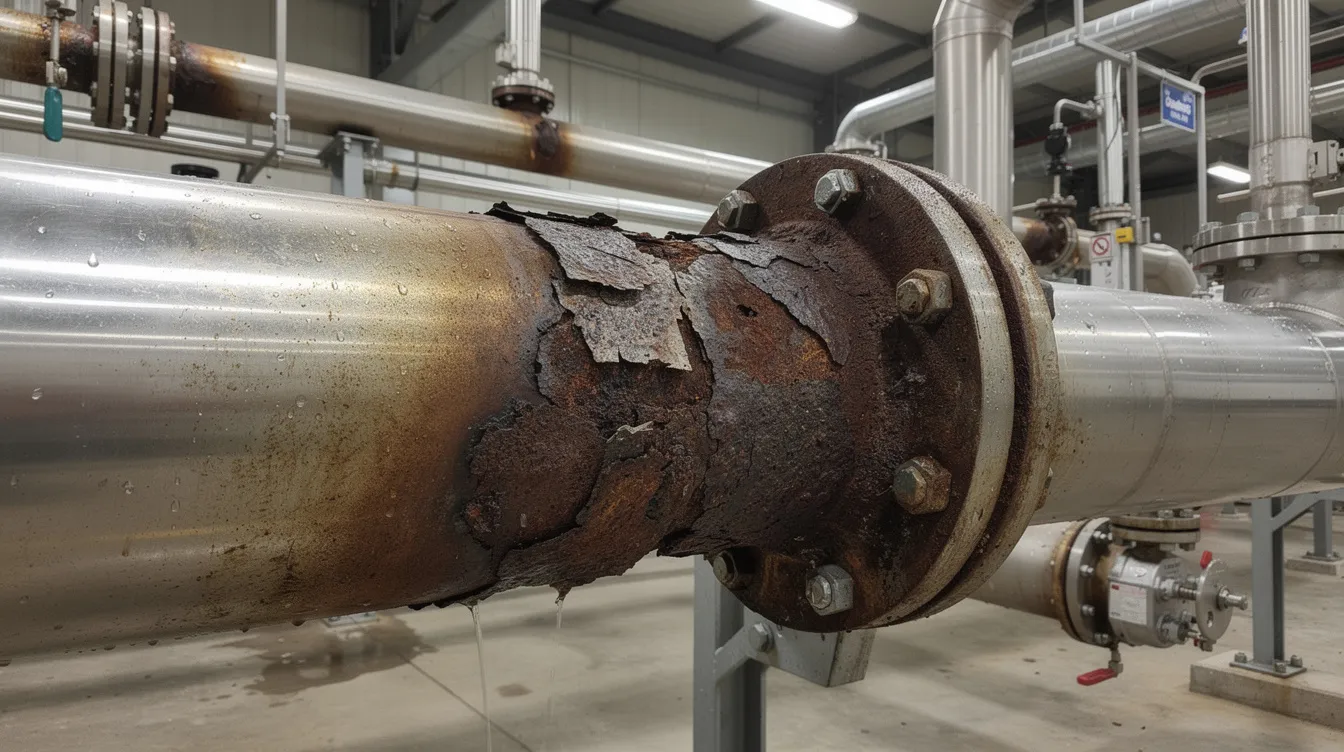
Corrosion is the gradual deterioration of materials, especially metals, due to chemical or electrochemical reactions with their environment. In water treatment systems, water acts as a catalyst that facilitates these reactions but is not itself consumed. The presence of dissolved minerals and oxygen in water helps produce corrosion through electrochemical reactions on metal surfaces, with iron oxide being the most common form of corrosion.
Galvanic Corrosion
Galvanic corrosion occurs when two dissimilar metals with different electrochemical potentials are in electrical contact within an electrolyte, such as water, so corrosion develops between two metals under these conditions. This creates a galvanic cell where one metal becomes anodic and corrodes faster. The other acts as a cathode and is protected. For example, if a steel pipe is connected to a copper flange, the steel (anodic) will corrode preferentially. To prevent this, it is essential to pair compatible materials or use insulative barriers to separate dissimilar metals, which breaks the electrical path between them and reduces galvanic corrosion risk.
Microbial and Chemical Mechanisms
Microbial corrosion involves microorganisms, especially sulfur-reducing bacteria, which produce hydrogen sulfide. This compound lowers pH levels and creates a corrosive environment that can damage both steel and concrete components. Additionally, chloride ions penetrating concrete can corrode embedded steel rebar, causing structural degradation. Concrete carbonation also lowers pH and breaks down protective layers around embedded steel. Understanding these mechanisms is crucial to designing effective corrosion control strategies, since corrosion-related expansion can create internal stress in concrete as damage progresses.
Corrosion Inhibitors for Treatment Plants
Water treatment plants use various classes of corrosion inhibitors to protect infrastructure by interrupting the corrosion process.
Anodic Inhibitors
Anodic inhibitors work through anodic inhibition, forming a protective oxide film on the metal surface that blocks the electrochemical reaction and reduces metal dissolution. Oxidizing anodic inhibitors accelerate the formation of stable passivation layers, while non-oxidizing types catalyze iron oxidation or improve the impermeability of protective films. Their effectiveness depends on oxygen availability and inhibitor concentration. Common chemicals include chromates and nitrates. Proper dosage and continuous monitoring are essential to maintain effectiveness.
Cathodic Inhibitors
Cathodic inhibitors reduce corrosion by promoting the formation of insoluble compounds, such as hydroxide ions, that coat cathodic areas and slow reduction reactions. Typical cathodic compounds include zinc and calcium salts. These inhibitors are often used in combination with anodic inhibitors to provide comprehensive corrosion protection.
Organic Inhibitors
Organic inhibitors form hydrophobic, film-forming layers on metal surfaces, creating a barrier that prevents water and corrosive agents from reaching the metal. Examples include fatty amines and surfactants. Compatibility with biocides and other water treatment chemicals should be verified to ensure inhibitor performance. Some oxidizing agents, including chlorine and ammonia, can leave inhibitor performance affected and accelerate corrosion on sensitive metals.
Combined and Specialized Inhibitor Strategies
Some formulations combine anodic and cathodic inhibitors to maximize protection. Cooling water systems often use specialized programs, where mixed materials and contaminants create added corrosion challenges. Volatile corrosion inhibitors (VCIs) seal micro-pores in iron pipes by reacting with the metal surface. Oxygen absorbers, on the other hand, reduce dissolved oxygen levels that drive corrosion. Selecting the appropriate inhibitor depends on water chemistry, operating parameters, and system materials. For copper alloys, dissolved copper in recirculating water can increase galvanic attack. Consider this when selecting treatment.
Corrosion Control in Drinking Water Systems
In drinking water systems, corrosion control is critical to public health. Lead and copper leaching from pipes pose significant risks. Phosphate-based inhibitors are often evaluated to form protective mineral scales inside pipes, reducing metal solubility. pH and alkalinity adjustment is also a common corrosion control method in drinking water systems because raising water pH lowers metal solubility and makes lead and copper less likely to dissolve into the water. Regular assessment ensures that corrosion control measures comply with regulatory standards and effectively protect consumers.
Protection for Non-Ferrous Metals
Water treatment plants commonly use copper and aluminum alloys, which are susceptible to corrosion under certain conditions. Azole derivatives are recommended inhibitors for copper alloys, providing a protective film that limits corrosion. For aluminum, silicates and phosphates are effective options to maintain surface integrity and prevent degradation.
Implementation at the Treatment Plant
Implementing corrosion control begins with pilot testing to evaluate inhibitor effectiveness under actual operating conditions, along with adjusting water chemistry and routine maintenance to protect infrastructure and improve water quality. Monitoring key metrics such as pH level, dissolved oxygen, flow velocity, and temperature fluctuations helps optimize dosing. Chlorine is also used to combat microbial contamination in water as part of overall system management. In applicable systems, chlorine dioxide can help prevent iron and manganese from corroding pipes. Dosing control should be precise and continuous to maintain inhibitor concentrations within target ranges. Corrosion coupons and online probes provide valuable diagnostic data to track corrosion rates and surface conditions.
Monitoring and Diagnostics
Corrosion coupons are metal samples installed in the system to measure corrosion rates over time. Online probes offer real-time monitoring of parameters like electrochemical potential and corrosion current density. Regular water chemistry sampling supports comprehensive analysis and timely adjustments to treatment protocols. Inspections should also check the condition of each pipe line or lined surface so physical damage does not undermine corrosion control.
Regulatory, Safety, and Operational Considerations
Compliance with drinking water regulations mandates thorough documentation and reporting of corrosion control practices. Proper personal protective equipment (PPE) and safe chemical handling procedures are essential to protect personnel. Maintaining detailed records and adhering to operational protocols ensures both safety and regulatory compliance, while preventing corrosion also reduces harmful failures and extends equipment life.
Protecting Water Treatment Infrastructure
Effective water treatment corrosion control protects infrastructure, ensures water quality, and safeguards public health. Understanding corrosion mechanisms, selecting appropriate inhibitors, and implementing robust monitoring programs are essential steps. Water treatment specialists are encouraged to conduct pilot tests and consult with experts to tailor corrosion control strategies. For professional assistance and customized solutions, contact our team to help maintain your water treatment system’s integrity and performance.
Frequently Asked Questions (FAQs)
What causes corrosion in water treatment systems?
Corrosion in water treatment systems is primarily caused by electrochemical reactions between metals and their environment, facilitated by water containing dissolved oxygen and minerals. Factors such as microbial activity, chloride ions, and pH levels also contribute to corrosion.
How do phosphates help control corrosion in drinking water systems?
Phosphates act as corrosion inhibitors by forming a protective mineral scale inside pipes, which reduces the solubility of lead and copper and prevents these metals from leaching into drinking water.
What are the common types of corrosion inhibitors used in water treatment plants?
Common corrosion inhibitors include anodic inhibitors, cathodic inhibitors, organic inhibitors, and combined formulations. Each works differently to form protective films or reduce electrochemical reactions on metal surfaces.
How can microbial corrosion be prevented in water treatment infrastructure?
Microbial corrosion can be controlled by maintaining disinfectant residuals like chlorine, using biocides, and monitoring water quality to limit the growth of sulfur-reducing bacteria that produce corrosive hydrogen sulfide.
Why is monitoring important in corrosion control programs?
Regular monitoring using corrosion coupons, online probes, and water chemistry analysis helps assess corrosion rates and inhibitor effectiveness, enabling timely adjustments to treatment protocols and protecting infrastructure longevity.
