
A water treatment company helps facilities maintain water quality, protect equipment, and keep water systems operating efficiently. In industrial and commercial environments, water treatment is tied directly to system performance, maintenance costs, and regulatory compliance. A well-designed water treatment program reduces contaminants, controls corrosion and scale, and supports reliable operation across cooling towers, boilers, and closed loop systems.
While many people associate a water treatment company with residential water filtration or a house water filtration system, the role in industrial facilities is broader. It includes monitoring water chemistry, applying chemical treatment, managing filtration systems, and providing ongoing service and maintenance to keep systems running correctly.
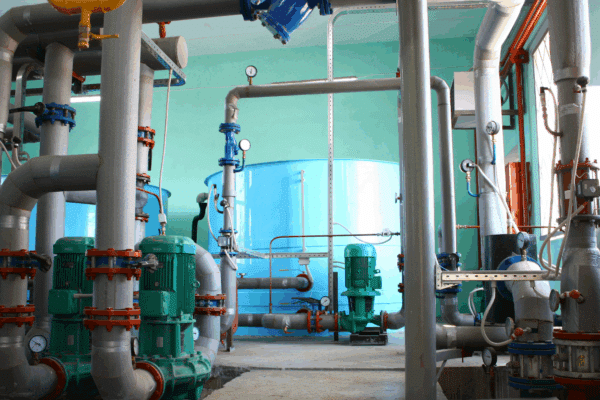
What Services Does a Water Treatment Company Provide?
A water treatment company typically provides a combination of testing, treatment, installation, and maintenance services. The goal is to deliver the right solution for each system based on water quality and operating conditions.
Common services include:
- Water testing and water analysis to identify contaminants and water issues
- Design and installation of water treatment systems and filtration systems
- Chemical treatment programs for corrosion, scale, and biological control
- Routine maintenance and repair services for ongoing performance
- System monitoring and adjustments based on changing conditions
These services are tailored to specific needs for each facility and water system.
Water Testing and Water Quality Analysis
Every water treatment program starts with understanding water quality. A water test identifies hardness, contaminants, chlorine levels, and other factors that affect system performance.
For industrial facilities, water testing helps determine:
- Presence of harmful contaminants and dissolved solids
- Hard water conditions caused by calcium and magnesium
- Water supply variability from city water or well water
- Risk of scale buildup, corrosion, or biological growth
Accurate water quality data allows a water treatment company to recommend the right solution and avoid unnecessary chemical usage.
Core Water Treatment Systems Used in Facilities
Industrial facilities rely on several types of water treatment systems depending on the application.
Cooling Tower Water Treatment
Cooling towers require continuous water treatment to control contaminants, maintain water quality, and prevent scaling and corrosion.
Learn more about our cooling tower water treatment services.
Boiler Water Treatment
Boiler systems depend on proper water treatment to prevent scale buildup, maintain efficiency, and protect equipment from damage.
Learn more about our boiler water treatment services
Closed Loop Water Treatment
Closed loop systems require stable water chemistry and corrosion protection to maintain long-term performance.
Learn more about our closed loop water treatment services.
Legionella Testing and Risk Management
Facilities must manage water safety and public health risks through routine monitoring and testing.
Learn more about our Legionella testing services.
Filtration and Purification Systems
Water filtration systems and water purification systems are used to remove contaminants and improve water quality before water enters critical equipment.
Common filtration systems include:
- Sand and multimedia filters for suspended solids
- Carbon filters for chlorine and organic contaminants
- Reverse osmosis systems for removing dissolved solids
A reverse osmosis system is often used where high purity water is required. These osmosis systems reduce contaminants and support better water quality in industrial processes.
Water Softeners and Hard Water Control
Water softeners are used to remove hardness from water by exchanging calcium and magnesium ions with sodium ions. This prevents scale buildup and improves system performance.
Benefits of water softener systems include:
- Reduced mineral deposits in equipment
- Improved efficiency of heat transfer systems
- Lower maintenance and repair costs
Properly installed and maintained water softener systems help protect appliances, piping, and process equipment.
Chemical Treatment Programs
Chemical treatment is a key part of industrial water treatment. These programs use chemicals to control corrosion, scale, and biological growth.
Typical treatment chemicals include:
- Corrosion inhibitors to protect metal surfaces
- Scale inhibitors to prevent mineral buildup
- Biocides to control bacteria and contaminants
A water treatment company manages chemical usage carefully to reduce waste, maintain performance, and support safer water conditions.
Installation, Maintenance, and Repair Services
Installation and maintenance are critical to long-term system performance. A water treatment company provides:
- System installation based on design requirements
- Routine maintenance to keep systems operating
- Repair services to address equipment issues
Regular maintenance helps prevent unexpected failures and ensures water treatment systems continue delivering clean water and stable performance.
Industrial vs Residential Water Treatment
While industrial water treatment focuses on system performance and process efficiency, residential systems focus on drinking water quality and household use.
Residential Systems
Residential systems may include:
- Whole house water filtration
- Water softeners for hard water
- Reverse osmosis for drinking water
These systems improve taste, reduce contaminants, and provide better water for daily use.
Industrial Systems
Industrial water treatment systems are designed for:
- Large-scale water usage
- Process water quality control
- Equipment protection and efficiency
Both residential and commercial systems rely on the same principles of filtration, chemical treatment, and water quality management.
Benefits of Working with a Water Treatment Company
A professional water treatment company provides expertise and ongoing support that helps facilities avoid costly problems.
Key benefits include:
- Improved water quality and cleaner water
- Reduced contaminants and safer water
- Lower maintenance costs and fewer repairs
- Better system efficiency and performance
- Long-term cost savings and operational reliability
By addressing water issues early, facilities can avoid larger problems and maintain consistent performance.
Table: Common Water Treatment Solutions and Applications
| Solution | Application | Benefit |
|---|---|---|
| Water softener | Hard water treatment | Prevents scale buildup |
| Reverse osmosis system | High purity water | Removes dissolved contaminants |
| Filtration systems | Suspended solids removal | Improves water clarity |
| Chemical treatment | Corrosion and scale control | Protects equipment |
| Legionella testing | Water safety | Supports public health |
FAQ: Water Treatment Companies and Services
What does a water treatment company do?
A water treatment company tests, treats, and maintains water systems to improve water quality, reduce contaminants, and support system performance.
What types of water treatment systems are used in industrial facilities?
Facilities use filtration systems, reverse osmosis systems, water softeners, and chemical treatment programs.
How often should water systems be maintained?
Routine maintenance is required to ensure systems operate correctly and prevent failures.
Can water treatment improve equipment life?
Yes, proper water treatment reduces scale and corrosion, helping extend equipment life.
What is the difference between residential and industrial water treatment?
Residential systems focus on drinking water quality, while industrial systems focus on performance, efficiency, and process needs.
Improve Your Water Systems with the Right Partner
A water treatment company plays a critical role in maintaining water quality, protecting equipment, and supporting efficient operations. Whether managing cooling towers, boilers, or filtration systems, the right approach ensures better water, lower costs, and reliable performance.
Aquatrol works with commercial and industrial customers to design, install, and maintain water treatment systems tailored to specific needs.
If your facility is experiencing water issues or looking to improve system performance, contact us today to review your systems and opportunities for improvement.
