
A water softener solution is one of the most common answers to hard water problems in both commercial and industrial systems. But in practice, choosing the right water softener is not just about removing hardness minerals. It is about protecting equipment, maintaining system performance, and reducing long term operating costs.
Most operators dealing with hard water already know the symptoms. Scale buildup in pipes, reduced efficiency in water heaters, and constant maintenance on water using appliances. The question is not whether you need a water softener. The question is which water softener solution actually fits your system.
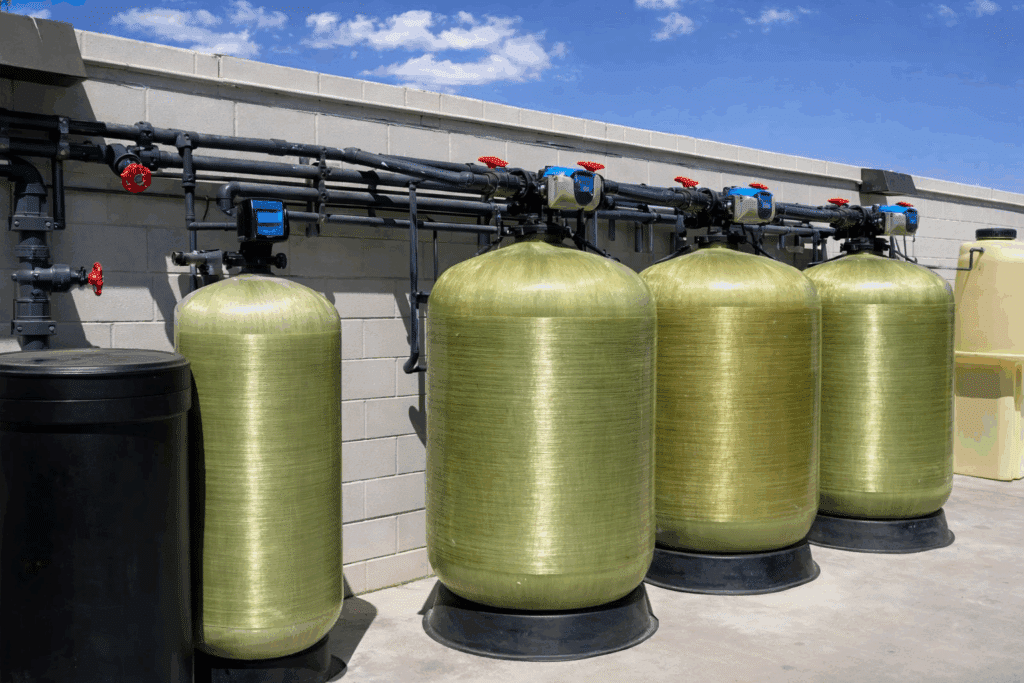
What Is Hard Water and Why It Matters
Hard water contains dissolved minerals, primarily calcium and magnesium. These hardness minerals form calcium carbonate deposits as water is heated or evaporates. Over time, mineral buildup restricts flow, reduces heat transfer, and damages equipment.
In commercial and industrial systems, this shows up as:
- Reduced efficiency in heat exchangers and water heaters
- Scale buildup in pipes and valves
- Increased energy consumption
- More frequent maintenance and cleaning
If you are seeing these issues, it usually means the system is operating with untreated or poorly treated water.
How Water Softener Systems Work
Most water softener systems rely on a process called ion exchange. In this process, calcium and magnesium ions are removed and replaced with sodium ions using resin beads inside a resin tank.
Basic process:
- Hard water enters the resin bed
- Calcium and magnesium ions attach to resin beads
- Sodium ions are released into the water
- Softened water exits the system
Over time, the resin becomes saturated and must go through a regeneration cycle using salt from a brine tank.
This is the foundation of most salt based water softeners.
Types of Water Softener Solutions
Not all water softener solutions are the same. The right choice depends on system size, water quality, and operational goals.
Comparison of Water Softener Types
| Type | Method | Best Use | Key Consideration |
|---|---|---|---|
| Salt based water softeners | Ion exchange | Industrial and commercial systems | Requires salt and regeneration |
| Salt free water conditioners | Template assisted crystallization | Scale prevention applications | Does not remove hardness minerals |
| Whole house water softener systems | Centralized softening | Commercial buildings | Covers entire water system |
Each system has advantages, but they solve different problems.
Salt Based Water Softeners
Salt based water softeners are the most widely used solution for removing hardness minerals. They use resin beads and a regeneration cycle to continuously soften water.
Advantages include:
- Effective removal of calcium and magnesium
- Reduced scale buildup
- Improved performance of water heaters and equipment
Limitations include:
- Ongoing salt consumption
- Maintenance of brine tank and regeneration cycle
- Potential issues such as salt bridges
For most industrial systems, salt based systems remain the standard approach because they actually remove hardness minerals rather than just treating their effects.
Salt Free Water Conditioners
Salt free water conditioners are often marketed as an alternative water softener solution. These systems use template assisted crystallization to prevent scale formation without removing minerals.
In practice, salt free systems:
- Do not remove hardness minerals
- Prevent scale from adhering to surfaces
- Require less maintenance than salt based systems
However, they are not suitable for all applications. In systems with high hardness or critical performance requirements, salt free systems may not provide sufficient control.
Choosing the Right Water Softener Solution
Selecting the right water softener solution depends on understanding your system.
Key factors include:
- Water hardness level and test results
- Flow rate and system demand
- Type of equipment being protected
- Water source such as municipal supply or well water
A proper water test is the starting point for any decision. Without accurate data, even the best water softener will not perform correctly.
Impact on Equipment and System Performance
Hard water affects almost every part of a water system. Over time, hardness minerals build up and reduce performance.
Common impacts include:
- Reduced efficiency in heat transfer systems
- Increased pressure loss in pipes
- Damage to water based appliances and washing machines
- Higher energy usage in heating systems
Installing the correct water softener system helps restore system performance and extend equipment life.
Integration with Filtration and Treatment Systems
A water softener solution is often part of a larger treatment program. Many systems also require filtration to remove other contaminants.
For example:
- Filtration systems remove sediment and particles
- Carbon filters address chlorine and taste issues
- Softening systems remove hardness minerals
Understanding the difference between these approaches is important. If you are comparing approaches, see how water softener vs filtration systems differ in real applications.
Installation and System Design Considerations
Installing a water softener system is not just about placing equipment. It requires proper system design.
Considerations include:
- Correct sizing based on flow and hardness
- Placement within the water system
- Integration with existing equipment
- Bypass valve configuration for maintenance
In larger facilities, system design plays a major role in performance. A properly designed commercial water softener installation ensures long term reliability.
Maintenance and Operation
Water softener systems require ongoing maintenance to operate effectively.
Typical maintenance tasks include:
- Monitoring salt levels in the brine tank
- Cleaning resin bed with water softener cleaner
- Checking for salt bridges
- Verifying regeneration cycle performance
Without proper maintenance, even the best water softener systems will lose efficiency over time.
Cost Considerations and Long Term Value
When evaluating a water softener solution, the price of the system is only part of the equation.
Real costs include:
- Salt consumption
- Maintenance and labor
- Energy savings from improved efficiency
- Reduced equipment replacement
In most cases, a properly designed system helps facilities save money by reducing maintenance costs and improving performance.
Frequently Asked Questions
What is the best water softener solution for industrial systems?
Salt based water softeners are typically the most effective for removing hardness minerals in industrial applications.
Do salt free systems actually soften water?
No, salt free systems condition water but do not remove calcium and magnesium.
How often should a water softener regenerate?
The regeneration cycle depends on water usage and hardness levels.
Can hard water damage equipment?
Yes, scale buildup reduces efficiency and shortens equipment life.
Is a whole house water softener suitable for commercial buildings?
Yes, whole house systems are commonly used to treat all incoming water.
Improve System Performance with the Right Water Softener
A well-designed water softener solution helps reduce scale buildup, improve efficiency, and protect equipment across commercial and industrial systems. The key is selecting the right system based on water quality and operational needs.
If you are evaluating water softener options or dealing with ongoing hard water issues, reach out to one of our experts today to review your system and identify the right solution.
