
Water chemistry is one of the most important factors in maintaining reliable industrial systems, but most operators do not think about it until something goes wrong. Pumps still run, flow still moves, and temperatures look normal on the surface. Meanwhile, water chemistry is quietly shifting in the background, driving scale, corrosion, and fouling.
In industrial systems, water chemistry is not theoretical. It directly affects equipment life, heat transfer efficiency, chemical costs, and overall system stability. Understanding the basics allows operators to connect what they are seeing in the field to what is actually happening inside the system.
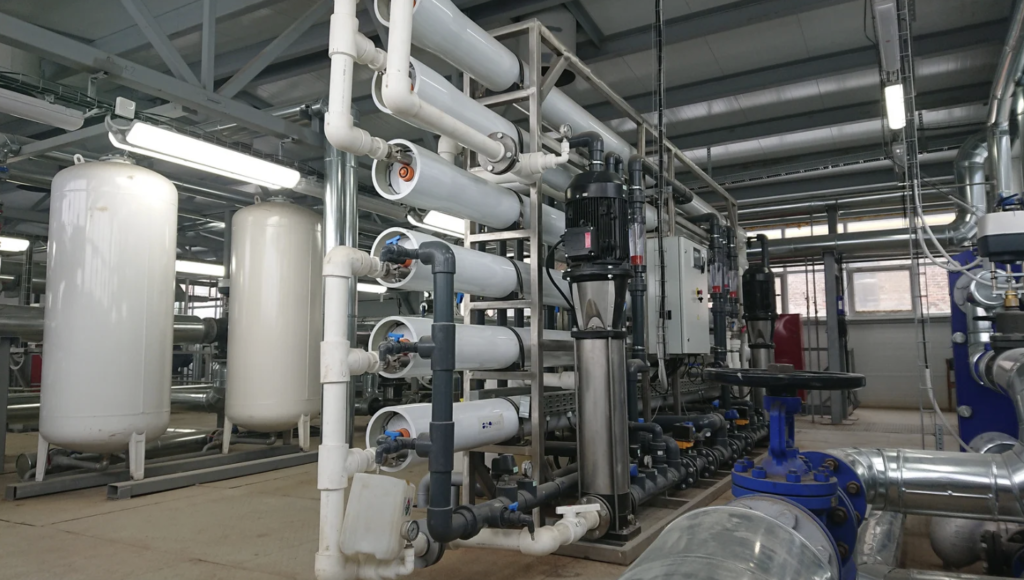
Why Water Chemistry Matters in Real Systems
Every industrial system that uses water is constantly changing. Water enters the system, is heated or cooled, exposed to air, treated with chemicals, and then recirculated or discharged.
During that process, water chemistry changes continuously.
This is why operators see issues like:
- Scale forming on heat transfer surfaces
- Corrosion developing in piping and equipment
- Fouling reducing system efficiency
- Chemical usage increasing over time
These are not random problems. They are direct results of water chemistry moving outside of controlled conditions.
Water at the Molecular Level (Why It Matters Operationally)
At its simplest level, one water molecule is made of two hydrogen atoms and one oxygen atom. These hydrogen atoms and the oxygen atom form a structure that allows hydrogen bonding between neighboring molecules.
That bonding gives water properties that are critical in industrial systems:
- Water has a higher boiling point than most liquids
- Water has a defined freezing point and expands as it freezes into ice
- Liquid water behaves differently than most liquids under temperature change
Why this matters operationally:
- Higher boiling point affects how steam systems operate
- Freezing point matters for systems exposed to cold conditions
- Water expands when it freezes, which is why pipes fail in freezing conditions
These are not academic concepts. They show up in real system failures.
Physical Properties That Drive System Behavior
Water chemistry is tightly connected to physical properties that operators deal with every day.
| Property | What Operators See in the Field |
|---|---|
| Boiling point | Impacts steam generation and pressure control |
| Freezing point | Affects freeze protection in exposed systems |
| Density change | Causes pipe damage when water freezes |
| Surface interaction | Drives fouling and deposit formation |
For example, when water boils, dissolved gases leave the liquid phase. That changes corrosion behavior in boilers. When water freezes, expansion damages piping and tanks.
These properties explain why water behaves the way it does under operating conditions.
Dissolved Substances and Why They Drive Problems
In industrial systems, water is never pure. It contains dissolved substances that directly affect water chemistry.
Common dissolved components include:
- Calcium and magnesium (hardness)
- Carbon dioxide (forms carbonic acid)
- Oxygen (drives corrosion)
- Other contaminants and chemicals
Operators see the impact of these dissolved substances as:
- Scale from calcium deposits
- Corrosion from acidic or oxygen-rich conditions
- Fouling from organic or inorganic contamination
Even small amounts of dissolved substances can create large problems over time.
How Water Chemistry Changes in Industrial Systems
Water chemistry is not static. It changes as water moves through a system.
In industrial systems, water is exposed to:
- High temperatures in boilers and heat exchangers
- Air contact in cooling systems
- Chemical treatment programs
- System surfaces that interact with dissolved substances
As these conditions change, water chemistry changes.
This is why operators often see problems develop gradually. The system may look stable, but the chemistry is shifting underneath.
Hard Water, Soft Water, and Scaling Risk
Hard water contains dissolved calcium and magnesium. When heated, these minerals form scale.
Operators recognize this as:
- Deposits on heat exchangers
- Reduced heat transfer
- Increased energy use
Soft water has lower mineral content and reduces scaling risk.
Water softeners are used to remove calcium and reduce these issues. However, softening water changes the overall chemistry, which must still be managed properly.
Role of Temperature in Water Chemistry
Temperature is one of the most important drivers of water chemistry changes.
As temperature increases:
- Chemical reactions happen faster
- Dissolved gases become less stable
- Scaling potential increases
Operators often see this in high-temperature systems where:
- Corrosion rates increase
- Scale forms more quickly
- Chemical treatment must be adjusted
Temperature is not just a process variable. It is a chemistry driver.
Dissolved Gases and Their Impact
Water dissolves gases such as oxygen and carbon dioxide. These gases drive important chemical reactions.
- Carbon dioxide reacts with water to form carbonic acid
- Oxygen contributes to corrosion reactions
Carbonic acid lowers pH and creates acidic conditions. This leads to corrosion in piping and equipment.
Controlling dissolved gases is a key part of water treatment in industrial systems.
Water Treatment and Chemistry Control
Water treatment exists to control water chemistry.
Typical treatment approaches include:
- Filtration to remove contaminants
- Chemical dosing to stabilize reactions
- Reverse osmosis to remove dissolved substances
For example, reverse osmosis removes dissolved salts and improves water quality for sensitive systems.
Effective water treatment aligns chemistry with system requirements.
Surface Interactions: Where Problems Actually Show Up
Operators do not see water molecules. They see what happens when water interacts with surfaces.
Water chemistry drives:
- Scale formation when minerals precipitate
- Corrosion when chemical reactions attack metal
- Fouling when contaminants accumulate
These issues appear on surfaces such as:
- Heat exchangers
- Pipes
- Cooling tower components
Understanding water chemistry helps explain why these problems occur.
Environmental Factors and Incoming Water
Water entering a system is influenced by the environment.
Sources include:
- Groundwater with high mineral content
- Surface water affected by weather conditions
- Municipal water that is typically treated but still variable
Changes in source water affect water chemistry inside the system.
Operators must adjust treatment programs based on these variations.
Common Water Chemistry Problems in Industrial Systems
Most facilities see the same recurring issues.
- Scaling from high calcium levels
- Corrosion from acidic conditions and dissolved gases
- Fouling from contaminants and biological growth
These problems rarely occur alone. They interact and amplify each other.
How Operators Can Stay Ahead of Water Chemistry Issues
The difference between reactive and proactive operation is monitoring and control.
Operators should:
- Monitor water chemistry regularly
- Track changes in temperature and system performance
- Adjust chemical treatment based on real data
- Maintain filtration and treatment systems
These steps allow operators to manage water chemistry instead of reacting to problems after they develop.
Frequently Asked Questions
What is water chemistry in industrial systems
Water chemistry refers to how water, dissolved substances, and chemical reactions interact within a system.
Why does water chemistry matter to operators
It directly impacts scaling, corrosion, and system performance.
What causes hard water problems
Hard water is caused by dissolved calcium and magnesium, which form scale when heated.
How does temperature affect water chemistry
Temperature changes reaction rates, gas solubility, and scaling potential.
How is water chemistry controlled
Through monitoring, filtration, and chemical treatment programs.
Maintain Control of Water Chemistry in Your Systems
Water chemistry is always changing, whether operators are monitoring it or not. Systems that maintain control operate efficiently and avoid costly issues. Systems that ignore chemistry eventually develop problems.
If your facility is dealing with water chemistry issues or inconsistent performance, contact our experts to review your system and identify where control needs improvement.
