
Understanding the types of steam boilers used in industrial facilities is essential for selecting the right boiler system, maintaining boiler efficiency, and supporting reliable steam production. Different steam boilers are designed around how heat transfer occurs, how pressure is generated, and how fuel is used to produce steam for industrial processes.
For operators, choosing between fire tube boilers, water tube boilers, and electric steam boilers directly impacts steam output, fuel consumption, operating costs, and overall system performance. This guide explains the most common types of steam boilers, how they work, and where they are used in real-world applications.
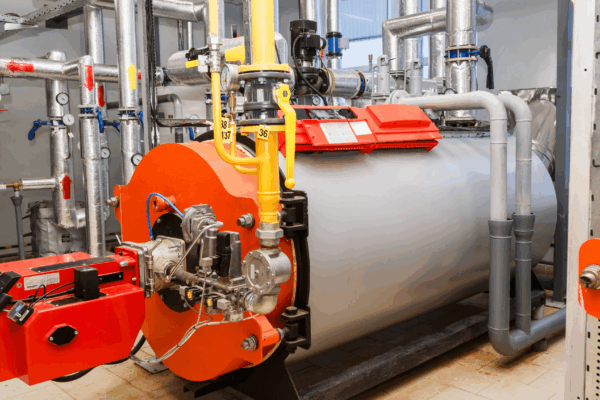
How Steam Boilers Work
All steam boilers operate on the same basic principle. A heat source generates hot combustion gases inside a combustion chamber. These hot gases transfer heat to water, which then converts to steam under pressure.
Key elements in any steam boiler system include:
- Combustion chamber where fuel combustion occurs
- Heat exchanger surfaces where heat transfer happens
- Boiler shell or pressure vessel
- Steam drum or collection area
The goal is to efficiently generate steam at the required steam pressure and temperature for the application.
Main Types of Steam Boilers
The two most common types of steam boilers are fire tube boilers and water tube boilers. Additional types such as electric boilers and biomass boilers are also used depending on system requirements.
Comparison of Steam Boiler Types
| Boiler Type | Design | Typical Use | Key Advantage |
|---|---|---|---|
| Fire tube boilers | Hot gases flow through tubes immersed in water | Low to medium pressure systems | Simple design and lower cost |
| Water tube boilers | Water flows through tubes heated by combustion gases | High pressure steam boilers | Higher efficiency and rapid steam generation |
| Electric boilers | Use electricity to generate heat | Smaller or specialized systems | No fuel combustion |
| Biomass boilers | Use organic fuel sources | Sustainable applications | Reduced carbon emissions |
Fire Tube Boilers
Fire tube boilers are one of the most widely used types of steam boilers in commercial buildings and light industrial applications. In fire tube boiler designs, hot combustion gases pass through tubes that are surrounded by water inside the boiler shell.
Characteristics of fire tube boilers:
- Tubes immersed in water allow heat transfer from hot gases
- Typically used for low pressure boilers
- Common in heating systems and hot water production
Advantages:
- Simpler construction
- Lower initial cost
- Easier maintenance
Limitations:
- Lower thermal efficiency compared to water tube boilers
- Not suitable for high pressure steam demand
Water Tube Boilers
Water tube boilers are designed for high pressure steam and large-scale steam production. In water tube steam boilers, water flows through tubes that are heated externally by combustion gases.
Characteristics of water tube boilers:
- Water flows inside tubes
- Hot gases surround the tubes
- Steam is collected in a steam drum
Advantages:
- Higher thermal efficiency
- Suitable for high pressure steam boilers
- Rapid steam generation for industrial processes
Water tube boilers are commonly used in power plants, chemical processing, and large industrial plants where steam demand is high.
Electric Steam Boilers
Electric steam boilers generate heat using electricity rather than fuel combustion. These systems are used in applications where emissions must be minimized or where fuel supply is limited.
Advantages:
- No combustion gases or emissions
- Lower maintenance requirements
- Suitable for smaller systems or specific applications
Limitations:
- Higher operating costs due to electricity usage
- Limited capacity compared to fuel-based systems
Biomass Boilers
Biomass boilers use organic materials as fuel, such as wood or agricultural waste. These systems are used where environmental sustainability and reduced greenhouse gas emissions are priorities.
Advantages:
- Reduced carbon emissions compared to fossil fuels
- Supports sustainable energy strategies
Limitations:
- Requires fuel handling systems
- Higher complexity in operation
Key Factors in Boiler Selection
Selecting the right steam boiler depends on several factors:
- Required steam pressure and steam demand
- Fuel type (natural gas, oil, biomass)
- Energy efficiency and fuel consumption
- Space and installation requirements
- Operating costs and maintenance needs
Facilities must balance these factors to select a boiler system that meets both performance and cost requirements.
Boiler Efficiency and Performance
Boiler efficiency is a critical factor in steam production. Efficient boilers reduce energy waste and lower operating costs.
Factors that affect boiler efficiency include:
- Heat transfer efficiency across heating surfaces
- Proper combustion of fuel
- Minimizing heat loss through exhaust gases
- Maintaining clean heat exchanger surfaces
Modern boiler technology includes advanced control systems that optimize combustion efficiency and adjust operation based on steam demand.
Applications of Steam Boilers
Steam boilers are used across a wide range of industries:
- Power generation and thermal power plants
- Food processing and beverage production
- Chemical production and industrial processes
- Commercial buildings and heating systems
These systems are essential for generating steam used in heating, cleaning, sterilization, and energy production.
Operational Considerations
Operating steam boilers requires careful monitoring of system conditions.
Important considerations include:
- Maintaining proper boiler water quality
- Monitoring pressure steam and temperature
- Ensuring pressure relief valves are functioning
- Managing fuel consumption and combustion gases
Improper operation can lead to reduced efficiency, increased carbon emissions, and potential safety risks.
Water Treatment and Steam Boilers
Water treatment plays a critical role in steam boiler performance. Poor boiler water quality can lead to scale buildup, corrosion, and reduced heat transfer.
A proper water treatment program helps:
- Prevent corrosion in the pressure vessel
- Reduce scale formation on heating surfaces
- Maintain boiler efficiency
- Extend equipment life
Learn more about how proper boiler water treatment supports steam system performance.
You can also explore how testing supports performance in our guide to boiler water testing.
Frequently Asked Questions
What are the main types of steam boilers?
The main types are fire tube boilers, water tube boilers, electric boilers, and biomass boilers.
What is the difference between fire tube and water tube boilers?
Fire tube boilers pass hot gases through tubes surrounded by water, while water tube boilers circulate water through tubes heated externally.
Which boiler is used for high pressure steam?
Water tube boilers are typically used for high pressure steam applications.
Are electric boilers efficient?
Electric boilers are efficient in terms of heat generation but may have higher operating costs depending on electricity pricing.
Why is water treatment important for boilers?
Water treatment prevents scale and corrosion, helping maintain efficiency and extend equipment life.
Maintain Reliable Steam Boiler Performance
Understanding the types of steam boilers used in industrial facilities helps operators select the right system and maintain performance over time. However, long-term reliability depends on proper operation, monitoring, and water treatment.
Aquatrol works with facilities to support steam boiler systems through water treatment, monitoring, and system optimization.
If your facility needs support with boiler performance or water treatment, contact us today to review your system.
