
Corrosion is one of the most common and costly problems in water systems. Understanding the different types of corrosion is critical for facility operators managing cooling towers, boiler systems, and closed loop water systems. Corrosion occurs when a chemical or electrochemical reaction causes a metal surface to deteriorate, leading to reduced performance, leaks, and potential structural failure.
In water treatment, corrosion control is not just about preventing visible rust. It involves managing water chemistry, protecting metal surfaces, and maintaining conditions that support long-term corrosion resistance. This guide outlines the main types of corrosion found in water systems and how to prevent corrosion using practical water treatment strategies.
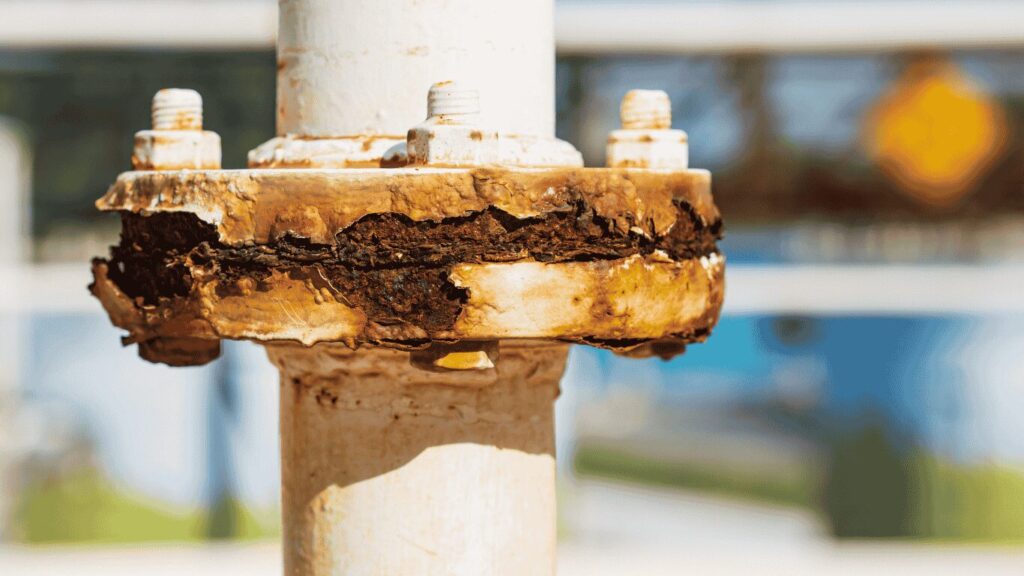
What Causes Corrosion in Water Systems?
Corrosion occurs when a metal is exposed to a corrosive environment and undergoes a chemical reaction with oxygen, water, or other corrosive agents. In aqueous environments, this process is typically electrochemical, involving the transfer of electrons between anodic and cathodic areas on a metal surface.
Common drivers of corrosion include:
- Dissolved oxygen and other oxidizing agents
- Low or unstable pH
- Presence of dissolved solids and salts
- Temperature and flow conditions
- Contact between dissimilar metals
These conditions influence corrosion rate, corrosion products, and the overall corrosion process.
Major Types of Corrosion in Water Systems
There are several types of corrosion that affect metal structures and system components. Each type of corrosion behaves differently and requires specific corrosion protection strategies.
Comparison of Common Types of Corrosion
| Type of Corrosion | Description | Common Cause | Risk Level |
|---|---|---|---|
| Uniform corrosion | Even material loss across a metal surface | General exposure to water and oxygen | Moderate |
| Pitting corrosion | Localized corrosion creating small pits | Breakdown of protective oxide film | High |
| Crevice corrosion | Occurs in confined spaces where stagnant water exists | Oxygen concentration differences | High |
| Galvanic corrosion (bimetallic corrosion) | Occurs between two dissimilar metals in electrical contact | Different metal potentials | High |
| Stress corrosion cracking | Cracking caused by tensile stress and corrosive environment | Combined mechanical and chemical factors | Very High |
| Erosion corrosion | Material loss due to fluid flow and abrasion | High velocity or turbulence | Moderate |
| Intergranular corrosion | Corrosion along grain boundaries in metals | Improper heat treatment or welding | Moderate |
Uniform Corrosion (General Corrosion)
Uniform corrosion, sometimes called general corrosion, occurs when a metal surface corrodes evenly across its exposed surface. This form of corrosion is predictable and often easier to manage compared to localized corrosion.
In water systems, uniform corrosion typically affects steel piping and other metal components exposed to oxygen and water. Over time, rust forms as the metal undergoes further oxidation.
Prevention methods include:
- Maintaining proper pH and alkalinity
- Applying corrosion inhibitors
- Using protective coatings
Pitting Corrosion
Pitting corrosion is a localized form of corrosion that creates small holes or pits in a metal surface. It is particularly dangerous because it can lead to rapid failure with minimal visible warning.
Pitting corrosion often occurs when the passive oxide layer on stainless steels or other metals is damaged. Chloride ions and dissolved oxygen can accelerate this process.
Prevention includes:
- Controlling chloride levels
- Maintaining proper water chemistry
- Using corrosion inhibitors
Crevice Corrosion
Crevice corrosion occurs in confined areas where water becomes trapped, such as under gaskets, deposits, or between joined surfaces. In these areas, oxygen levels decrease, creating a concentration cell that drives corrosion.
Crevice corrosion occurs more frequently in stagnant conditions and can affect stainless steels and aluminum alloys.
Prevention includes:
- Eliminating stagnant areas
- Maintaining proper flow
- Regular system cleaning and monitoring
Galvanic Corrosion (Bimetallic Corrosion)
Galvanic corrosion occurs when two dissimilar metals are in electrical contact within an electrolytic environment. The more active metal corrodes faster, while the less active metal is protected.
This is common in systems with mixed materials, such as copper systems connected to steel piping.
Prevention methods include:
- Avoiding direct contact between dissimilar metals
- Using insulating materials
- Applying cathodic protection
Stress Corrosion Cracking
Stress corrosion cracking is a severe form of corrosion that occurs when tensile stress and a corrosive environment combine to cause cracks in metal structures. This type of corrosion can lead to sudden structural failure.
Stress corrosion is often seen in stainless steels and high-strength alloys under elevated temperatures.
Prevention includes:
- Reducing tensile stress in system components
- Controlling water chemistry
- Using materials with higher corrosion resistance
Erosion Corrosion
Erosion corrosion occurs when high flow rates or turbulence remove protective surface layers from metal surfaces, exposing fresh metal to corrosion.
This is common in piping systems, heat exchangers, and areas with high velocity flow.
Prevention includes:
- Controlling flow rates
- Using proper system design
- Monitoring wear in high-risk areas
Intergranular Corrosion
Intergranular corrosion occurs along the grain boundaries of metals, often due to improper heat treatment or welding. This type of corrosion weakens the internal structure of the material.
In stainless steels, this is sometimes referred to as weld decay.
Prevention includes:
- Proper material selection
- Controlled manufacturing process
- Post-weld treatment
Other Forms of Corrosion
Additional types of corrosion include:
- Fretting corrosion on bearing surfaces
- Filiform corrosion under painted or plated surfaces
- Microbiologically influenced corrosion caused by bacteria
- Concentration cell corrosion due to differences in oxygen levels
Each form of corrosion depends on environmental conditions, water chemistry, and system design.
Corrosion Prevention and Control Strategies
Effective corrosion control requires a combination of water treatment, system design, and monitoring.
Key strategies include:
- Maintaining proper water quality parameters
- Applying corrosion inhibitors
- Using protective coatings on metal surfaces
- Monitoring dissolved oxygen levels
- Implementing cathodic protection where appropriate
Water treatment programs are designed to control corrosion rate, maintain system performance, and protect equipment.
Industry Guidance and Best Practices
Organizations such as the Environmental Protection Agency (EPA) and industry groups provide guidance on corrosion control and water quality standards. These guidelines help facilities establish monitoring programs and maintain safe operating conditions.
Following established best practices ensures that corrosion protection strategies are effective and aligned with regulatory expectations.
Maintain System Performance and Prevent Corrosion Damage
Understanding the types of corrosion in water systems allows operators to identify risks early and apply the right treatment strategies. Corrosion leads to reduced efficiency, equipment damage, and increased maintenance costs if not properly managed.
Aquatrol works with facilities to implement corrosion control programs, monitor water systems, and maintain reliable operation.
If your facility is experiencing corrosion issues or needs support with water treatment,
contact one of our experts to review your system and corrosion control strategy.
