
Reverse osmosis water treatment is one of the most widely used methods for producing high quality water in industrial and commercial systems. Reverse osmosis systems remove dissolved salts, total dissolved solids, and many contaminants by forcing water through a semi permeable membrane under pressure.
For operators, understanding how reverse osmosis works is not just theory. It directly affects water quality, system recovery, membrane life, and overall system performance. This guide explains the reverse osmosis process, the key components of RO systems, and how facilities use them to produce clean water and high purity water.
What Is Reverse Osmosis
Reverse osmosis is a water treatment process that reverses a naturally occurring phenomenon. In natural osmosis, water molecules move from a lower concentration solution to a higher concentration solution across a semipermeable membrane. In reverse osmosis RO, a high pressure pump applies energy to overcome osmotic pressure and force water in the opposite direction.
As water flows through the reverse osmosis membrane, dissolved salts, heavy metals, and other contaminants are rejected, while purified water passes through.
How Reverse Osmosis Water Treatment Works
A typical reverse osmosis water treatment system includes multiple stages to prepare feed water, protect the membrane surface, and improve overall performance.
Basic process:
- Feed water enters the system and passes through pre treatment
- Filtration removes larger particles and protects the RO membrane
- A high pressure pump increases feed pressure
- Water is forced through the semi permeable membrane
- Purified water is collected as permeate
- Concentrated solution is discharged as reject stream
This filtration process allows reverse osmosis systems to remove most contaminants and produce high quality water.
Key Components of RO Systems
RO systems rely on several components working together.
| Component | Function |
|---|---|
| Sediment filter | Removes larger particles to protect downstream components |
| Carbon filter | Removes chlorine and organic compounds |
| High pressure pump | Provides energy to overcome osmotic pressure |
| RO membrane | Core separation barrier for dissolved solids |
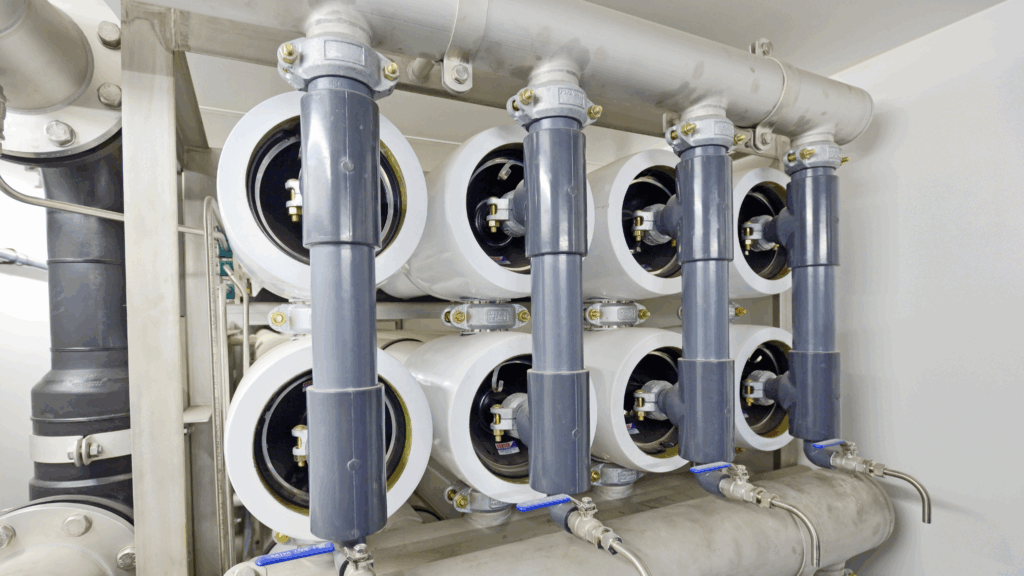
| Pressure vessel | Houses the membrane elements |
| Post treatment | Adjusts water chemistry after filtration |
Each component plays a role in maintaining system efficiency and membrane life.
Role of the RO Membrane
The RO membrane is the most critical part of reverse osmosis systems. It acts as a barrier that allows water molecules to pass while rejecting dissolved salts, dissolved solids, and many contaminants.
The membrane surface must be protected from fouling, scaling, and damage. Pre treatment steps such as cartridge filtration, multi media filter systems, and scale inhibitors are used to protect the membrane.
Maintaining proper feed water quality is essential for long term performance.
What Reverse Osmosis Removes
Reverse osmosis water treatment can remove a wide range of contaminants.
Common contaminants removed include:
- Dissolved salts and dissolved solids
- Heavy metals
- Volatile organic compounds
- Calcium carbonate and scaling compounds
- Other water contaminants
This makes RO systems suitable for producing clean water and high purity water across many applications.
Feed Water and System Performance
Feed water quality directly affects how reverse osmosis systems perform. High levels of dissolved solids, suspended solids, or biological activity can reduce system recovery and increase fouling.
Key factors include:
- Feed pressure and feed stream composition
- Concentration of dissolved salts
- Presence of organic compounds
- Water temperature and flow conditions
Operators must monitor these variables to maintain system efficiency.
System Recovery and Efficiency
System recovery refers to the percentage of feed water converted into permeate. Higher recovery reduces water waste but increases the concentration of dissolved solids in the reject stream.
Balancing recovery is critical:
- Low recovery increases water usage
- High recovery increases scaling risk
Proper design and operation help optimize recovery while maintaining performance.
Applications of Reverse Osmosis Systems
Reverse osmosis systems are used across a wide range of industries.
Common applications include:
- Drinking water systems
- Industrial processes
- Semiconductor manufacturing
- Food and beverage processing
- Boiler feed water treatment
RO systems are often used where high purity water or consistent water quality is required.
For more on system configurations, see our overview of commercial reverse osmosis systems.
Reverse Osmosis in Industrial Water Treatment
In industrial settings, reverse osmosis water treatment is used to control water quality and protect equipment.
Examples include:
- Producing boiler feed water to reduce scale formation
- Treating cooling system makeup water
- Removing contaminants from industrial wastewater
Proper integration with water treatment programs improves system reliability and reduces maintenance costs.
Pre Treatment and Membrane Protection
Pre treatment is critical for protecting RO membranes and ensuring long term operation.
Common pre treatment methods include:
- Multi media filter systems to trap particles
- Cartridge filtration to remove fine solids
- Chemical dosing such as scale inhibitors
These steps prevent fouling and extend membrane life.
For a deeper look at system components, see our guide on reverse osmosis skids.
Post Treatment and Water Quality Adjustment
After reverse osmosis, post treatment may be required to adjust water chemistry.
This can include:
- pH adjustment
- Addition of mineral additives
- Final polishing filtration
Post treatment ensures that reverse osmosis water meets specific application requirements.
Reverse Osmosis vs Other Filtration Methods
| Method | Removes Dissolved Solids | Typical Use |
|---|---|---|
| Reverse osmosis | Yes | High purity water, industrial use |
| Standard filtration | No | Suspended solids removal |
| Carbon filtration | Limited | Organic compounds, chlorine removal |
Reverse osmosis is one of the most effective filtration methods for removing dissolved solids and producing purified water.
Common Challenges in RO Systems
Operators may encounter several issues in reverse osmosis systems.
Common challenges include:
- Membrane fouling from suspended solids
- Scaling from calcium carbonate and dissolved salts
- Reduced membrane life due to poor pre treatment
- Changes in feed water quality
Routine monitoring and maintenance are required to maintain performance.
Maintenance and Monitoring
To ensure reliable operation, RO systems require regular monitoring.
Key practices include:
- Monitoring TDS levels and conductivity
- Checking membrane performance and pressure drop
- Inspecting system components
- Scheduling membrane replacement when needed
For maintenance guidance, see our overview of reverse osmosis membrane replacement.
Frequently Asked Questions
What is reverse osmosis water treatment?
Reverse osmosis water treatment is a process that uses pressure to force water through a semi permeable membrane to remove dissolved solids and contaminants.
What do reverse osmosis systems remove?
RO systems remove dissolved salts, heavy metals, and many contaminants from water.
How does reverse osmosis work?
It uses a high pressure pump to push water through a membrane that separates contaminants from purified water.
Is reverse osmosis water safe to drink?
Yes, reverse osmosis produces high quality drinking water when properly maintained.
How often should RO systems be maintained?
Regular monitoring and periodic membrane replacement are required to maintain system performance.
Maintain Reliable Reverse Osmosis Performance
Reverse osmosis water treatment is one of the most effective methods for producing clean water and maintaining water quality in industrial systems. Proper system design, monitoring, and maintenance are essential for long term performance.
Aquatrol works with facilities to design, operate, and maintain reverse osmosis systems that meet specific water treatment needs.
If your facility needs support with reverse osmosis systems or water treatment strategy, contact our team today to review your system and identify the right solution.
