
EDI water treatment, or electrodeionization, is a polishing technology used after reverse osmosis to produce high purity water on a continuous basis. By combining ion exchange resins, ion exchange membranes, and a direct current (DC) electric field, EDI systems remove ions without the need for chemical regeneration.
For operators, electrodeionization EDI is valued because it delivers consistent product quality, reduces handling of chemicals, and supports continuous operation in critical applications such as power generation and the pharmaceutical industry.
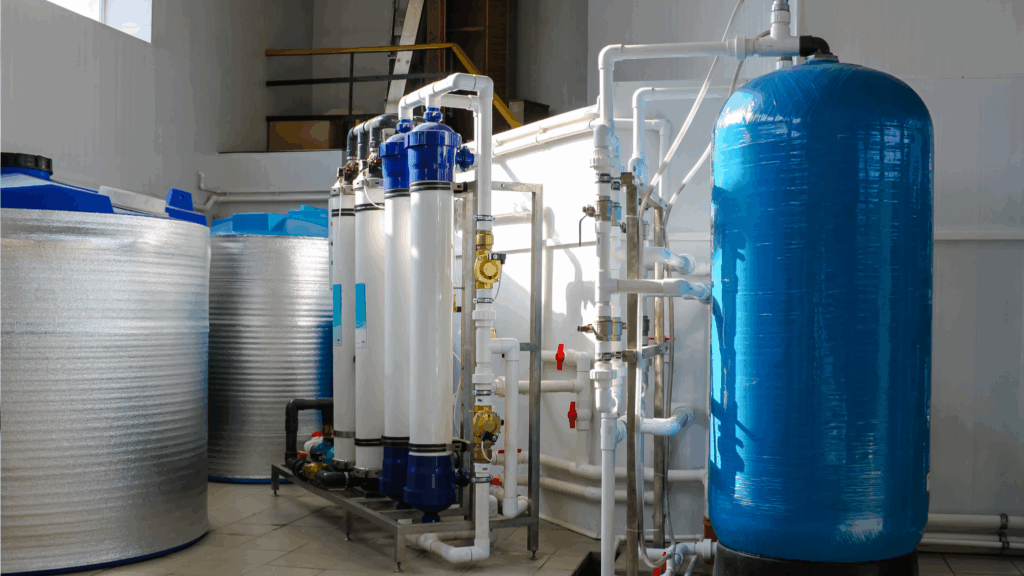
What Is EDI Water Treatment?
EDI water treatment is a water purification technology that removes ionized and ionizable species from water. It builds on two technologies: ion exchange and electro dialysis. In EDI systems, ion exchange media and ion selective membranes work together under an electric field to drive ions out of the product stream.
Unlike conventional mixed bed resins, electrodeionization eliminates periodic resin regeneration using acids and caustics. Instead, the system uses water splitting at the resin bed to continuously regenerate the media.
How the EDI Process Works
The EDI process occurs inside an EDI module made up of alternating dilute and concentrate chambers separated by ion exchange membranes.
Basic sequence:
- Feed water from an upstream RO system enters the EDI module
- Water flows through the dilute chamber containing ion exchange resins
- A DC power supply applies an electric field across the module
- Positive ions move toward the negative electrode; negative ions move toward the positive electrode
- Ions pass through ion exchange membranes into concentrate streams
- Water splitting generates hydrogen ions and hydroxyl ions, continuously regenerating the resin bed
- High purity water exits the dilute chamber
This continuous process enables stable high purity water production without chemical regeneration.
Key Components of EDI Systems
| Component | Function |
|---|---|
| EDI module | Houses chambers, membranes, and resin bed |
| Ion exchange resins | Capture ions and enable water splitting |
| Ion exchange membranes | Allow selective ion transport |
| DC power supply | Drives ion movement with electrical current |
| Concentrate channels | Carry removed ions out of the system |
Each component is essential for maintaining EDI performance and product quality.
Role of Reverse Osmosis Upstream
EDI systems require low total dissolved solids in the feed water. For that reason, they are almost always installed after a reverse osmosis stage.
The RO system removes the bulk of dissolved salts and organic substances. EDI then removes the remaining ions to produce ultrapure water.
For a deeper look at upstream systems, see our overview of reverse osmosis water treatment.
Advantages of EDI Water Treatment
Chemical Free Operation
One of the main advantages of electrodeionization technology is that it is a chemical free process. There is no need for chemical regeneration using acids or caustics, reducing exposure to harmful chemicals and simplifying operations.
Continuous Operation
EDI systems operate continuously without downtime for resin regeneration. This supports stable water treatment and consistent product quality.
High Purity Water Production
EDI is capable of producing high purity water and ultra pure water suitable for demanding applications such as pharmaceutical applications and power plants.
Lower Chemical Handling and Waste
By eliminating chemical regeneration, EDI reduces wastewater generation and improves environmental performance.
Cost Effectiveness Over Time
While initial costs may be higher than conventional systems, long term cost effectiveness improves due to reduced chemical usage, labor, and downtime.
Comparison: EDI vs Conventional Ion Exchange
| Feature | EDI Systems | Conventional Ion Exchange |
|---|---|---|
| Regeneration | Continuous (water splitting) | Batch chemical regeneration |
| Chemicals | Minimal | High chemical usage |
| Operation | Continuous process | Intermittent cycles |
| Product quality | Stable high purity water | Variable based on cycle |
| Environmental impact | Lower | Higher due to chemicals |
This comparison highlights why EDI is often selected for modern high purity water systems.
Applications of EDI Water Treatment
EDI water treatment is used across industries where high quality water is required.
Common applications include:
- Power generation and power plants
- Pharmaceutical industry and laboratory use
- Semiconductor manufacturing
- Industrial water systems requiring deionized water
In these environments, even low levels of ions or other contaminants can impact product quality or equipment performance.
Factors That Affect EDI Performance
Several variables influence EDI performance and system reliability.
- Feed water quality from the RO system
- Presence of carbon dioxide and dissolved gases
- Concentration of organic compounds and other impurities
- Proper electrical current and voltage control
- Condition of ion exchange media and membranes
Maintaining stable feed water conditions is critical for consistent operation.
Pre Treatment Requirements
Effective water pretreatment is essential before water enters an EDI system.
Pretreatment typically includes:
- Filtration to remove suspended solids
- Reverse osmosis to reduce total dissolved solids
- Removal of chlorine and other oxidants that can damage membranes
Proper pretreatment protects the EDI module and extends system life.
Monitoring and Maintenance
To maintain EDI systems, operators should monitor:
- Product water resistivity or conductivity
- Flow rates in dilute and concentrate streams
- Voltage and current across the module
- Presence of scaling or fouling
Routine monitoring ensures high quality water and prevents performance issues.
Environmental and Operational Benefits
EDI water treatment supports environmentally friendly operation by reducing chemical usage and minimizing waste streams.
Benefits include:
- Reduced environmental impact
- Lower handling of hazardous chemicals
- Improved safety for operators
- Consistent high purity water production
These advantages make EDI a preferred solution for modern water purification systems.
Frequently Asked Questions
What is EDI water treatment?
EDI water treatment is a process that removes ions from water using ion exchange resins, membranes, and an electric field without chemical regeneration.
How does electrodeionization differ from ion exchange?
Electrodeionization operates continuously and regenerates resin using electricity, while conventional ion exchange requires chemical regeneration.
Why is reverse osmosis used before EDI?
Reverse osmosis reduces dissolved solids so the EDI system can efficiently remove remaining ions.
What industries use EDI systems?
Power plants, pharmaceutical facilities, and semiconductor manufacturing commonly use EDI systems.
Is EDI environmentally friendly?
Yes, EDI reduces chemical usage and wastewater compared to conventional systems.
Improve High Purity Water Systems with EDI
EDI water treatment provides a reliable and efficient method for producing high purity water in demanding applications. When properly designed and maintained, EDI systems deliver consistent performance with reduced chemical handling and improved sustainability.
If your facility is evaluating high purity water production or upgrading existing systems, contact our team today to review your setup and identify the right solution.
