
In industrial cooling systems, the cooling tower basin is the lifeblood of the entire operation. It is responsible for collecting, storing, and recycling cooled water that keeps facilities running efficiently. This article will explore the essential aspects of cooling tower basin design and maintenance, providing practical insights to optimize system performance and ensure safety.
Key Takeaways
- Proper basin design ensures efficient water flow, drainage, and prevents sediment accumulation.
- Selecting corrosion-resistant materials extends basin lifespan and reduces maintenance.
- Freeze protection with electric heaters safeguards the basin and piping in cold climates.
- Sweeper systems help automate debris removal, reducing manual cleaning needs.
- Flow-through basin designs lower chemical costs and minimize bacterial growth risks.
- Regular monitoring and control integration optimize basin performance and safety.
What Is a Cooling Tower Basin?
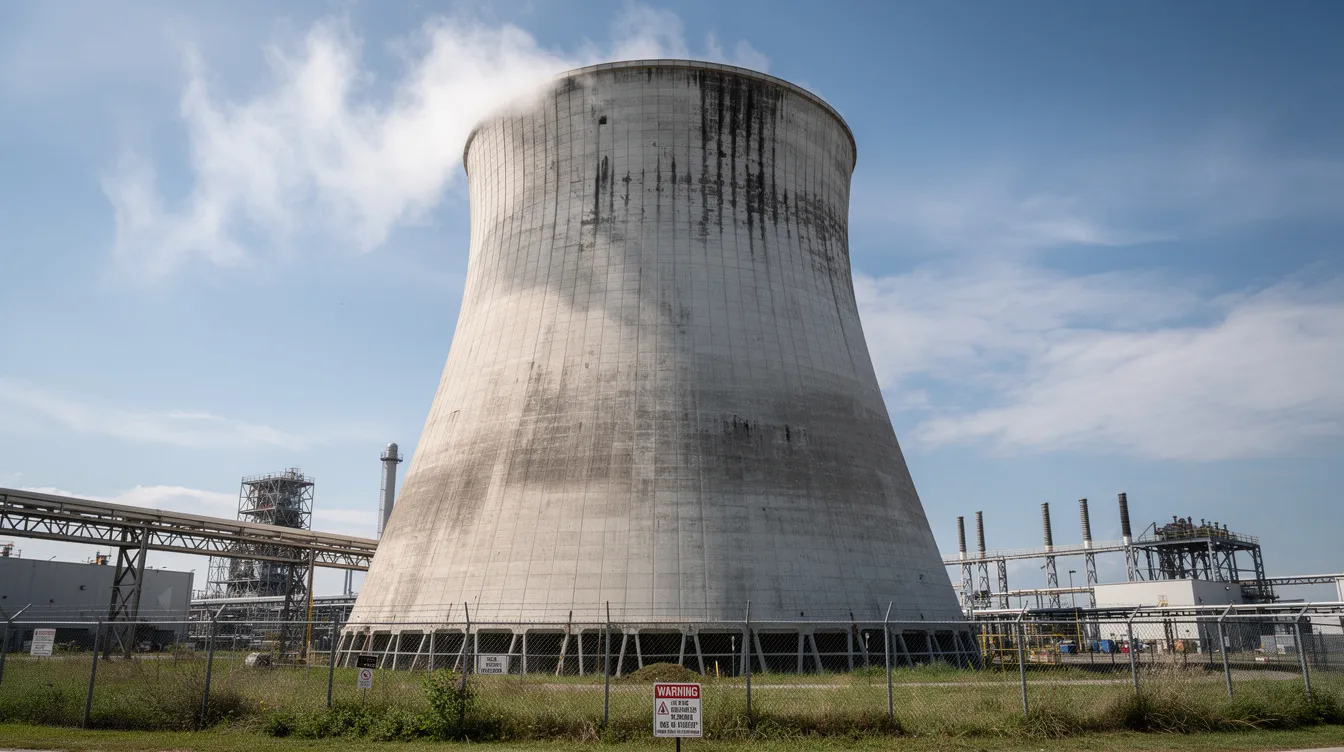
A cooling tower basin is the reservoir located at the bottom of a cooling tower. It collects cooled water before it pumps it back into the system. The cooling cycle begins when hot water enters the tower from condensers or other equipment. This water is distributed over fill media via spray nozzles, allowing air to pass through and evaporate a small portion, removing heat in the process. The cooled water then collects in the basin at the bottom, from where it is pumped back through the system for reuse.
Cooling tower basins come in various types, including square or rectangular basins often found in modular towers, circular basins used in some field-erected towers, reinforced concrete basins for large industrial applications, and fiberglass or stainless steel basins common in modular units.
Why Basin Design and Maintenance Matters
Proper design and maintenance of the cooling tower basin are essential for system efficiency, cost savings, and safety. A well-designed basin enhances thermal performance and energy efficiency, while poor design leads to scale and dirt buildup that increases energy consumption. Maintaining correct water levels and managing blowdown supports water conservation.
Health and safety are paramount, as neglected basins can foster Legionella bacteria growth, earning the nickname “legionella gardens.” Regular cleaning and disinfection, recommended biannually by OSHA, help mitigate these risks. Traditional open basins also accumulate debris, sludge, and mineral scale, which reduce efficiency and increase corrosion risks.
Biofilm formation promotes microbiologically influenced corrosion, damaging basin materials and water quality. Treatment chemicals play a vital role in controlling scale, corrosion, and microbial growth. Control panels integrate freeze protection heaters, pumps, and sweeper systems, automating operations and reducing manual intervention to maintain basin cleanliness and safety.
Design Requirements for Cooling Tower Basins
Effective design requirements are essential to ensure the cooling tower basin functions optimally and supports overall system performance.
Drainage Requirements
The basin must be capable of draining 100% of its water volume. The drain outlet should have a minimum internal diameter of 50mm. Position it at the lowest point of the basin. Adequate slope or fall toward the drain prevents pooling. Failure to meet these requirements means the basin will not drain as required, and standing water at the low end leads to sludge accumulation and reduced efficiency.
Cell Isolation Requirements
Each cooling tower cell should have a dedicated basin that can be isolated without draining adjacent basins. Isolation valves on inlet and outlet piping allow maintenance on one cell while others remain operational.
Water Flow Between Basins
Free flow between multiple basins is maintained via pipes or weirs that connect them and keep water levels consistent across all basins. Pipe diameter and weir size must handle flow without restriction.
Surface Quality Requirements
Basin surfaces must be smooth, with no dirt-trapping patterns, and completely watertight to prevent leaks. A polished or coated finish helps prevent biofilm adhesion.
Submergence Requirements (Anti-Vortex)
The outlet should have a minimum submergence of two velocity heads above the outlet to prevent vortexing, which can cause air entrainment in pumps, reducing flow and potentially damaging equipment.
Outlet Velocity Limits
Outlet velocity should be limited to a maximum of 1-2 feet per second to prevent turbulence and erosion. Velocity is calculated as flow rate divided by outlet area.
Cooling Tower Sweeper Systems
To address sediment and debris accumulation in traditional basins, many cooling towers incorporate sweeper systems. These systems include components such as filter separators that remove contaminants before water returns to the basin, pumps that circulate water through nozzles, and supply pipework that delivers water to strategically placed nozzles. The nozzles create hydraulic sweeps that push sediment and debris toward a sweeper outlet connected to the filtration system. Controls, often interlocked with the cooling tower operation, manage system timing and purging cycles, reducing manual intervention and maintaining basin cleanliness.
Regular maintenance of sweeper systems includes monitoring nozzle flow rates, ensuring filters purge correctly, and checking control panel settings to optimize cleaning cycles. This proactive approach helps prevent sediment buildup and reduces the need for extensive manual cleaning.
Basin Freeze Protection
In colder climates, freezing presents a significant problem for cooling tower basins. Electric immersion heaters are commonly installed to maintain basin water temperatures above freezing, often set around 45˚F. These heaters are fully immersed in the water, providing 100% efficiency, and are usually interlocked with the pump operation to run only during standby conditions. Heating cables wrapped around piping protect against freeze damage. Control panels with temperature and liquid level sensors regulate heater operation and provide safety cutoffs to prevent heater damage during low water conditions. This control strategy means the heaters operate only when needed, and the panel should generally be mounted where the unit remains accessible for service. Proper freeze protection safeguards the basin and associated piping, ensuring reliable year-round operation.
Selecting heater sheath materials carefully is important to minimize accelerated corrosion due to elevated temperatures and chemical exposure. Materials such as copper or 304 stainless steel are commonly used, with longer cartridge-style heaters preferred for large basins to distribute heat evenly. Manufacturers may also provide suggestions on heater sizing and placement, and if elements fail, replace worn components promptly. When a wall connection is required, the heater hub should match the basin material to help avoid galvanic corrosion.
Advanced Basin Designs: Flow-Through Basins
Modern cooling tower manufacturers have developed flow-through basin designs that keep water moving at velocities of 5-7 feet per second. Working with a cooling tower manufacturer also helps match basin components and controls to the tower design. This design prevents sediment and algae accumulation by eliminating stagnant water areas, reducing the need for treatment chemicals by up to 40%. Enclosed flow-through basins also minimize biofilm and Legionella growth risks, offering many advantages over traditional open basins. These basins support higher cycles of concentration, improving water conservation and reducing operational costs while enhancing system reliability. Additionally, flow-through basins are corrosion-resistant and compatible with treated wastewater sources such as TSE/RO, expanding their application in sustainable building water management.
Common Design Mistakes and Their Impact
Proper design and maintenance of cooling tower basins are crucial to avoid common pitfalls that can compromise system performance and longevity, and a cooling tower manufacturer often develops advanced flow-through basin designs to reduce these risks.
- Piping Run Above Basin Height: Installing piping at or above basin height reduces thermal performance because the basin water is the cooled water in the system. Best practice is to keep piping at or below basin height.
- Insufficient Submergence: An outlet too close to the water surface causes vortexing and air entrainment in pumps. Solutions include installing anti-vortex plates, increasing submergence depth, or using larger outlets.
- Poor Drainage Design: Lack of slope to the drain or an outlet not at the lowest point causes standing water, which accumulates sludge and debris and creates a number of operating and maintenance problems. Redesign with proper fall to the drain point is necessary.
- Inadequate Material Selection: Using galvanized steel in chemical or saline environments leads to rust and corrosion over time. Stainless steel (304 or 316) or epoxy-coated materials are better choices.
- Missing Water Level Control: Without a float valve or level instrument, basins can overflow or run dry, causing system inefficiency. Installing a float valve with a stilling tube ensures proper water level control.
- Neglecting Water Chemistry and Treatment: Failure to monitor water chemistry and adjust treatment chemicals can lead to increased corrosion, scale formation, and microbial growth, shortening basin and equipment life.
- Ignoring Control Panel Functionality: Overlooking control panel integration and maintenance can result in improper operation of freeze protection, sweeper systems, and alarms, increasing the risk of system failures.
Material Selection Guide
Choosing the appropriate material for a cooling tower basin is crucial to ensure durability, corrosion resistance, and cost-effectiveness. The following table summarizes common materials used, highlighting their properties, advantages, disadvantages, and typical applications to guide water treatment specialists in making informed decisions.
| Material | Properties | Pros | Cons | Best Use Case | Cost Range |
|---|---|---|---|---|---|
| FRP (Fiberglass Reinforced Plastic) | Lightweight, corrosion-resistant, molded | Easy installation, no rust, long life | Can be damaged by impact, UV degradation over time | Modular square towers | Medium |
| Galvanized Steel | Economical, durable, standard | Lower cost, widely available | Rust risk over time, especially in wet environments | Standard applications | Low |
| Stainless Steel (304/316) | High chemical resistance, very durable | Excellent corrosion resistance, durable | Higher cost, heavier | Chemical/saline environments | High |
| Reinforced Concrete (RCC) | Heavy-duty, field-erected | Very durable, handles large volumes | Very heavy, requires professional installation, can crack | Large field-erected towers | Medium-High |
| Epoxy-Coated Steel | Protective coating over steel | Corrosion protection, moderate cost | Coating can degrade, requires monitoring | Chemical/saline environments | Medium |
Material Selection Factors
Environmental conditions such as chemical exposure, salinity, UV exposure, and temperature influence material choice. Tower size and type, budget considerations, and long-term maintenance requirements also guide selection. For example, stainless steel 316 offers the best life-cycle value in harsh environments, while galvanized steel suits low-budget, standard applications.
Optimizing Cooling Tower Basins
Effective cooling tower basin design and maintenance are vital for optimizing system performance, reducing operational costs, and ensuring safety. By addressing traditional basin issues, implementing proper freeze protection, and considering advanced flow-through basin designs, water treatment specialists can significantly enhance cooling tower efficiency and longevity. Selecting the right materials and incorporating features such as sweeper systems, treatment chemicals, and adequate drainage further contribute to a reliable and sustainable cooling process.
Regular monitoring of water quality parameters, including concentration cycles and contaminant levels, is recommended, and using operating data helps adjust treatment chemicals and maintain optimal basin conditions. Implementing automated control panels to manage these functions makes operation easier and reduces human error.
Contact our team today for the opportunity to discuss cooling tower basin treatment options.
Frequently Asked Questions (FAQs)
What is the primary function of a cooling tower basin?
The cooling tower basin collects and stores cooled water at the bottom of the tower, allowing it to be recirculated back into the system to maintain efficient cooling operations.
Why is regular maintenance of the cooling tower basin important?
Regular maintenance prevents sediment, solids, and biofilm buildup that can reduce system efficiency, promote corrosion, and create health risks such as Legionella growth.
How does freeze protection work in cooling tower basins?
Freeze protection typically uses electric immersion heaters and heating cables to maintain basin water and piping temperatures above freezing, preventing damage during cold weather.
What are the benefits of a flow-through basin design?
Flow-through basins keep water moving at high velocities, reducing sediment accumulation, lowering chemical treatment costs by up to 40%, and minimizing bacterial growth risks compared to traditional basins.
How do cooling tower sweeper systems improve basin cleanliness?
Sweeper systems use pumps, nozzles, and filter separators to hydraulically sweep and remove debris and solids from the basin, reducing manual cleaning and maintaining water quality.
What materials are best suited for cooling tower basins?
Materials like stainless steel (304 or 316) and fiberglass reinforced plastic (FRP) offer excellent corrosion resistance and durability, while galvanized steel is a cost-effective option for less demanding environments.
How does basin design affect water treatment and operational costs?
Proper basin design reduces sediment and solids buildup, lowering the need for water treatment chemicals and minimizing operational costs associated with cleaning and equipment maintenance.
Why is it important to monitor water chemistry in the cooling tower basin?
Maintaining balanced water chemistry prevents scale, corrosion, and microbial growth, ensuring the longevity of basin materials and the overall system’s efficiency.
