
Chlorine benefits in water treatment systems are widely recognized across public water systems, industrial facilities, and commercial operations. Chlorine is one of the most effective and widely used disinfectants for maintaining water quality, controlling harmful microorganisms, and ensuring safe drinking water.
For operators and facility managers, understanding chlorine benefits is not just about disinfection. It is about balancing chlorine chemistry, managing disinfection byproducts, and maintaining system performance while protecting public health.
What Is Chlorine and Why It Is Used in Water Treatment
Chlorine is a chemical element and an essential chemical building block used across many industries. In water treatment, chlorine plays a vital role in water disinfection by killing harmful bacteria, viruses, and other dangerous pathogens.
Chlorine is commonly used in:
- Drinking water chlorination
- Industrial water treatment systems
- Cooling towers and process water systems
- Distribution system protection
Because chlorine is highly effective at killing germs, it remains a primary method for disinfecting water and preventing waterborne diseases such as typhoid fever.
How Chlorine Works in Water Systems
Chlorine works through a chemical reaction that disrupts the cellular structure of harmful microorganisms. When chlorine is added to water, it reacts with organic matter and forms compounds that destroy bacteria and viruses.
This process ensures that water remains safe as it travels through storage tanks, water pipes, and distribution systems.
Chlorine chemistry is critical because the effectiveness of chlorine depends on factors such as:
- Amount of chlorine added
- pH levels of water
- Presence of organic matter
- Temperature and contact time
Maintaining proper chlorine levels ensures effective disinfection without excessive chemical usage.
Key Benefits of Chlorine in Water Treatment
Reliable Disinfection and Disease Control
One of the most important chlorine benefits is its ability to disinfect water and kill harmful bacteria and microorganisms. Chlorine is widely used because it provides consistent and reliable protection against pathogens.
Chlorine helps:
- Kill harmful bacteria and viruses
- Control microbial regrowth in water systems
- Reduce the risk of waterborne diseases
This makes chlorine essential for public health and safe drinking water.
Protection Across the Distribution System
Unlike some other disinfectants, chlorine provides a residual effect. This means that chlorine remains active as water travels through the distribution system.
This residual helps prevent contamination and microbial regrowth in water pipes and storage tanks.
Cost Effective and Scalable Solution
Chlorine is a cost effective solution for both large treatment plants and smaller systems. It can be applied in small amounts and scaled depending on system size and demand.
This makes chlorine suitable for various applications, from municipal water supply systems to industrial water treatment processes.
Improved Water Quality and Safety
Chlorine improves water quality by eliminating harmful contaminants and ensuring water is safe to drink. It supports clean water production and helps maintain compliance with drinking water regulations.
Chlorine vs Other Disinfection Methods
| Method | Effectiveness | Residual Protection | Typical Use |
|---|---|---|---|
| Chlorine | High | Yes | Public water systems, industrial water |
| Chlorine dioxide | High | Limited | Specialized disinfection applications |
| Ozone | Very high | No | Advanced treatment systems |
| UV light | High | No | Point-of-use or final disinfection |
Chlorine remains one of the most widely used disinfectants because of its balance between effectiveness, cost, and residual protection.
For comparison with other methods, see our guide on chlorine dioxide sterilization.
Managing Chlorine Levels and Water Quality
Proper control of chlorine levels is essential to maintain effectiveness while minimizing potential health risks.
Operators must:
- Regularly test chlorine levels
- Adjust dosing based on water quality
- Monitor taste and odor issues
- Ensure compliance with safety standards
Maintaining appropriate levels of chlorine helps ensure water remains safe without causing excessive taste or odor concerns.
Disinfection Byproducts and Considerations
While chlorine is effective, it can react with organic matter to form disinfection byproducts (DBPs). These include compounds that may have potential health effects if not properly managed.
Key considerations include:
- Monitoring DBP levels in water
- Managing organic matter in source water
- Using proper treatment processes to reduce DBPs
Advanced water treatment methods can help produce fewer disinfection byproducts while maintaining effectiveness.
Chlorine in Industrial Water Treatment
In industrial systems, chlorine is used to control biological growth and maintain system performance.
Applications include:
- Cooling towers to prevent bacterial buildup
- Process water systems to maintain cleanliness
- Industrial water treatment plants
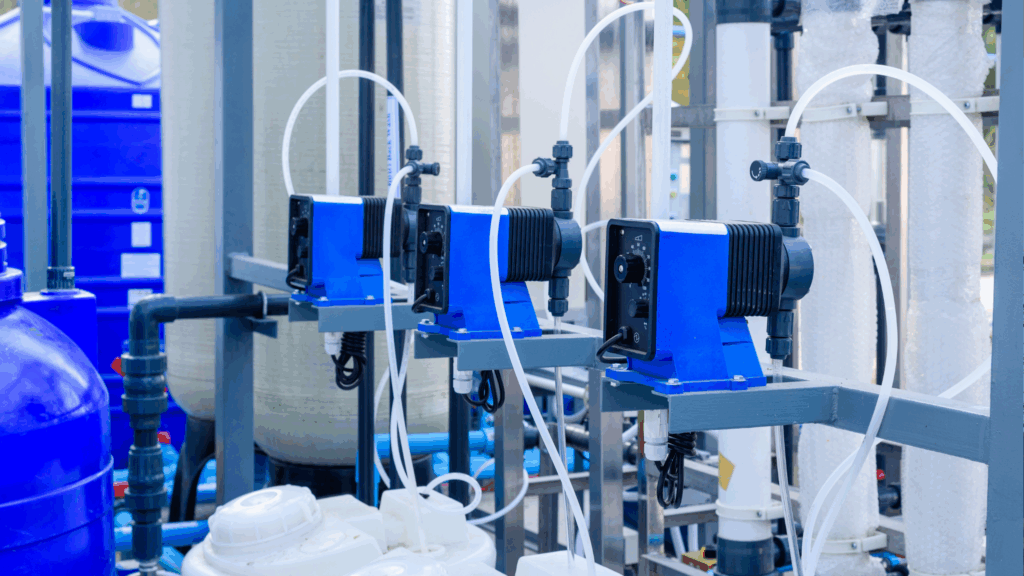
Chlorine dosing systems, such as those described in our guide on chlorine injection pumps, help deliver precise chlorine levels for effective treatment.
Health and Environmental Considerations
Chlorine must be handled carefully to avoid potential health risks.
High levels of chlorine can lead to:
- Skin irritation
- Eye irritation
- Strong smell or taste in water
Proper monitoring ensures that chlorine levels remain within safe limits for human health and environmental protection.
Chlorine and Drinking Water Safety
Chlorine plays an essential role in ensuring safe drinking water. Public water systems rely on chlorination to protect people from harmful germs and waterborne diseases.
Despite concerns about taste or odor, the benefits of chlorine in protecting health far outweigh these issues.
For additional insight into chlorine chemistry and pH interaction, see our guide on chlorine and pH.
Frequently Asked Questions
What are the main chlorine benefits in water treatment?
Chlorine provides reliable disinfection, controls harmful microorganisms, and helps maintain safe drinking water.
Does chlorine remove contaminants from water?
Chlorine primarily disinfects water by killing bacteria and viruses, but it does not remove all dissolved contaminants.
Is chlorinated water safe to drink?
Yes, when properly controlled, chlorinated water is safe for human consumption and widely used in public water systems.
What are disinfection byproducts?
Disinfection byproducts are compounds formed when chlorine reacts with organic matter in water.
How do you control chlorine levels?
Chlorine levels are controlled through regular testing and adjusting dosing based on water conditions.
Maintain Safe and Effective Water Treatment
Chlorine benefits make it one of the most important tools in water treatment systems. It provides reliable disinfection, protects public health, and supports safe water across drinking water and industrial applications.
Aquatrol works with facilities to manage chlorine dosing, monitor water quality, and maintain effective water treatment programs.
If your system needs evaluation or improvement, contact us today to review your water treatment strategy.
