
ASHRAE Standard 241 is a new guideline designed to reduce the risk of infectious aerosol transmission in buildings, focusing on improving indoor air quality (IAQ). This article will present the new standard and explain its relevance, including how Standard 241 targets infectious aerosols and why building water systems play a crucial role in maintaining healthy indoor environments.
Key Takeaways
- ASHRAE Standard 241 introduces a performance-based framework focusing on infection risk reduction through clean air delivery.
- The standard applies to a wide range of buildings and renovations, emphasizing flexible compliance options.
- Building water systems can be significant sources of infectious aerosols and require integrated control measures.
- Effective air cleaning technologies must be validated for safety and efficacy under the standard.
- Ongoing maintenance, monitoring, and documentation are essential to sustain compliance and occupant health.
What is ASHRAE Standard 241 and Its Scope for Air Quality
ASHRAE Standard 241, published on July 7, 2023, establishes minimum requirements to control infectious aerosols within occupiable spaces. The standard applies broadly to new buildings, existing buildings, and major renovations, including offices and healthcare facilities. It sets guidelines for ventilation, filtration, and air cleaning technologies to reduce airborne disease transmission from SARS-CoV-2, influenza, and other pathogens.
Infectious Aerosols, Disease Transmission, and IAQ Metrics
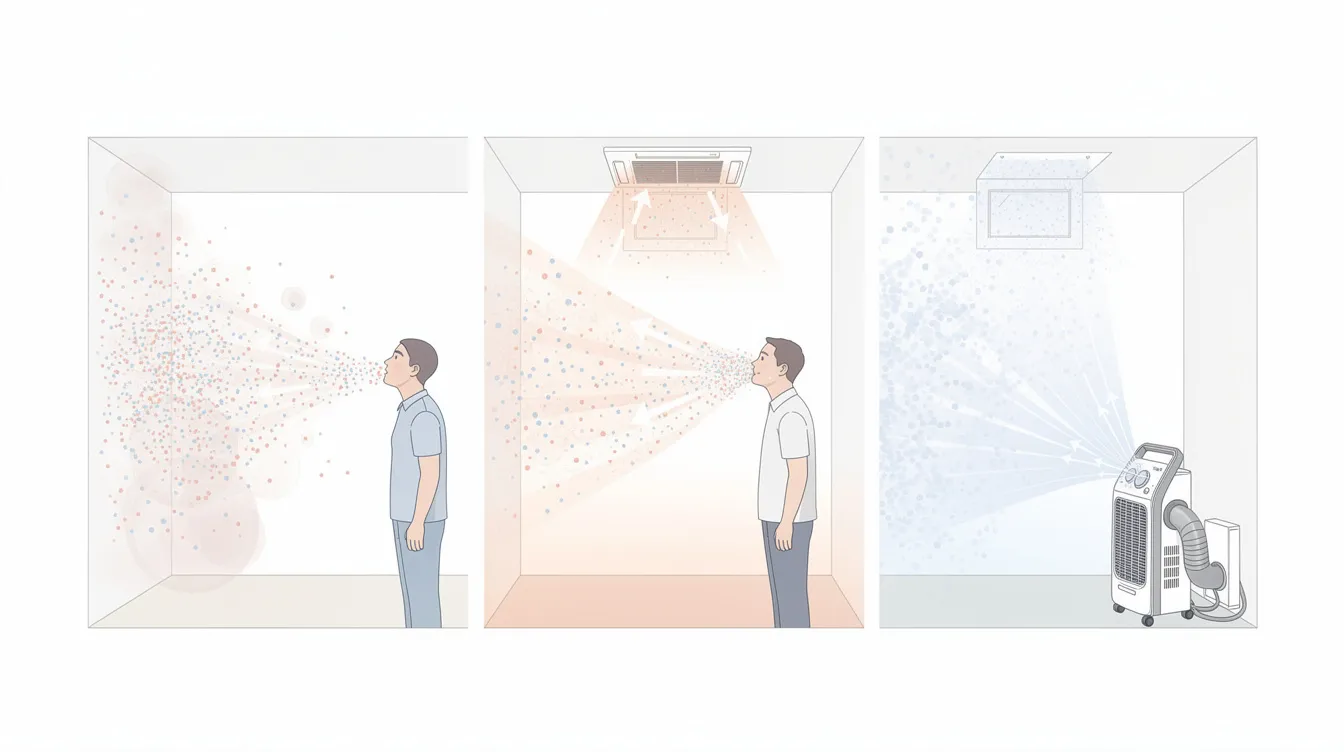
Infectious aerosols are microscopic particles capable of carrying airborne pathogens such as bacteria and viruses. Disease transmission occurs when these aerosols spread through indoor air, potentially infecting occupants. To manage this risk, Standard 241 introduces the Equivalent Clean Airflow Rate (ECAi), a metric quantifying the amount of clean air delivered to indoor spaces and supporting performance-based compliance. This approach ensures safer indoor environments by reducing pathogen concentrations without relying on a single prescriptive method.
Why Building Owners Should Care About Standard 241 and Air Quality
Building owners face regulatory and liability implications related to airborne disease risks. Proper implementation of Standard 241 can protect occupant health, reduce economic damage from outbreaks, and lower operational costs by optimizing HVAC systems and air cleaning technologies. Early stakeholder alignment, education, and development of response procedures are recommended to effectively meet these new requirements.
Assessing Building Water Systems as Sources of Infectious Aerosols
Water systems such as cooling towers, humidifiers, and plumbing fixtures can generate infectious aerosols if not properly managed. Cooling towers may aerosolize harmful bacteria like Legionella, while plumbing fixtures can release contaminated water droplets. Collecting historical water quality and maintenance records helps identify and mitigate these risks.
Design Measures for Water-Related Systems
Upgrading filtration with HEPA filters and incorporating air cleaning technologies like UV germicidal irradiation reduces aerosol emissions from water systems. These technologies must demonstrate verified effectiveness and avoid harmful byproducts. Integrating HVAC systems with water-related emissions control strategies helps maintain safe indoor air. Humidifier designs should limit aerosol growth, and isolating high-risk water fixtures can prevent pathogen spread.
Operational Measures for Building Owners
Developing a Building Readiness Plan (BRP) tailored to water systems supports infection risk management. Proper installation of water-system and air-cleaning components is necessary for the plan to function effectively. Setting Infection Risk Management Mode (IRMM) parameters defines acceptable risk levels. Routine inspections focusing on aerosol risks, calibrated flushing of stagnant plumbing, and checks of control or monitoring devices help maintain system safety and ongoing verification.
Commissioning, Testing, and Verification for IAQ and Water Systems
Testing methods to measure aerosol generation and validate control measures are vital. Surrogate agents like bacteriophages can safely simulate pathogens during validation. Documenting commissioning results ensures compliance, while periodic verification based on risk profiles maintains ongoing safety.
Maintenance, Monitoring, and Ongoing Control of Infectious Aerosols
A maintenance checklist for water-related aerosol controls supports consistent operation. Key items include:
- Regular inspection and cleaning of cooling towers to prevent bacterial growth.
- Routine flushing and disinfection of plumbing fixtures to minimize aerosolized pathogens.
- Verification and calibration of humidifiers to control aerosol generation.
- Scheduled replacement or cleaning of filters, including HEPA and UV components.
- Monitoring water quality parameters such as temperature and disinfectant levels.
- Documentation of maintenance activities and any corrective actions taken.
- Training staff on proper operation and maintenance procedures for water systems.
Continuous monitoring of IAQ indicators and setting thresholds for corrective actions enable proactive management of airborne pathogens.
Integrating Standard 241 with Existing Air Quality Standards
Standard 241 complements existing standards such as ASHRAE 62.1, which remains a prerequisite. Compliance paths can coexist, and documenting equivalency decisions helps authorities having jurisdiction (AHJs) understand the approach.
Implementation Roadmap for Building Owners and Facility Teams
A phased roadmap, from assessment to full implementation, prioritizes high-risk systems for early intervention. Assigning roles, setting timelines, and budgeting for capital and operational costs are essential steps to achieve compliance and reduce infection risks effectively.
Building Water Systems and Infection Control
Understanding and applying ASHRAE Standard 241 is essential for building owners and operators aiming to minimize airborne disease transmission risks associated with water systems. By implementing the standard’s guidelines, you can ensure healthier indoor environments for occupants and enhance overall building safety. To determine how your water systems measure up and to develop a tailored compliance strategy, contact our team today. We’re here to help you navigate the requirements and safeguard your facilities effectively.
Frequently Asked Questions (FAQs)
What is the main purpose of ASHRAE Standard 241?
ASHRAE Standard 241 aims to reduce the risk of airborne disease transmission by establishing minimum requirements for controlling infectious aerosols in occupiable indoor spaces. It provides guidance on ventilation, filtration, and air cleaning technologies to improve indoor air quality and protect occupant health.
Which buildings does ASHRAE Standard 241 apply to?
The standard applies to new buildings, existing buildings, and major renovations across various types of facilities, including public buildings, health care facilities, offices, and schools. It addresses both design and operational aspects of air and water systems related to infection risk.
How does ASHRAE Standard 241 impact building water systems?
Building water systems such as cooling towers, humidifiers, and plumbing fixtures can generate infectious aerosols. Standard 241 includes design and operational guidance to reduce these risks by integrating water system controls with HVAC and air cleaning strategies to reduce pathogen transmission.
What is the Equivalent Clean Airflow Rate (ECAi) introduced in Standard 241?
ECAi is a new metric introduced by ASHRAE Standard 241 that quantifies the amount of clean air delivered to a space, considering ventilation, filtration, and air cleaning technologies. It helps building engineers and owners assess and optimize infection risk mitigation strategies.
How can building owners reduce risk and comply with Standard 241?
Owners should develop a Building Readiness Plan (BRP), set Infection Risk Management Mode (IRMM) parameters, and ensure proper commissioning, testing, and maintenance of HVAC and water systems. Education and alignment among stakeholders, including ashrae members and facility teams, are critical for successful implementation.
Does Standard 241 replace previous ASHRAE standards?
No, Standard 241 complements existing standards like ASHRAE 62.1. Compliance with prior standards remains a prerequisite. Standard 241 provides additional guidance focused specifically on infection risk mitigation and introduces new performance-based approaches.
Are technologies like bipolar ionization recognized in Standard 241?
The standard requires air cleaning technologies to demonstrate verified effectiveness without producing harmful byproducts. While it provides guidance on various technologies, including UV germicidal irradiation, any technology such as bipolar ionization must meet these verification criteria before being accepted.
Why is heating and ventilation important in controlling infectious aerosols?
Proper heating and ventilation help maintain indoor environmental conditions that reduce the survival and spread of infectious aerosols. Standard 241 emphasizes engineering controls that optimize airflow and filtration to reduce airborne disease transmission risk effectively.
