
A reverse osmosis tank is a hydropneumatic pressurized storage container designed to hold purified water produced by a reverse osmosis (RO) water filtration system, making fresh filtered water available on demand. Because RO membranes filter water slowly, often less than one gallon per hour, the storage tank acts as a buffer. It collects and pressurizes the filtered water so that when you open your faucet, you receive a steady, faster flow rather than a slow trickle.
This guide explains everything you need to know about reverse osmosis (RO) storage tanks, including how they work, why they’re important, types and sizes, maintenance, and troubleshooting.
Key Takeaways
- Reverse osmosis tanks store purified water under pressure, providing instant access despite slow filtration rates.
- Maintaining correct tank air pressure (5–7 PSI empty) is essential for optimal flow and longevity.
- Common tank issues include bladder rupture, pressure loss, and bacterial growth, requiring regular checks and sanitizing.
- Pressurized tanks are standard in home systems; atmospheric tanks and tankless systems serve specialized needs.
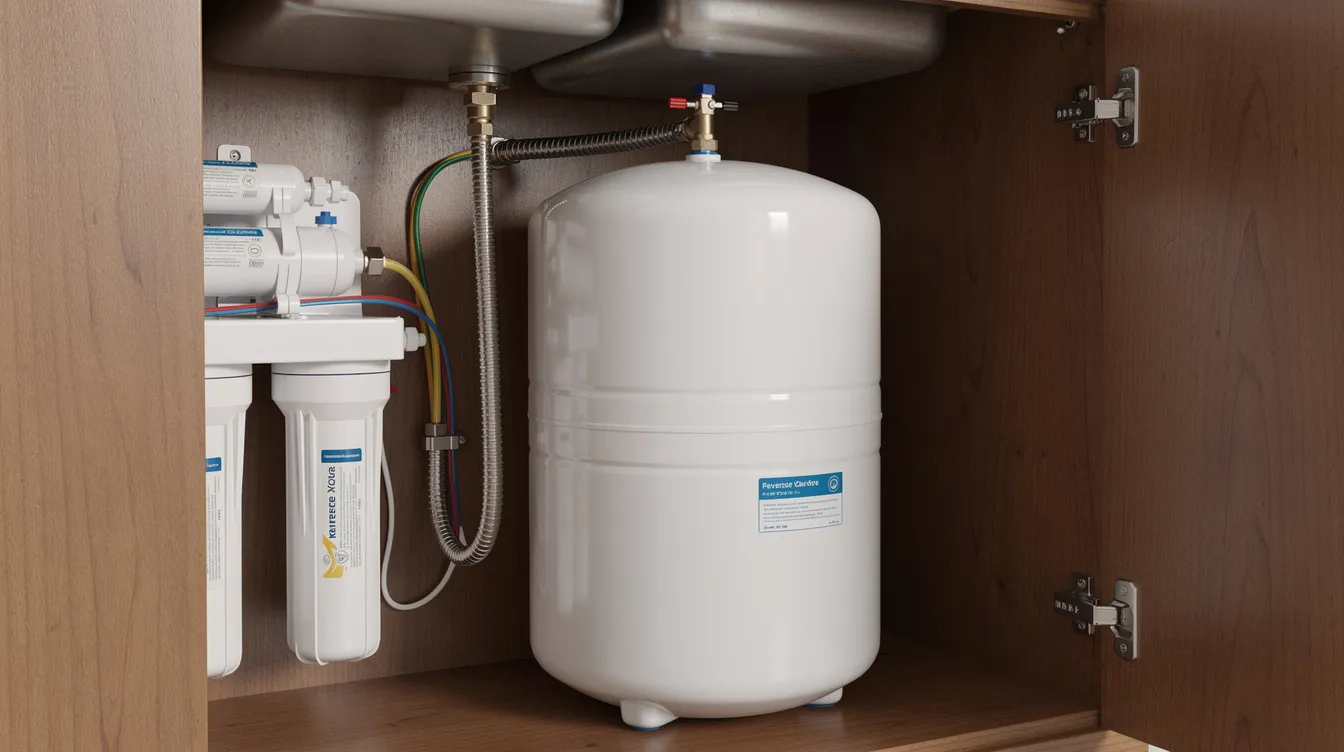
How a Reverse Osmosis Storage Tank Works
Reverse osmosis tanks in a reverse osmosis system are typically constructed with a durable steel or composite shell. They feature an internal butyl/chlorobutyl bladder or diaphragm with a polypropylene liner to ensure water purity.
Many tanks meet NSF/ANSI 58 certification standards, verifying their suitability for drinking water systems. Important tank features include corrosion-resistant shells and food-safe internal materials that support durability and water quality.
The tank operates through the following process:
- The tank is pre-pressurized and filled with air on the dry side to establish initial pressure.
- Purified water from the RO system enters the tank, compressing the air chamber and increasing internal pressure.
- This pressure balance between the pre-charge air and feed water maintains system readiness.
- When the RO faucet is opened, the compressed air forces water out of the tank to the faucet.
- As water is dispensed, tank pressure decreases.
- When the pressure drops to approximately 60% to 66% of the incoming water line pressure, the system’s shut-off valve signals the RO system to begin refilling the tank.
Types and Sizes of Reverse Osmosis Tanks
Residential reverse osmosis storage tanks typically range from 2 to 4 gallons nominal capacity. However, most tanks deliver about 50-60% of their listed capacity as usable water because the air chamber occupies space. Larger households or light commercial applications might require a bigger tank unit or multiple tanks to meet higher demand.
Standard RO Tank Capacities
Common tank sizes include:
- 2.0 to 2.5 gallons: suitable for small households or limited under-sink space.
- 3.2 to 4.0 gallons: the most common size for typical family use, balancing capacity and cabinet space.
- 10 gallons and above: used in commercial or whole-house RO systems.
How to Choose the Right Tank Size
Selecting the proper tank size depends on several factors:
- Daily Water Use: Consider drinking, cooking, coffee brewing, ice maker, and refrigerator dispensers, and how the tank helps keep fresh water available for these point-of-use appliances.
- Peak vs. Average Use: Larger families, offices, or cafes benefit from bigger or multiple tanks to avoid running out during high-demand periods.
- Incoming Water Pressure: Low feed pressure can reduce effective tank capacity and flow rate, influencing size choice.
Reverse Osmosis Tank Pressure
Reverse osmosis tanks come pre-pressurized and filled with air at the factory, typically around 5 to 7 psi when empty. Maintaining correct empty tank air pressure is crucial. If too high, less water fits inside. If too low, the tank can become waterlogged, causing weak flow and potential damage. The tank air pressure should be checked annually using a standard tire gauge at the air valve, usually located near the tank base. Keep in mind that temperature can affect perceived tank performance and available drawdown.
How to Check RO Tank Pressure
- Turn off the water supply and close the shut-off valve to the RO tank.
- Open the RO faucet to drain all water from the tank.
- Use a tire gauge on the tank’s air valve to measure the empty tank air pressure.
- Adjust the pressure with a bicycle pump or air compressor if necessary, aiming for the manufacturer’s recommended range (usually 5–7 psi).
Signs of Incorrect Tank Pressure
- Over-pressurized or Failing Bladder: Very little water flows before the faucet slows to a trickle.
- Undercharged Tank or Membrane Issues: Water flows well briefly, then drops to a dribble.
Diagnostics and Failure Modes of Reverse Osmosis Tanks
Common failure modes include:
- Bladder Rupture: This causes water and air to mix in the reverse osmosis tank or water storage tank, leading to poor flow and pressure loss. Replacement is necessary.
- Loss of Pre-Charge: Air leaks through the Schrader valve reduce tank air pressure.
- Internal Corrosion or Liner Failure: Older steel tanks may develop rust or leaks.
- Biofilm or Fouling: Poor sanitation can lead to bacterial growth inside the tank, affecting water quality and harboring contaminants.
Diagnostic Methods
- Weight Comparison: Comparing full and empty tank weight helps estimate drawdown volume.
- Static Pressure Checks: Measuring pressure at empty, partially full, and full states can pinpoint issues.
- Isolating Tank vs. RO Module: Helps distinguish whether flow problems stem from the tank or upstream components.
| Symptom | Probable Cause | Recommended Check |
|---|---|---|
| Weak or no water flow | Low air pressure/bladder failure | Check air pressure and bladder integrity |
| Faucet sputtering or burping | Faulty shut-off valve or bladder leak | Inspect valves and listen for air release |
| Stale or off-taste water | Bacterial growth | Sanitize tank and filters |
Maintenance Protocols and Hygiene
Maintaining your RO storage tank involves:
- Inspection and Replacement: Tanks typically last 5 to 10 years; replace sooner if damaged or leaking.
- Sanitizing: Clean the tank annually using appropriate agents like unscented bleach or hydrogen peroxide, avoiding damage to the bladder.
- Coordinated Maintenance: Replace prefilters every 6–12 months and membranes every 2–3 years to protect system integrity and water quality.
Microbiological concerns due to stagnation in low-use settings can be mitigated by periodic flushing, using UV sterilizers, or installing post-filters downstream of the tank.
Storage Tanks vs Tankless Designs
Traditional RO systems rely on pressurized storage tanks, while a reverse osmosis system in tankless form filters water on demand to save space and avoid a storage tank. However, tankless units often require booster pumps, can be harder to install, and may come at a higher price. Traditional under-sink systems, on the other hand, are often easier to install.
Standard RO systems typically cost $200-$500, installation commonly adds $150-$400, and whole-house systems can run $2,000-$10,000. Hybrid approaches combine tankless cores with auxiliary buffer tanks to balance flow rate and footprint, and most manufacturers provide installation guides and serviceable parts for conventional setups.
The Role of Reverse Osmosis Tanks in Water Treatment
Reverse osmosis tanks are vital components that influence membrane loading, user experience, maintenance costs, and common installation details. Understanding their construction, operation, and maintenance helps water treatment specialists optimize system performance, ensuring reliable access to fresh, contaminant-free water with efficient service life and minimal downtime. The tank also provides purified water immediately instead of users waiting for filtration at the tap.
Frequently Asked Questions (FAQs)
What is a reverse osmosis tank, and why is it important?
A reverse osmosis tank is a pressurized storage container that holds purified water produced by an RO system. It ensures immediate water flow at the faucet by storing filtered water, compensating for the slow filtration rate of the RO membrane.
How often should I check the air pressure in my RO tank?
It’s recommended to check the tank’s air pressure annually. The ideal empty tank air pressure is typically between 5 to 7 PSI. Maintaining proper pressure ensures optimal flow and prevents damage to the internal bladder.
What causes an RO tank to fail, and how can I diagnose it?
Common failure modes include bladder rupture, loss of pre-charge air pressure, or internal corrosion. Symptoms include weak water flow, sputtering faucets, or stale taste. Diagnosing involves checking air pressure, inspecting valves, and sanitizing the tank.
Can I replace the bladder inside my RO storage tank?
No, the bladder is not serviceable. If it ruptures or fails, the entire reverse osmosis tank must be replaced to maintain system performance and water quality.
How long does a reverse osmosis storage tank typically last?
With proper maintenance, including regular pressure checks and sanitizing, RO storage tanks usually last between 5 and 10 years before needing replacement.
Are all RO tanks NSF certified?
Not all tanks are NSF certified. It’s important to choose an NSF certified reverse osmosis water storage tank to ensure it meets safety and quality standards for drinking water.
What is the difference between pressurized and atmospheric RO tanks?
Pressurized tanks have an internal bladder that uses air pressure to deliver water instantly without a pump. Atmospheric tanks are non-pressurized and require an external pump to move water, typically used in whole-house systems.
Can I use a tankless reverse osmosis system instead of a tank?
Yes, tankless RO systems filter water on demand without storage tanks. However, they may have slower flow rates, higher costs, and often require booster pumps, making them less suitable for high-volume use in some settings.
How do I sanitize my reverse osmosis storage tank?
Sanitize the tank annually by draining it, then flushing with a sanitizing solution such as unscented bleach or hydrogen peroxide. Follow manufacturer instructions to avoid damaging the bladder or other components.
What size reverse osmosis tank should I choose?
Tank size depends on household water usage, peak demand, and available space. Most residential systems use tanks between 2 to 4 gallons nominal capacity, providing about 50-60% of usable water volume.
