
Cooling tower drift eliminators are specialized devices designed to significantly reduce the carryover of water droplets from the exhaust air of cooling towers. Understanding and managing drift is essential for retaining valuable treatment chemicals, preventing corrosion, maintaining compliance with environmental regulations, and minimizing microbial risks such as Legionella spread. By effectively controlling drift, these components play a crucial role in optimizing cooling tower operations, enhancing system longevity, and ensuring safety and environmental protection.
Key Takeaways
- Cooling tower drift eliminators are critical for reducing water and chemical loss by capturing droplets carried with exhaust air.
- They protect equipment and the environment by minimizing corrosion, mineral deposits, and microbial contamination risks.
- Common designs include cellular, blade, and chevron types, made from durable materials like PVC and polypropylene.
- Proper maintenance and inspection ensure optimal performance and compliance with environmental regulations.
- Drift eliminators complement water treatment programs but do not replace comprehensive Legionella control measures.
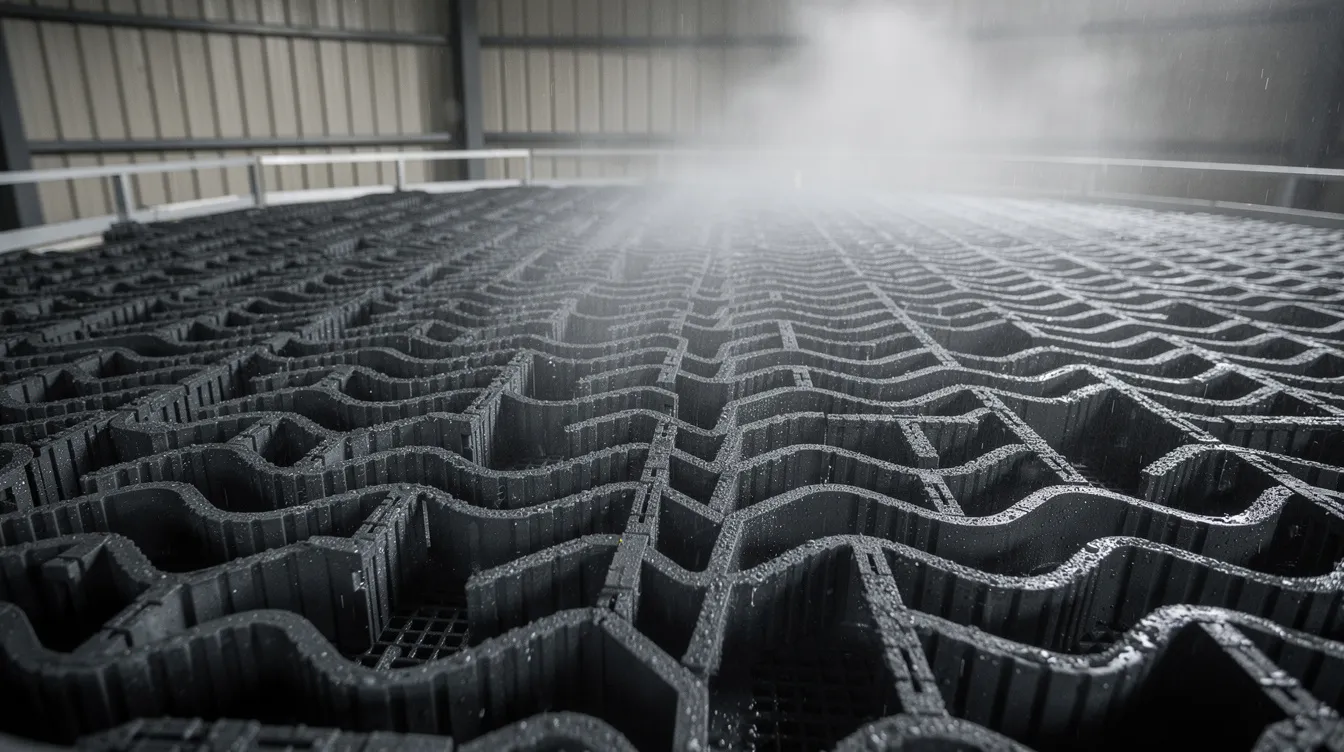
What Are Cooling Tower Drift Eliminators?
Cooling tower drift eliminators are internal components designed to capture tiny water droplets, known as drift, that are carried away with the discharge air. Unlike evaporation, blowdown, or splash-out, drift consists of liquid droplets escaping with the airflow. Although the volume may seem small, drift carries valuable treated water and chemicals away, increasing make-up water demand and chemical loss. It can also deposit minerals and corrosive substances on nearby equipment, causing damage.
By forcing moist air through a series of directional changes, drift eliminators cause these droplets to collect on surfaces and drain back into the tower basin. This minimizes water loss and environmental contamination. This function is key to maintaining optimal cooling tower performance, ensuring compliance with environmental regulations, and supporting stable biocide, inhibitor, and dispersant programs.
How Cooling Tower Drift Eliminators Work
Drift eliminators separate water droplets from exhaust air by forcing the airstream to change direction sharply, causing droplets (typically 50 to 200µm) to hit internal surfaces and combine. These larger drops then fall back into the cooling tower basin, reducing water loss. Made from durable materials like polyvinyl chloride (PVC), modern eliminators can cut drift loss to as low as 0.0005% to 0.001% of the circulating water flow. Without them, a system with 200m3/hr flow might lose about 1 litre per hour.
Common Types of Cooling Tower Drift Eliminators
Cooling tower drift eliminators come in various types suited to specific configurations and performance needs:
Cellular Drift Eliminators
Featuring a honeycomb or block-style design, cellular eliminators force airflow to be directed through cellular passages and baffles-like channels. They are ideal for applications prioritizing high collection efficiency and compact installation, and cellular designs are generally more efficient than blade types.
Blade Type Drift Eliminators
Consisting of angled slats or blades, blade type eliminators redirect airflow to capture entrained droplets. Common in larger towers with lower velocity airflows, they balance efficiency with ease of maintenance.
Chevron Drift Eliminators
Utilizing zigzag vane patterns, chevron eliminators create sharp airflow changes that effectively separate water droplets. Their reliable performance and durability make them widely used across many cooling tower applications.
High-Efficiency Drift Eliminators
Incorporating advanced geometries and materials, high-efficiency eliminators are engineered for tighter drift control in demanding applications. They can help optimize tower performance and ensure compliance in systems where low drift is critical, including those requiring stringent water conservation or minimal chemical loss.
Materials Used in Drift Eliminators
Drift eliminators are typically made from materials chosen for durability and chemical resistance, including:
- PVC: Lightweight and corrosion-resistant, widely used in many applications, with polymer selection affecting strength, longevity, and temperature resistance.
- Polypropylene (PP): Offers enhanced chemical resistance, suited for aggressive water chemistries.
- Fiberglass Reinforced Plastic (FRP): Provides superior durability for demanding environments with higher mechanical or environmental stresses.
Material selection depends on temperature ranges, UV exposure, water chemistry, airflow characteristics, and specific cooling tower design. The most suitable option also depends on adjacent components like fill that increase surface area for heat transfer in towers used across different industries.
Drift Eliminators and Legionella Risk Management
While vital for reducing contaminated aerosol spread, drift eliminators complement but do not replace comprehensive water treatment programs. Effective Legionella control requires proper maintenance, including scale, corrosion, and sediment management, regular cleaning, disinfectant control, and ongoing monitoring. Poorly maintained cooling towers can promote Legionella growth and dispersion, making combined measures essential for health risk minimization.
Inspection and Maintenance of Drift Eliminators
Regular inspection and maintenance maintain cooling tower efficiency and prevent water and chemical losses. Key indicators for inspection or replacement include:
- Visible mist or water carryover
- Increased make-up water consumption
- Unusual chemical usage
- Fouling or scale buildup
- Physical damage such as cracks or brittleness that can lead to breakage
- Uneven airflow
- Corrosion on nearby structures
Maintenance best practices involve:
- Inspecting for deposits, damage, and correct orientation, with parts installed in the suitable counterflow location when applicable
- Cleaning carefully to avoid damage
- Ensuring well-fitted eliminators with no gaps
- Maintaining accessible service points; and documenting condition and actions taken so eliminators stay in good condition and maintain performance.
Access platforms and safe removal methods facilitate effective upkeep. Proper maintenance ensures drift eliminators continue to operate efficiently, conserving water and chemicals while protecting equipment.
Enhance Your Cooling Tower Performance
Cooling tower drift eliminators are essential components that significantly reduce water loss, chemical carryover, and environmental exposure. They form an integral part of comprehensive cooling tower management, including water chemistry control, regular cleaning, thorough inspection, effective disinfection, and meticulous documentation. Proper selection, maintenance, and timely upgrading of drift eliminators enhance cooling tower efficiency, support environmental compliance, and help prevent microbial hazards such as Legionella.
For expert guidance and tailored cooling tower services, contact our team to ensure your system operates safely, efficiently, and sustainably.
Frequently Asked Questions (FAQs)
What are cooling tower drift eliminators?
Cooling tower drift eliminators are components that capture and return water droplets carried away by the exhaust air, reducing water loss and chemical carryover while protecting the environment and equipment.
Why is drift control important in cooling towers?
Drift control minimizes water and chemical loss, prevents corrosion and mineral deposits on nearby structures, reduces environmental contamination, and helps limit the spread of harmful bacteria like Legionella.
What materials are commonly used for drift eliminators?
These are usually PVC, polypropylene (PP), or fiberglass reinforced plastic (FRP), chosen for their durability, chemical resistance, and suitability to various operating conditions.
Are drift eliminators required for all cooling towers?
Yes, drift eliminators are required in all cooling towers equipped with fans, except some natural draft towers, to comply with environmental regulations and ensure operational safety.
How often should drift eliminators be inspected and maintained?
Regular inspection and maintenance are essential, including checking for damage, fouling, and proper fitting. Maintenance frequency depends on operating conditions but should be part of routine cooling tower upkeep.
Can drift eliminators help reduce Legionella risk?
While drift eliminators reduce the spread of contaminated aerosols, they are part of a broader Legionella risk management program that includes water treatment, cleaning, and monitoring.
What are the common types of drift eliminators?
Common types include cellular, blade type, chevron, and high-efficiency eliminators, each suited for specific airflow conditions and performance requirements.
How do drift eliminators improve cooling tower efficiency?
By capturing water droplets and returning them to the system, drift eliminators conserve water and treatment chemicals, reduce corrosion risks, and maintain stable operating conditions.
What should I consider when selecting a drift eliminator manufacturer?
Choose a reputable drift eliminator manufacturer with expertise in your application, offering durable materials, efficient designs, and support for maintenance and upgrades.
How do drift eliminators perform in crossflow applications?
Drift eliminators designed for crossflow applications manage airflow and droplet capture effectively, ensuring consistent drift reduction in such cooling tower configurations.
