
Cooling towers are heat exchangers that remove excess heat from industrial processes or commercial HVAC systems by evaporating a small part of the water into the atmosphere. As such, they depend on multiple mechanical, structural, electrical, as well as water-contact components working together. Understanding each of the cooling tower parts helps diagnose scale, corrosion, fouling, drift, poor heat transfer, and water loss.
Key Takeaways
- Cooling tower efficiency depends on the coordinated function of multiple specialized components.
- Proper material selection for structural parts enhances durability in corrosive environments.
- Regular maintenance and water treatment extend component lifespan and system reliability.
- Monitoring and controlling water chemistry prevents common issues like scaling and biological fouling.
What Are the Main Components of a Cooling Tower?
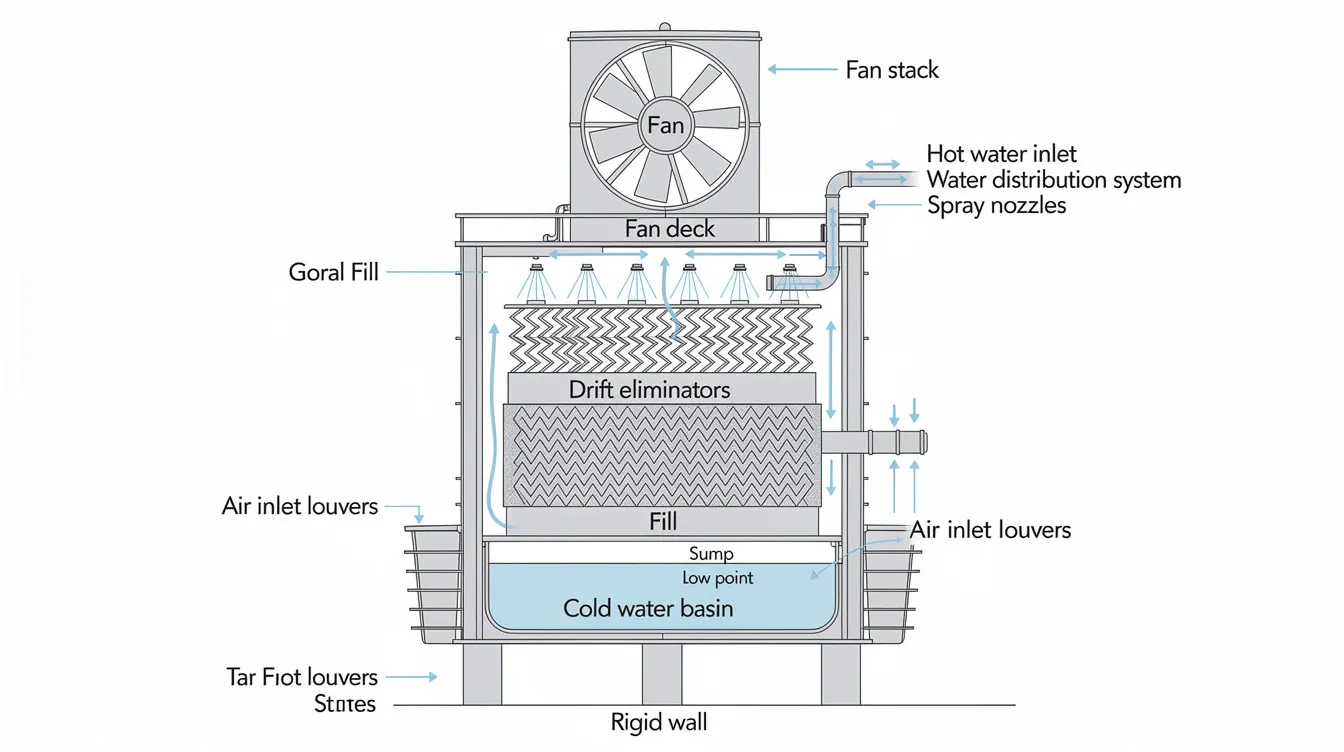
Cooling towers consist of several essential components that work together to efficiently remove heat from water. These key parts include the fill media, drift eliminators, water distribution system with spray nozzles, cold water basin, fans and motors, louvers, casing and structural frame, piping and valves, strainers and screens, and water treatment equipment. Each component plays a vital role in optimizing the cooling process and ensuring reliable operation.
Fill Media
The fill media provides the surface area where warm water and air mix, promoting evaporation and heat exchange. There are two types of fill: splash fill, which breaks water into droplets, and film fill, which allows water to flow in thin sheets for maximum contact. Proper water treatment is crucial to prevent scale, biofilm, and solids from reducing fill efficiency. Cooling tower fill is a critical component for maximizing heat transfer.
Water Distribution System
This system includes piping, hot water basins, headers, and nozzles that spray water uniformly over the fill media. Even distribution maximizes surface area exposure and cooling performance. Common issues like clogged nozzles or debris buildup can cause uneven flow and reduce capacity. Using quality tower tech and regular maintenance helps keep the water distribution system functioning optimally.
Drift Eliminator
Drift eliminators capture water droplets carried by airflow before they escape the tower, reducing water loss and discharge of droplets that may contain chemicals and minerals. Efficient drift eliminators can keep water loss below 0.001% of recirculating flow. They work by changing droplet direction so the droplets strike the blade walls and fall back into the cooling water system instead of escaping into the environment, improving water conservation and environmental safety. Regular inspection and cleaning maintain their effectiveness.
Cold Water Basin
After cooling, water collects in the cold water basin before being pumped back into the system. Keep the basin clean to prevent sediment buildup, corrosion, and biological growth. Proper maintenance of the basin and strainers ensures water quality and protects pumps and other components.
Fans, Motors, and Drives
Fans generate airflow required for evaporation and heat transfer. Cooling towers use either axial or centrifugal fans, selected based on tower design. Cooling tower motors drive these fans during tower operation, often through gearboxes and drive shafts that reduce speed and increase torque. Some suppliers also provide complete fan and drive assemblies for replacement or repair. Durable motors and hardware are essential to withstand harsh conditions, and efficient tower motors help optimize airflow and energy use.
Louvers
Louvers regulate air intake while preventing water splash-out, debris entry, noise, and sunlight penetration. This helps reduce algae growth and protects internal components. Louvers also enhance airflow balance, improving cooling efficiency. They are typically made from durable materials such as fiberglass or metal. Louver design can also improve the tower’s appearance.
Casing, Frame, and Structural Components
The cooling tower structure provides the physical foundation supporting all components, ensuring stability under environmental stresses such as wind and temperature changes. Structures are made from materials including fiberglass reinforced polyester (FRP), galvanized steel, stainless steel, concrete, or wood; FRP is often valued for corrosion resistance and durability in harsh cooling-tower environments, while each material also affects suitability for different water conditions. Some manufacturers manufacture parts or structural replacements in house for existing towers and new cooling towers. Proper structural design, maintenance, and material selection affect service life, resistance to corrosive conditions, and long-term tower performance.
Piping, Valves, Strainers, and Screens
These components facilitate water circulation, isolation, and protection within the cooling system. Makeup water piping, blowdown lines, valves, strainers, and screens prevent debris from clogging nozzles and pumps while regulating flow. Float valves regulate water levels inside the tower, contributing to operational efficiency. Regular inspection and maintenance of these parts ensure reliable operation.
How Water Quality Affects Cooling Tower Components
Poor water chemistry can cause scale deposits on fill, nozzles, and drift eliminators, and in open-circuit towers the water is in direct contact with air, increasing exposure to contamination and water chemistry issues while reducing heat transfer and airflow. Corrosion can damage basins, piping, metal supports, and heat exchangers, compromising structural integrity. Biological fouling impedes water flow and promotes microbial risks. Suspended solids contribute to clogging and under-deposit corrosion. Vigilant water treatment and maintenance are essential to mitigate these issues.
Common Cooling Tower Component Problems and Treatment Solutions
| Problem | Affected Components | Treatment |
|---|---|---|
| Scale buildup | Fill, nozzles, piping, drift eliminators | Scale inhibitors, softening, blowdown control |
| Corrosion | Basin, piping, metal frame, heat exchangers | Corrosion inhibitors, pH control, monitoring |
| Biofilm | Fill, basin, distribution system | Biocides, biodispersants, microbiological testing |
| Nozzle clogging | Spray nozzles, headers | Filtration, cleaning, solids control |
| Excessive drift | Drift eliminators, airflow path | Inspection, cleaning, replacement parts |
| Poor cooling performance | Fill, fan, nozzles, louvers | Water balance, airflow inspection, cleaning |
Protect Cooling Tower Components with Proper Water Treatment
Water treatment systems manage chemicals through dosing and monitoring equipment such as chemical dosing pumps, conductivity controllers, pH and ORP monitors, and biocide dosing equipment. These tools maintain water quality to prevent scale, corrosion, and biological fouling that can damage cooling tower components. Pretreatment methods such as softening or reverse osmosis may also be employed.
The optimal mechanical performance of cooling tower components is linked to effective water chemistry management. Through a comprehensive water treatment program, you ensure the longevity, reliability, and efficiency of your cooling tower system. Proactive maintenance and tailored treatment solutions not only prevent costly repairs but also maximize cooling capacity and reduce operational downtime.
Contact our team today to learn how our treatment can protect your cooling tower components, improve water quality, and optimize your cooling operations for long-term success.
Frequently Asked Questions (FAQs)
What are the main components of a cooling tower?
The main components include fill media, drift eliminators, water distribution system with spray nozzles, cold water basin, fans and motors, louvers, casing and structural frame, piping and valves, strainers and screens, and water treatment equipment.
What is the function of fill media in a cooling tower?
Fill media provides a large surface area for water and air to mix, promoting evaporation and heat exchange to cool the water effectively.
What does a drift eliminator do in a cooling tower?
Drift eliminators reduce water loss by capturing water droplets carried by airflow, redirecting them back into the system to conserve water and reduce environmental impact.
Why do cooling tower nozzles clog?
Nozzles can clog due to debris, scale buildup, or biological growth, which obstruct water flow and reduce cooling efficiency.
How does water treatment protect cooling tower components?
Water treatment controls scale, corrosion, biological fouling, and suspended solids, preserving component integrity and maintaining efficient operation.
Which cooling tower components are most affected by scale and corrosion?
Fill media, nozzles, drift eliminators, basins, piping, and structural metal parts are commonly impacted by scale and corrosion.
How often should cooling tower components be inspected?
Regular inspections should be conducted based on manufacturer recommendations and operating conditions, typically quarterly to semi-annually, to ensure optimal performance, identify maintenance needs, and help install replacement parts correctly. Service providers often support multiple brands, including Frigid Coil cooling towers, when supplying replacement parts.
What causes poor cooling tower performance?
Poor performance can result from scale buildup, clogged nozzles, damaged fill, inefficient fans or motors, improper water distribution, and inadequate water treatment. Some suppliers manufacture replacement components for many tower models. Proper component selection, maintenance, and replacement-part support from manufacturers around the world can improve performance.
