
Key Takeaways
- Legionella bacteria thrive in warm, stagnant building water systems and are the primary cause of Legionnaires’ disease.
- Physical and thermal methods such as continuous temperature control and pasteurization are foundational to suppressing Legionella growth.
- Chemical disinfectants like chlorine, monochloramine, chlorine dioxide, and copper-silver ionization are critical when thermal control alone is insufficient.
- Advanced technologies like UV-C disinfection and point-of-use filters provide supplemental protection, especially in high-risk settings.
- Understanding legionella ecology, disease transmission, and building-specific risk factors guides targeted treatment and prevention strategies.
Legionella treatment is a discipline for potable water systems, cooling towers, hot tubs, evaporative condensers, and other building water sources to kill existing bacteria and prevent them from multiplying to dangerous levels.
Legionella bacteria, primarily Legionella pneumophila, are the causative agents of Legionnaires’ disease. Untreated or poorly controlled systems can contribute to community-acquired infection, hospital-acquired pneumonia, and outbreaks in hotels, long-term care facilities, and large buildings. This article focuses on Legionella treatment methods for potable and non-potable building water systems, providing actionable strategies to control and prevent Legionella proliferation effectively.
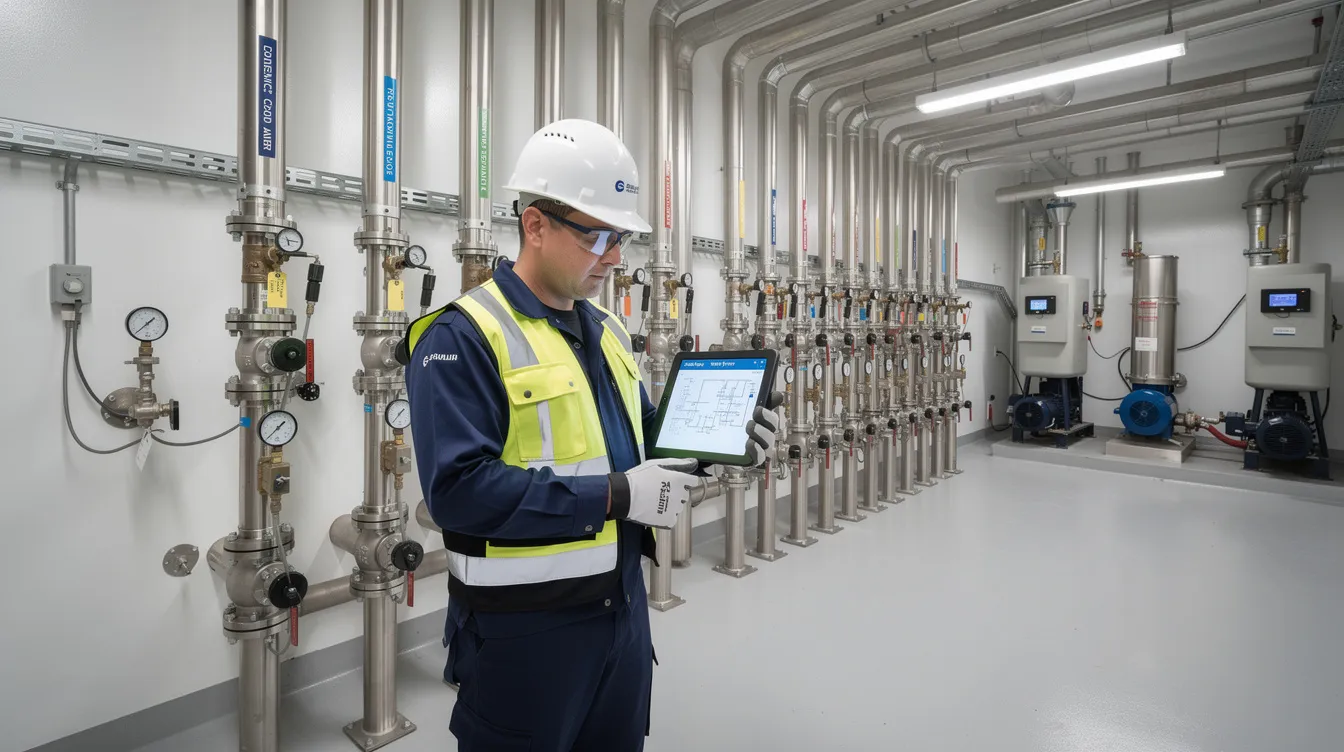
Legionella Bacteria Ecology, Disease, and Building‑Related Risk Factors
Understanding legionella ecology is foundational for effective management. Legionella bacteria thrive in warm (25–45°C), stagnant water environments like plumbing systems, hot tubs, and decorative fountains, especially where biofilms form. Its growth is promoted by conditions such as dead legs, scale, corrosion, low disinfectant residuals, organic matter, sediment, and water stagnation. Treatment strategies must address temperature control, hydraulics, supplemental disinfection, or a combination based on these conditions.
Legionnaires’ disease characteristics include:
- Presents as community-acquired pneumonia with symptoms overlapping other pneumonias, complicating diagnosis.
- Average incubation period is 5–6 days (range 2–14 days; rare cases up to 26 days).
- Symptoms typically begin 2–14 days after exposure. Pontiac fever appears within 24–48 hours.
- Exposure histories and exposure period data assist public health officials in linking cases to water systems.
The disease is not transmitted person-to-person, and is instead contracted via inhalation of aerosolized contaminated water droplets from sources like showers, hot tubs, and cooling towers. High-risk building areas include transplant units, ICUs, long-term care facilities, decorative fountains, shower heads, hot water recirculation loops, and any fixture generating tap water droplets. Because of these factors, healthcare settings require stricter control measures.
Legionella Treatment Control and Quality Standards
Legionella treatment follows agreed-upon standards, local laws, and the responsibility to keep water systems safe. Important guidelines come from ASHRAE Standard 188, CDC recommendations, UK HSE HSG274, and local health departments.
Operational targets to be included into a water management program are as follows:
- Water should be kept below 20°C (68°F) or above 60°C (140°F). Typical control limits include hot water storage above 60°C, distal delivery at or above 50°C within 1 minute, and cold drinking water below 20°C.
- Disinfectant residuals vary by method, but common targets include 0.2–0.5 mg/L free chlorine at distal points, 1.5–3.0 mg/L monochloramine as Cl₂, and 0.1–0.5 mg/L chlorine dioxide residual where approved.
Medical care, antibiotic treatment, and how Legionnaires’ disease is treated in patients are usually outside the scope of water treatment specialists. However, when health authorities take enforcement actions, they often focus on whether the facility can show that its water system controls were properly planned, monitored, and fixed when needed.
Core Physical and Thermal Treatment Methods
Physical and thermal controls are the foundation of Legionella treatment. They reduce water age, disrupt harborage, and create temperatures that suppress growth. In complex facilities, these measures usually work best as part of a multi-barrier program with chemical treatment and verification.
- Continuous temperature control: Maintain hot water storage at or above 60°C, hot distribution preferably near or above 55°C, and cold water below 20°C.
- Pasteurization or superheat-and-flush: During remediation or outbreak response, systems may be raised to 70–80°C and each outlet flushed until target temperatures are achieved for the specified duration, often 10–30 minutes.
- Flushing and dead-leg control: Scheduled flushing of low-use outlets, automatic flush devices, and removal of redundant pipework reduce stagnation. Low-use showers, eyewash stations, clinical sinks, and remote fixtures should be prioritized based on risk and aerosol potential.
- Physical cleaning: Descale heater bundles, clean storage tanks and calorifiers, remove sludge, and use high-velocity flushing where appropriate.
- Limitations and risk management: High temperatures increase scalding risk and energy use. Thermostatic mixing valves are essential, but they must be installed and maintained so they do not undermine system-wide thermal control.
Chemical Disinfection Options for Building Water Systems
Chemical disinfection is often required where temperature control alone cannot reliably suppress Legionella, especially in healthcare campuses, legacy plumbing, and large domestic hot water networks. Selection should account for water chemistry, materials, regulatory approval, biofilm burden, and operator capability.
Chemical disinfection methods are as follows:
- Chlorination uses free chlorine to kill bacteria, but it requires careful control of pH and organic matter and can cause taste, odor, and corrosion issues.
- Monochloramine lasts longer and penetrates biofilms better than chlorine but needs careful monitoring of ammonia and nitrification.
- Chlorine dioxide is a strong disinfectant that works well across pH ranges but requires managing by-products and material compatibility.
- Copper-silver ionization releases metal ions that kill bacteria but needs monitoring of ion levels and water chemistry.
- Shock disinfection involves high-dose chemical or heat treatments to quickly reduce bacteria during outbreaks but is not a long-term solution.
Disinfectant choice must consider compatibility with plumbing materials to avoid corrosion and system damage.
Advanced and Supplemental Treatment Technologies
Advanced treatments can enhance Legionella control but don’t replace good design, temperature management, and disinfection. They are best for high-risk areas, temporary needs, or systems requiring extra support. Each technology should be evaluated based on water quality, flow, and risk.
UV-C disinfection at central or entry points quickly inactivates Legionella, typically using doses of 20–40 mJ/cm² depending on water clarity. However, UV provides no lasting residual, so bacteria can regrow downstream.
Point-of-use filters on taps and showers reduce risk immediately. These filters usually have pore sizes of 0.1–0.2 µm and need replacing every 30–90 days based on use and water quality.
Advanced oxidation processes like ozone, UV/ozone, and UV/peroxide can lower microbial levels and disrupt biofilms, but maintaining residual control in piping is difficult. Non-chemical scale control devices should not be relied on for Legionella control unless proven by research or regulation.
Finally, online monitors for disinfectant residuals, temperature loggers, and flow meters help detect low-use zones, loss of disinfectant, and temperatures that favor Legionella growth before culture results are available.
Program Design, Verification, and Response to Legionella Detections
Effective Legionella treatment requires a formal water management program with clear roles, control limits, documentation, and verification. The CDC routine testing module highlights that sampling, interpretation, and corrective actions should match the building’s risk profile.
A strong plan maps all water sources, identifies high-risk areas, sets control measures, and assigns responsibilities. Regular monitoring includes hot and cold water temperatures, disinfectant levels, fixture use, maintenance, and periodic culture or PCR testing.
Interpret sampling results by detection level, species found, trends, number of positive sites, and whether positives are before or after flushing. One low-level positive may need investigation, while repeated positives or legionella pneumophila in multiple areas suggest systemic issues.
When high counts or linked illness occur:
- Use point-of-use filters, limit aerosol-generating fixtures, and protect vulnerable patients.
- Temporarily boost disinfection or temperature controls while investigating causes.
- Check pumps, mixing valves, setpoints, dead legs, low-flow branches, and equipment.
- Resample after fixes and document all actions and results.
- Work with infection control and public health if community or healthcare-associated cases arise.
Design, Retrofit, and Operational Best Practices for Long‑Term Control
The best way to control Legionella is through good design, careful upgrades, and consistent operation. For new systems, use suitable materials, ensure good water flow and balance, place mixing valves near outlets, insulate pipes, and avoid designs that trap warm water.
For existing buildings, upgrade heaters and mixers, use online monitors for temperature and disinfectant levels, and maintain updated system diagrams. Operators should train staff, document changes, and check controls after renovations, low use, seasonal shutdowns, or disinfectant changes. Watch carefully during warmer months when legionellosis cases often rise. While infectious disease teams manage patient treatment, water system operators control exposure risks.
Frequently Asked Questions
What is the most important Legionnaires Disease treatment method?
No single method is enough for every facility. Temperature control, hydraulic management, disinfectant residual, routine testing, and rapid corrective action work together as a multi-barrier strategy.
Can people get Legionella from drinking water?
Most patients are exposed by inhaling aerosolized water, but aspiration of contaminated water can also transmit bacteria, especially in vulnerable healthcare populations.
Are cooling towers higher risk than plumbing?
Both can be high risk. Cooling towers and evaporative condensers can disperse contaminated water widely, while potable plumbing exposes occupants through showers, taps, and clinical fixtures.
How often should testing be performed?
Testing frequency depends on building type, population vulnerability, system history, and local requirements. Hospitals and long term care facilities typically need more frequent verification than low-risk commercial sites.
What antimicrobial therapy should specialists prioritize first?
Start with a current system map, risk assessment, control limits, and monitoring plan. Then correct stagnation, verify temperatures, confirm residuals, and document every corrective action.
Legionella control is a documented, data-driven operating program that protects patients, occupants, equipment, and business continuity. Facilities that combine sound design, routine maintenance, targeted treatment, and verified performance are well-equipped to prevent disease and respond confidently when concerns arise.
