
Corrosion monitoring is one of those things that tends to get attention only after something fails. In most industrial water systems, corrosion does not start as a visible problem. It develops slowly through electrochemical reactions, small changes in water chemistry, and operating conditions that shift over time. By the time corrosion is obvious, metal loss has already occurred and the system is already at risk.
For operators, corrosion monitoring is not just inspection. It is the process of measuring, tracking, and understanding corrosion processes before they lead to failure. In systems where reliability and safety matter, early corrosion detection is what separates controlled operation from unexpected downtime.
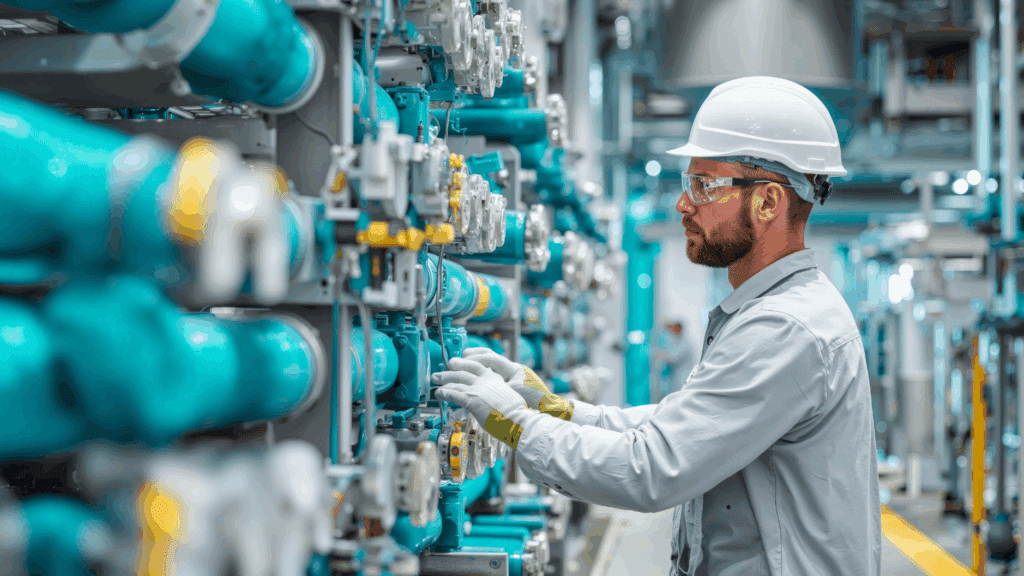
Why Corrosion Monitoring Matters in Real Systems
Corrosion is one of the biggest threats to industrial equipment. It affects pipes, pressure vessels, heat exchangers, and any surface where metals interact with water and chemicals.
When corrosion is left undetected, it leads to:
- Loss of wall thickness in critical components
- Reduced reliability of systems
- Increased maintenance costs and inspection costs
- Potential safety risks in high pressure systems
Most facilities do not fail because corrosion exists. They fail because corrosion was not monitored properly.
What Corrosion Monitoring Actually Means
Corrosion monitoring is the use of monitoring techniques and inspection methods to detect corrosion, measure corrosion rate, and evaluate material degradation over time.
A corrosion monitoring system typically includes:
- Continuous monitoring tools for real time data
- Periodic corrosion inspection using manual techniques
- Measurement of corrosion rate and metal loss
- Analysis of environmental and process conditions
The goal is to monitor corrosion before it impacts the entire asset.
Common Corrosion Monitoring Techniques
Industrial facilities rely on multiple techniques because no single method provides a complete picture.
Comparison of Corrosion Monitoring Methods
| Method | What It Measures | Typical Use |
|---|---|---|
| Corrosion coupons | Mass loss over time | Baseline corrosion rate measurement |
| Electrical resistance probes | Change in metal thickness | Continuous monitoring in water systems |
| Ultrasonic thickness measurements | Wall thickness | Inspection of pipes and vessels |
| Linear polarization resistance | Instant corrosion rate | Real time corrosion monitoring |
| Magnetic flux leakage | Defects and metal loss | Pipeline and tank inspection |
Using multiple techniques provides more accurate data and improves reliability.
Corrosion Coupons and Baseline Measurement
Corrosion coupons are one of the simplest and most widely used methods. A metal sample is exposed to the process environment and then removed for analysis.
By measuring mass loss, operators can estimate corrosion rate and identify trends over time.
While this method is simple, it does not provide real time corrosion monitoring. It is best used alongside other techniques.
Electrical Resistance and Probe-Based Monitoring
Electrical resistance probes measure corrosion by detecting changes in the thickness of a metal element. As corrosion occurs, electrical resistance increases.
These probes provide continuous monitoring and are useful in systems where conditions change frequently.
In practice, electrical resistance monitoring is often used in water systems and process intensive industries where corrosion must be tracked closely.
Ultrasonic Testing and Thickness Measurement
Ultrasonic testing uses ultrasonic waves to measure wall thickness. This method is widely used for corrosion inspection of pipes, tanks, and pressure vessels.
Advantages include:
- Accurate measurement of remaining life
- Non-destructive testing
- Ability to detect localized corrosion
Online ultrasonic thickness sensors are increasingly used to provide continuous monitoring rather than relying on periodic inspection.
Electrochemical Monitoring Techniques
Electrochemical methods provide insight into corrosion processes as they happen.
Linear Polarization Resistance
This method measures corrosion rate by applying a small electrical signal and analyzing the response.
Galvanic Monitoring
Galvanic monitoring measures current flow between dissimilar metals. Changes in galvanic current indicate changes in corrosion activity.
Zero Resistance Ammetry
Zero resistance ammetry measures current between electrodes without resistance, providing highly sensitive data for corrosion monitoring.
These methods are valuable for early corrosion detection and understanding how corrosion responds to changing conditions.
Visual Inspection and Traditional Methods
Visual inspection remains an important part of corrosion monitoring. Operators often identify early warning signs such as:
- Surface degradation
- Discoloration
- Deposits or scaling
However, visual inspection alone is not sufficient. By the time corrosion is visible, damage has already occurred.
Real Time Corrosion Monitoring vs Periodic Inspection
There is a major difference between real time monitoring and periodic inspection.
- Periodic inspection provides snapshots of system condition
- Real time corrosion monitoring provides continuous data
Facilities that rely only on inspection often miss rapid changes. Continuous monitoring allows operators to detect corrosion early and respond before serious damage occurs.
Corrosion in Water Systems and Industrial Environments
In water systems, corrosion is driven by a combination of chemical and environmental factors.
Common contributors include:
- Dissolved oxygen and carbon dioxide
- Chemical imbalance in water treatment programs
- Presence of aggressive substances such as sulphuric acid
- Temperature and flow variations
Understanding these factors is essential for effective corrosion control.
For a deeper look at how corrosion develops in water environments, see how types of corrosion affect different materials.
Linking Corrosion Monitoring to Corrosion Control
Monitoring alone does not prevent corrosion. It must be tied to control strategies.
Effective corrosion control includes:
- Adjusting water chemistry through treatment programs
- Using corrosion inhibitors
- Maintaining proper operating conditions
Facilities that combine monitoring with control are better able to prevent corrosion rather than react to it.
For system-level strategies, see how water treatment corrosion control is applied in industrial systems.
Impact on Safety and Operational Efficiency
Corrosion affects more than equipment. It impacts safety and operational efficiency.
In high pressure systems, corrosion can lead to failure of pressure vessels or pipelines. This creates serious safety risks and potential shutdowns.
From an operational standpoint, corrosion leads to:
- Reduced efficiency
- Increased maintenance
- Shorter equipment life
Monitoring helps maintain system stability and reduce risk.
Cost Considerations and Maintenance Planning
Corrosion monitoring helps facilities manage costs more effectively.
Without monitoring, facilities often rely on reactive maintenance. This leads to:
- Higher maintenance costs
- Increased downtime
- Emergency repairs
With proper monitoring, maintenance can be planned based on data rather than assumptions.
Best Practices for Effective Corrosion Monitoring
Facilities that maintain effective corrosion monitoring programs follow consistent practices.
- Use multiple monitoring techniques for accurate data
- Combine continuous monitoring with periodic inspection
- Track corrosion rate trends over time
- Integrate monitoring with maintenance planning
These practices improve reliability and reduce risk.
Frequently Asked Questions
What is corrosion monitoring
Corrosion monitoring is the process of measuring and tracking corrosion in systems to prevent damage.
Why is corrosion monitoring important
It helps detect corrosion early and reduces the risk of equipment failure.
What methods are used for corrosion monitoring
Common methods include corrosion coupons, electrical resistance probes, and ultrasonic testing.
What is the difference between monitoring and inspection
Monitoring provides continuous data, while inspection provides periodic snapshots.
How does monitoring reduce costs
It allows facilities to plan maintenance and avoid unexpected failures.
Maintain Control Over Corrosion in Your Systems
Corrosion monitoring is a practical tool for maintaining control over industrial water systems. Facilities that rely on continuous monitoring and accurate data are better equipped to prevent damage, maintain efficiency, and protect equipment.
If your facility is evaluating its corrosion monitoring approach or dealing with unexplained system degradation, contact our team today to review your system and identify where corrosion is developing.
