
Water treatment sensors are essential tools used to monitor water quality in real time across industrial facilities, drinking water systems, and wastewater treatment operations. These sensors provide continuous measurements of key parameters such as pH, conductivity, dissolved oxygen, chlorine, and turbidity so operators can control processes and maintain stable conditions.
For facility managers and operators, water treatment sensors turn raw signals into usable water quality data. That data supports control decisions, helps prevent contamination, and improves the effectiveness of water treatment programs.
What Are Water Treatment Sensors?
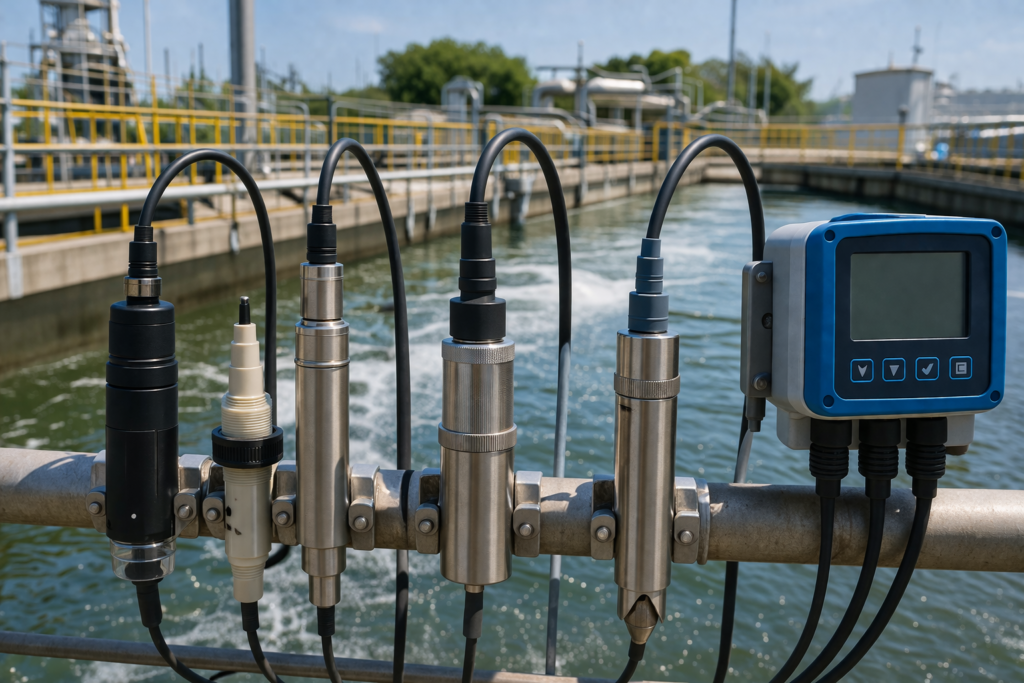
Water treatment sensors are devices installed in a water system to measure specific chemical, physical, and biological parameters. Each sensor is designed to detect a particular condition and convert it into a signal that can be logged, trended, and used for control.
Common water quality sensors include:
- pH sensors to measure acidity and alkalinity
- Conductivity sensors to estimate dissolved solids
- Dissolved oxygen sensors to measure oxygen content
- ORP sensor to track oxidation and disinfection potential
- Turbidity sensors to detect suspended particles
- Free chlorine and combined chlorine sensors for disinfection control
These sensors are used to measure parameters continuously, providing reliable measurements that operators can use to maintain water quality.
Why Water Quality Monitoring Matters
Water quality monitoring is critical for protecting equipment, maintaining process stability, and ensuring safety in water systems. Without continuous monitoring, small changes in water chemistry can lead to larger issues such as corrosion, scaling, or biological growth.
A structured water quality monitoring approach helps facilities:
- Detect contamination early
- Control chemical dosing and disinfection
- Maintain consistent water quality
- Improve operational reliability
Sensors enable continuous monitoring rather than relying only on periodic sampling.
Key Parameters Measured by Water Treatment Sensors
Water treatment sensors are used to measure a range of water quality parameters that affect system performance.
Chemical Parameters
- pH and measure pH using electrodes
- Free chlorine and combined chlorine
- Chlorine dioxide and ozone levels
- Chemical oxygen demand
- Nitrate and other dissolved ions
Physical Parameters
- Temperature
- Pressure
- Turbidity
- Conductivity
Biological Indicators
- Dissolved oxygen content
- Indicators related to bacterial growth and contamination
- Early warning signals such as blue green algae or algal blooms in surface water sources like lakes and rivers
These parameters provide a complete picture of water quality and help determine treatment effectiveness.
Types of Water Treatment Sensors
Different applications require different sensors. Below is a comparison of common sensor types used in water treatment systems.
| Sensor Type | What It Measures | Typical Application |
|---|---|---|
| pH sensors | Acidity and alkalinity | Drinking water, wastewater treatment |
| Conductivity sensors | Dissolved solids concentration | Cooling towers, boiler systems |
| Dissolved oxygen sensors | Oxygen levels in water | Biological treatment processes |
| ORP sensor | Oxidation potential | Disinfection control |
| Turbidity sensors | Suspended particles | Filtration and surface water monitoring |
| Chlorine sensors | Free and combined chlorine | Drinking water disinfection |
These various types of water quality sensors are often installed together to provide a complete monitoring solution.
How Sensors Work in a Water Treatment System
In a typical system, multiple sensors are installed at key points along the process line. These sensors continuously collect data and send signals to controllers or software platforms.
Basic process:
- Sensors measure conditions such as pH, chlorine concentration, or conductivity
- Data is transmitted to a control system
- Software processes and analyzes data
- Control actions are triggered, such as adjusting chemical dosing or flow
This closed loop monitoring and control approach improves efficiency and reduces manual intervention.
Applications Across Water Systems
Water treatment sensors are used across a wide range of applications.
Drinking Water Systems
In drinking water systems, sensors help ensure water safety by monitoring chlorine levels, turbidity, and other parameters required for compliance.
Wastewater Treatment
Wastewater treatment plants use sensors to monitor dissolved oxygen, chemical oxygen demand, and nutrient levels to support biological processes.
Industrial Processes
In industrial applications such as metal finishing and process cooling, sensors track water quality to maintain system performance and prevent contamination.
Cooling Towers and HVAC Systems
Cooling towers rely on conductivity sensors, pH sensors, and chlorine monitoring to control water chemistry and maintain system efficiency.
Benefits of Using Water Treatment Sensors
Using water treatment sensors provides several advantages for facilities.
- Continuous monitoring of water quality
- More accurate data compared to manual testing
- Reduced chemical usage through precise control
- Cost effective operation through improved efficiency
- Early warning of system issues
These benefits make sensors a critical part of modern water treatment solutions.
Integration with Automation and Data Systems
Modern water treatment sensors are often integrated with building automation systems and control solutions. Sensors provide the data that automation systems use to optimize performance and reduce operational costs.
For a deeper look at how automation connects with water systems, see our guide on building automation systems.
Integration allows facilities to:
- Analyze data trends over time
- Improve decision-making
- Automate control of water treatment processes
Installation and Maintenance Considerations
Proper installation and maintenance are essential to ensure accurate measurements.
Key considerations include:
- Correct placement of sensors in the system line
- Regular calibration of electrodes and instruments
- Cleaning sensors to prevent fouling
- Verifying readings against known standards
Routine maintenance ensures reliable performance and accurate data collection.
Challenges and Limitations
While water treatment sensors provide valuable data, they must be used correctly.
Common challenges include:
- Sensor fouling in harsh environments
- Calibration drift over time
- Incorrect interpretation of data
- Integration issues with existing systems
Addressing these issues helps maintain accurate monitoring and control.
Frequently Asked Questions
What are water treatment sensors used for?
Water treatment sensors are used to measure water quality parameters such as pH, conductivity, dissolved oxygen, and chlorine levels.
How do sensors improve water quality monitoring?
They provide continuous data that helps operators detect changes and control treatment processes in real time.
What is the most important parameter to monitor?
It depends on the application, but common parameters include pH, conductivity, and chlorine levels.
How often should sensors be calibrated?
Calibration frequency depends on the sensor type and operating conditions, but regular calibration is required to maintain accuracy.
Can sensors replace manual testing?
Sensors reduce the need for manual testing but should be used alongside periodic verification for accuracy.
Improve Water Quality Monitoring with the Right Tools
Water treatment sensors are essential for maintaining water quality, improving system performance, and supporting efficient operation across water systems. When properly installed and maintained, these sensors provide reliable data that helps facilities optimize water treatment processes.
If your facility is looking to improve water quality monitoring or upgrade existing systems, contact our team to review your monitoring approach and identify the right solution for your needs.
