
Water softener efficiency is a key factor in controlling operating costs, reducing water waste, and maintaining consistent water quality in commercial and industrial facilities. A properly managed water softener system removes hardness caused by calcium and magnesium ions, but poor setup or maintenance can lead to excessive salt consumption, frequent regeneration cycles, and unnecessary water usage.
This guide explains how water softeners work, what affects efficiency, and practical steps operators can take to improve performance and reduce salt and water usage.
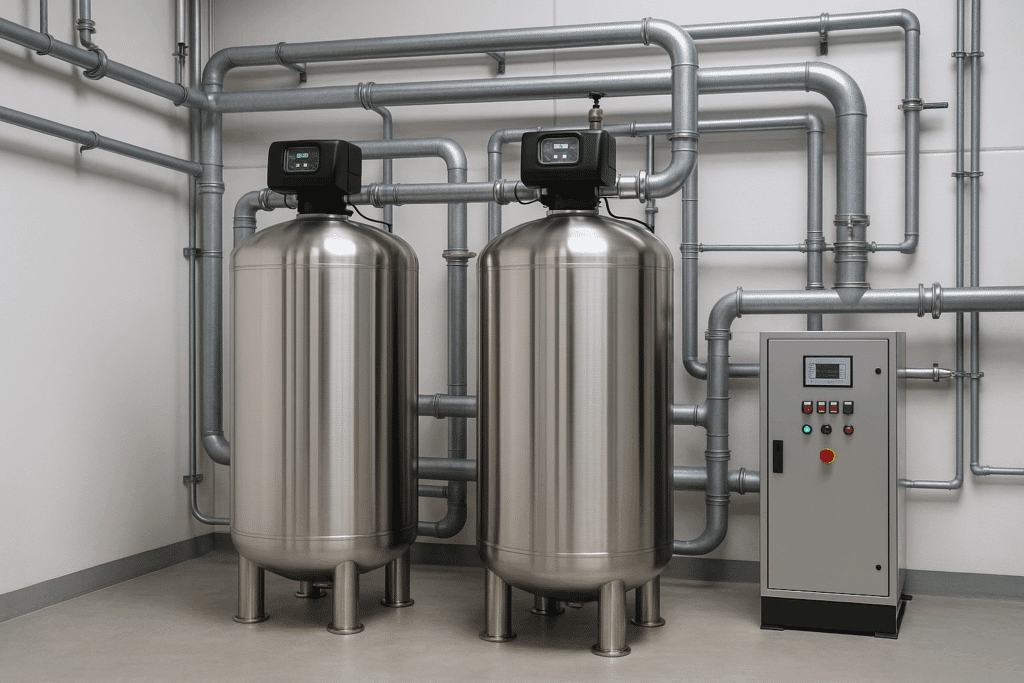
How Water Softeners Work
A water softener uses ion exchange to remove hardness from hard water. As water flows through the resin bed, resin beads exchange sodium ions for calcium and magnesium ions. This produces softened water that helps prevent scale buildup in equipment and piping.
Over time, the resin bed becomes saturated and must be regenerated. During regeneration, a brine solution from the brine tank restores the resin beads so the system can continue removing hardness.
What Drives Water Softener Efficiency
Water softener efficiency depends on how effectively the system removes hardness while minimizing salt and water usage. The key metrics include:
- Grains per pound of salt (grains per pound)
- Regeneration efficiency and frequency
- Total salt consumption and water consumption
- System capacity and flow rate
High efficiency water softeners are designed to maximize hardness removed per pound of salt while reducing water waste during regeneration.
Common Causes of Low Efficiency
Several issues can reduce water softener efficiency in commercial systems:
- Undersized units that trigger frequent regeneration cycles
- Incorrect salt setting leading to excess salt use
- Poorly maintained resin beads reducing capacity
- Unnecessary regeneration cycles in timer-based systems
- Incorrect grain capacity configuration for actual water usage
These conditions lead to higher cost implications and reduced system efficiency.
System Sizing and Capacity
Properly sized systems are critical for efficiency. The size water softener should match actual water usage, hardness levels, and peak demand.
If a system is undersized, it will regenerate too often. If oversized, it may waste salt and water due to inefficient regeneration cycles.
Example Capacity Considerations
| Factor | Impact on Efficiency |
|---|---|
| Grains of hardness | Determines total load on system |
| Gallons per day | Defines regeneration frequency |
| Grain capacity | Sets how much hardness can be removed |
| Flow rate | Affects performance under demand |
The goal is to find the sweet spot where capacity, regeneration frequency, and salt use are balanced.
Improving Salt Efficiency
Salt efficiency is one of the most important aspects of water softener performance. High efficiency softeners are designed to achieve higher grains per pound of salt, meaning less salt is used for the same level of hardness removal.
To improve salt efficiency:
- Optimize salt setting based on water hardness
- Avoid excess salt during regeneration
- Use demand initiated regeneration systems
- Monitor salt and water usage regularly
Reducing salt consumption lowers operating costs and environmental impact.
Demand Initiated Regeneration vs Timer Systems
Traditional systems regenerate on a fixed schedule, regardless of actual water usage. This leads to water waste and unnecessary regeneration cycles.
Demand initiated regeneration uses a metered system to track water usage and only regenerate when needed. This improves regeneration efficiency and reduces both salt and water usage.
Managing Regeneration Cycles
Regeneration cycles are essential but must be controlled.
Frequent regeneration increases water consumption and salt use. Infrequent regeneration can reduce performance and allow hardness breakthrough.
Operators should:
- Track regeneration frequency
- Adjust cycle settings based on actual usage
- Ensure proper brine tank operation
Resin Bed Performance and Maintenance
The resin bed is central to water softening performance. Over time, resin beads can become fouled by iron, organic matter, or bacterial growth.
To maintain efficiency:
- Periodically clean or replace resin beads
- Prevent mineral buildup and scale deposits
- Use filtration systems where needed
Proper maintenance helps maintain capacity and consistent soft water output.
Water Quality and Pre-Treatment
Water quality directly affects water softener efficiency. High levels of iron, sediment, or organic contaminants can reduce performance.
Pre-treatment options such as filtration systems help protect the softener and improve efficiency.
Environmental and Cost Benefits
Improving water softener efficiency provides measurable benefits:
- Reduced salt and water usage
- Lower operating costs
- Reduced environmental impact
- Improved system performance
Using less salt and less water helps reduce waste while maintaining water quality.
Best Practices for Maximum Efficiency
- Use high efficiency water softeners designed for commercial systems
- Monitor grains per pound performance regularly
- Adjust salt setting based on water hardness
- Maintain proper system sizing and capacity
- Implement demand initiated regeneration
- Perform regular testing and maintenance
These practices support maximum efficiency and long-term reliability.
FAQ: Water Softener Efficiency
What is water softener efficiency?
Water softener efficiency measures how effectively a system removes hardness while minimizing salt and water usage.
What are high efficiency water softeners?
High efficiency water softeners are designed to reduce salt consumption and improve regeneration efficiency using optimized settings and metered systems.
How can I reduce salt consumption?
Reduce salt consumption by optimizing salt settings, using demand initiated regeneration, and ensuring the system is properly sized.
How often should a water softener regenerate?
Regeneration frequency depends on water hardness and usage. Systems should regenerate only when needed to avoid water waste.
What affects grains per pound performance?
Grains per pound performance depends on system settings, resin condition, and regeneration efficiency.
Improve Water Softener Performance
Water softener efficiency directly impacts cost, performance, and sustainability. A properly managed system reduces salt and water usage while maintaining consistent softened water quality.
Aquatrol works with facilities to evaluate water softener systems, optimize regeneration cycles, and improve overall system efficiency.
If your system needs adjustment or optimization, contact one of our experts to review your water treatment setup.
